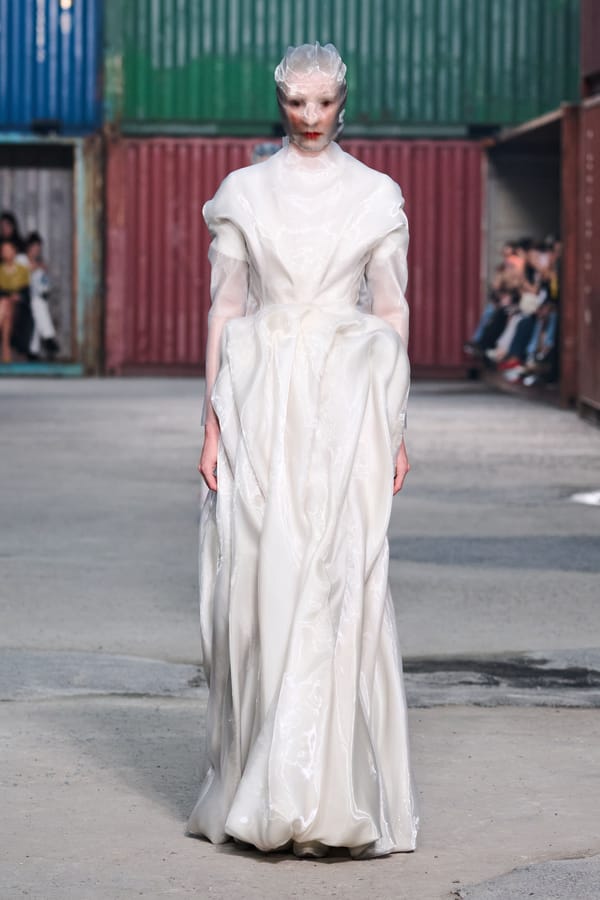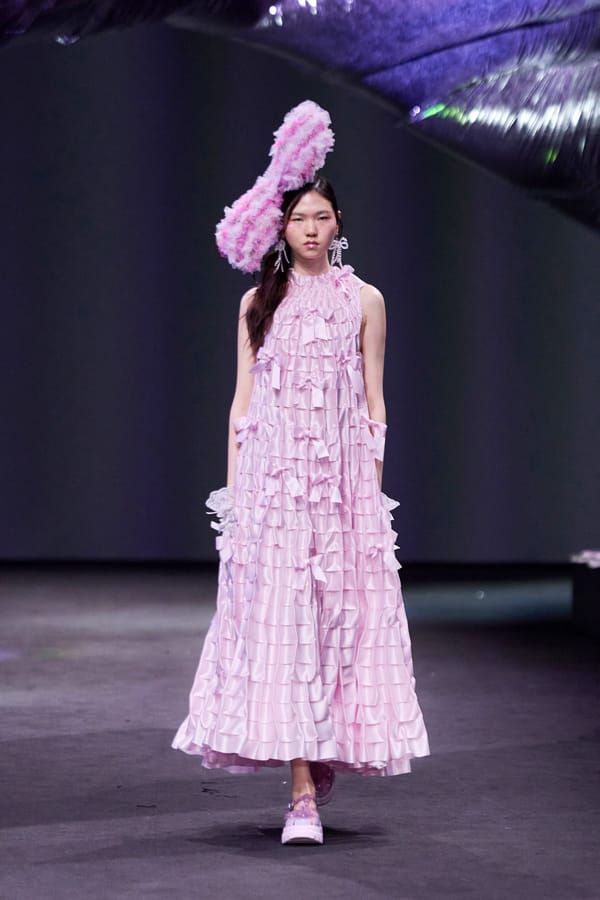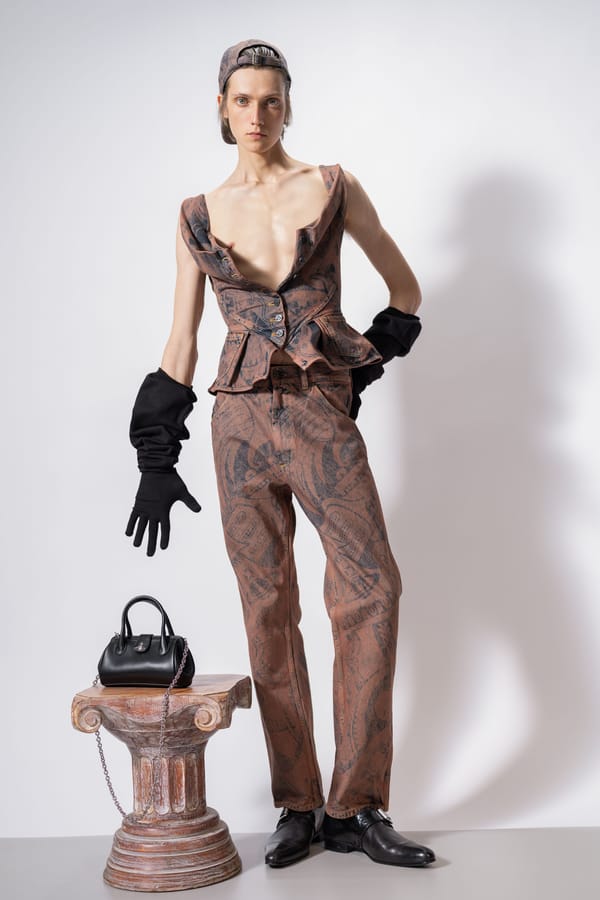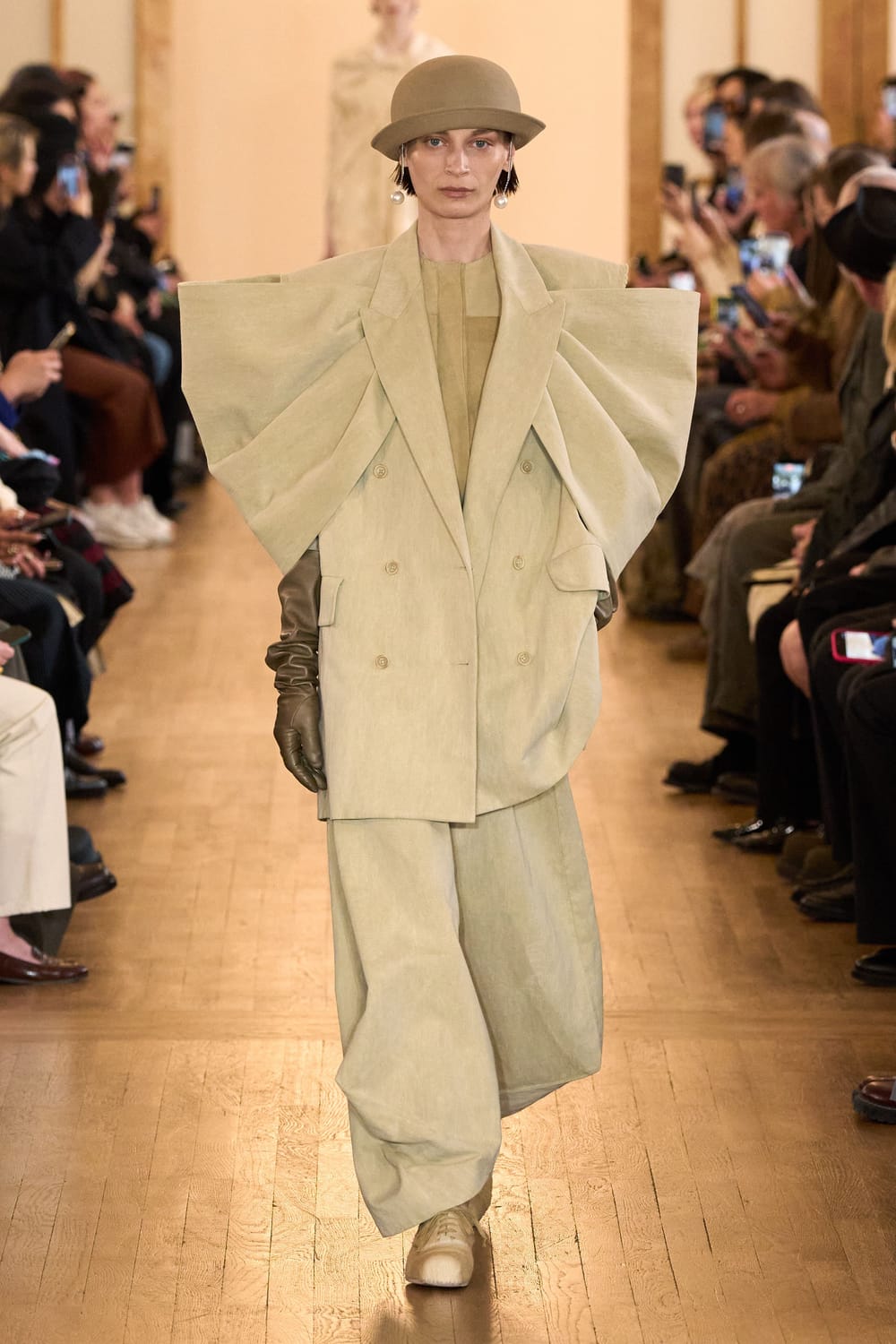
The first look in Uma Wang's Fall 2026 collection wasn't trying to announce anything. A long charcoal coat, unstructured and deliberate, moved down the runway with the kind of quiet authority that doesn't need to justify itself. No logo. No obvious reference point for Western fashion editors to latch onto. No attempt to perform "Chinese-ness" for an audience that might be expecting embroidery or silk or any of the visual shorthand that typically gets filed under "East meets West." Just fabric, cut, and a very clear point of view about what luxury should feel like in 2026.
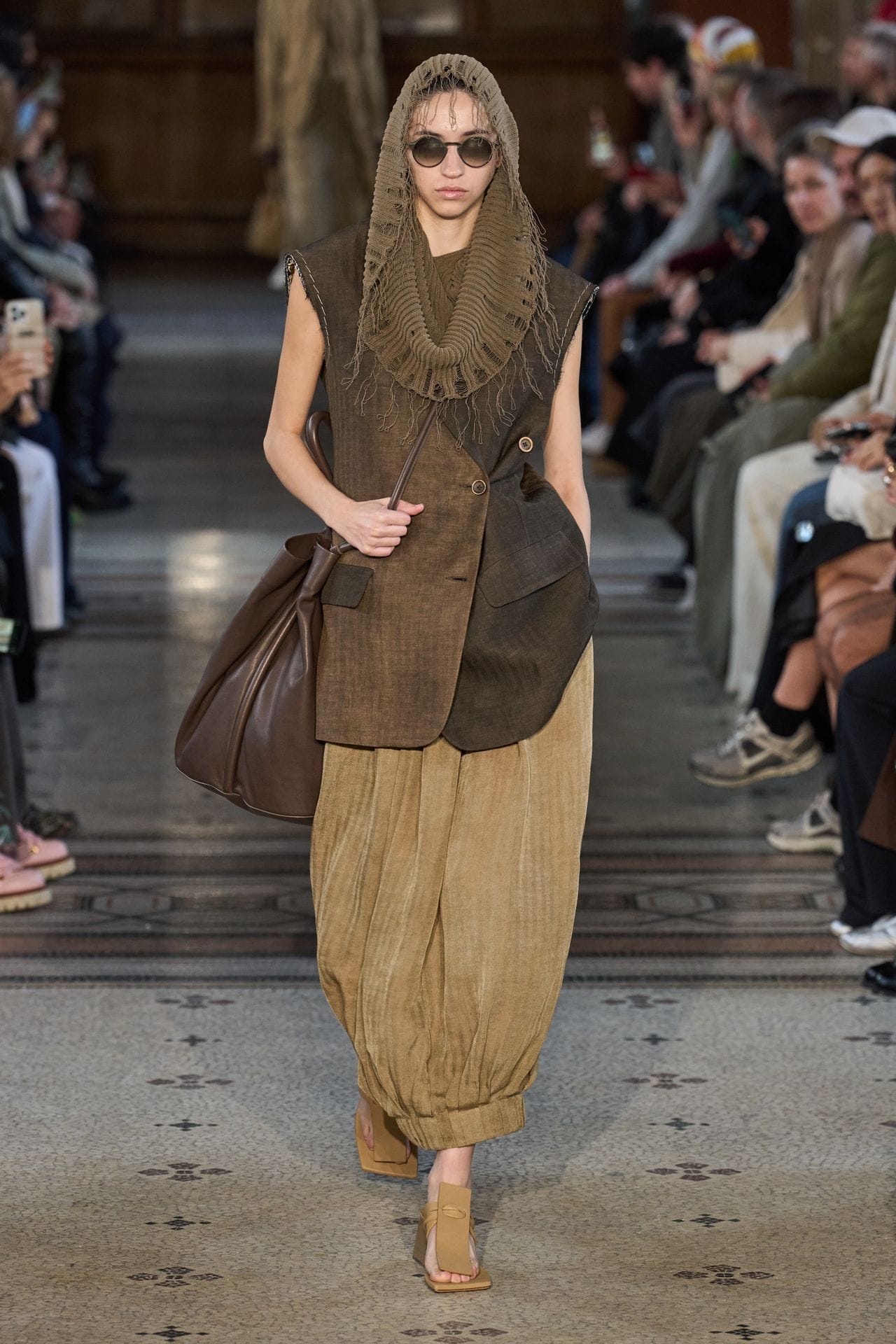
That refusal to perform is the entire strategy. Wang has spent two decades building a luxury empire from Shanghai that operates on a fundamentally different set of assumptions than the European houses dominating the conversation. Where Paris and Milan measure success in spectacle and celebrity front rows and viral runway moments, Wang's business model is built on something quieter and arguably more durable: a customer base that doesn't need fashion to be loud to understand its value. According to Vogue's coverage of the show, the collection leaned into textural experimentation and architectural silhouettes, prioritizing material innovation over trend-chasing. That's not a creative choice divorced from business strategy. It's the business strategy.
Chinese designers have historically faced a specific kind of pressure in the global fashion system: translate yourself for Western buyers, or remain niche. The expectation has always been that to scale internationally, you adapt to the visual and commercial language of Paris, Milan, New York. You show during their fashion weeks. You hire their stylists. You court their editors. You make your references legible to buyers who may not know Shanghai from Shenzhen. Wang's trajectory suggests that calculation no longer holds. Her brand has grown into a genuinely international business without softening its point of view or making itself easier to categorize. The clothes don't code-switch. The customer meets them where they are.
This isn't just about one designer's aesthetic choices. It's about the infrastructure that now exists to support a luxury brand that doesn't need Paris to anoint it. China's domestic luxury market is projected to represent 40% of global luxury sales by 2030, according to Bain & Company. That's not a future trend — that's the market Wang has been building toward while European houses were still figuring out how to pronounce her name. She's not ignoring the West; she's just not prioritizing it. The distinction matters. A brand that builds its foundation in Shanghai and expands outward operates with different constraints and different leverage than a brand that builds in Paris and hopes to crack China later.
The Fall 2026 collection makes that independence visible. There's no attempt to make the clothes "accessible" in the way brands often do when they're nervous about alienating a broader audience. The silhouettes are challenging. The palette is muted. The references, if they exist, aren't spelled out. This is fashion for people who already know what they're looking at — and if you don't, the collection isn't going to stop and explain itself. That level of confidence is rare, and it's especially rare from designers who don't have the institutional backing of an LVMH or a Kering behind them. Wang's independence isn't just creative. It's financial. And that changes the risk calculus entirely.
What's most telling is how little Wang's approach resembles the other Chinese designers who've gained traction in the West. She's not doing streetwear. She's not leaning into maximalism or irony or any of the aesthetics that tend to get labeled "contemporary" and therefore safe for Western buyers to embrace. She's doing something much harder to categorize, which in previous decades would have been a commercial death sentence. But the market has shifted. The customers who want clothes that don't announce themselves, who value material and construction over brand recognition, who are willing to invest in pieces that won't photograph well for Instagram — that customer base is growing, and it's increasingly based in Asia. Wang built her business for them first.
The Western fashion establishment is still catching up to what that shift means. European luxury houses are pouring resources into China, hiring Chinese celebrities as ambassadors, staging shows in Shanghai, trying to crack the code of a market that increasingly doesn't need them to. Meanwhile, designers like Wang have spent years building direct relationships with the customers those houses are now scrambling to reach. It's not that Western brands can't compete in China. It's that they're competing on terms they didn't set, in a market where their historical dominance doesn't automatically translate into relevance. Wang's Fall 2026 collection is a quiet reminder that luxury's center of gravity is moving — and the designers who saw it coming are the ones who won't need to chase it.
The question isn't whether Western fashion will eventually recognize what Wang has built. The question is whether that recognition will matter by the time it arrives. Wang's business doesn't depend on Vogue's approval or a CFDA award or a retrospective at the Met. It depends on customers who already understand what she's doing and are willing to pay for it. That's a very different kind of power than the fashion system has historically granted designers, and it's the kind that doesn't require anyone's permission to grow. If luxury's future is less about Paris dictating taste to the world and more about regional markets supporting designers who speak directly to them, Wang isn't adapting to that future. She's already living in it.
For more, see Rick Owens’ design independence and Anrealage’s tech-forward experiments.