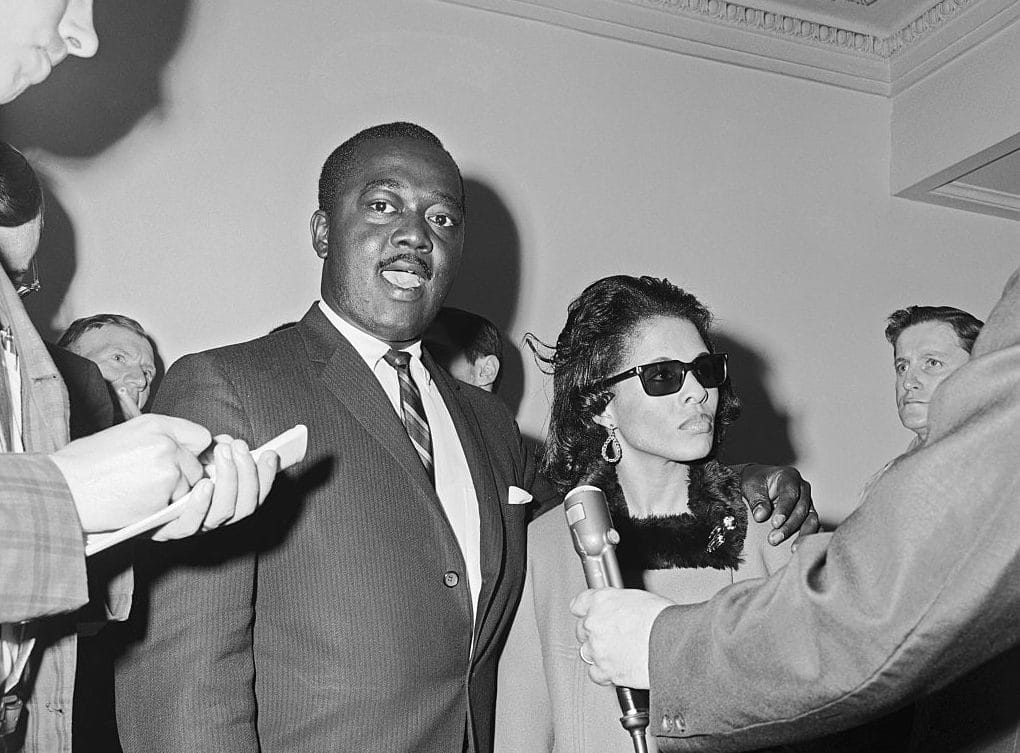
Veteran producer Mark Lipsky is teaming with LA-based production company 20/20 Visions Entertainment Group on The Unseen Shield, an action-thriller based on the true story of Abraham Bolden, the first Black White House Secret Service agent, according to Deadline. Bolden was appointed by President John F. Kennedy in 1961, breaking a color barrier in one of the most visible—and scrutinized—roles in federal law enforcement.
The project joins a growing pipeline of films and series excavating civil rights history that mainstream Hollywood largely ignored for decades. It's not that these stories didn't exist—Bolden himself wrote a memoir, The Echo from Dealey Plaza, published in 2008—but that the industry apparatus wasn't structured to greenlight them. What's changed isn't the availability of material. It's the market calculus around who gets to tell these stories and whether they can be packaged as commercially viable.
Lipsky, whose credits include Vampire in Brooklyn, brings a producer's understanding of genre packaging to what could easily have been positioned as prestige-only material. Framing Bolden's story as an action-thriller rather than a staid biopic signals an attempt to reach beyond the awards-season audience that typically consumes civil rights narratives. Whether that approach serves the story or dilutes it will depend entirely on execution—but the choice itself reflects how these projects now need to justify their existence in a risk-averse development landscape.
The timing matters, too. In an industry still grappling with what inclusion actually looks like beyond casting decisions, greenlighting a film about someone who integrated a federal institution in 1961 is both a gesture toward historical reckoning and a relatively safe bet. Bolden's story has built-in dramatic architecture: institutional resistance, proximity to power, the Kennedy administration's contradictions on race. It's the kind of project that checks multiple boxes—historical importance, underrepresented perspective, genre appeal—which is precisely why it's getting made now and not fifteen years ago.
But the genre framing raises questions about how Hollywood metabolizes Black historical narratives. Action-thriller packaging might expand the potential audience, but it also risks flattening the institutional critique at the story's core. Bolden didn't just face individual prejudice—he confronted a federal system that actively worked to discredit him after he reported security lapses and racist conduct within the Secret Service. He was later arrested on federal charges that many historians believe were retaliatory, charges that weren't vacated until decades later. That's not action-movie material. That's systemic corruption with documented victims and a paper trail.
The question becomes whether The Unseen Shield will interrogate that system or simply use it as backdrop for heroic individual triumph. The latter is easier to market. The former is what the story actually demands.
This isn't an isolated project. Over the past five years, studios have greenlit films about Bayard Rustin, Emmett Till, Mamie Till-Mobley, Claudette Colvin, and dozens of other civil rights figures whose stories were available for decades but only became "marketable" once the post-2020 industry reckoning made them commercially defensible. The pattern reveals less about Hollywood's evolving consciousness and more about its ability to package moral urgency as product differentiation.
The infrastructure matters here. 20/20 Visions Entertainment Group, founded by Shawn Edwards and Elaine Edwards, has positioned itself specifically around underrepresented narratives—a business model that didn't have institutional support until recently. That these stories now have dedicated production companies to shepherd them through development is progress. That it took this long is the problem the stories themselves document.
What's worth watching is whether The Unseen Shield can balance commercial viability with the institutional critique Bolden's actual experience demands. Genre conventions can serve a story—action beats can externalize internal conflict, thriller pacing can sustain tension across historical exposition. But they can also sand down the edges that make a story matter beyond its entertainment value.

Bolden's story sits at the intersection of federal power, racial integration, and institutional retaliation—the same territory that makes projects like likeness rights disputes and international production infrastructure worth covering. It's about who controls the narrative and who benefits from its distribution. The fact that Hollywood is finally greenlighting these projects doesn't erase the decades they spent in development hell. It just means the market conditions finally aligned.
Whether The Unseen Shield becomes the definitive Bolden story or another competent biopic that checks the right boxes will depend on how seriously it takes the system Bolden exposed. The action-thriller framing is a choice. The question is whether it's in service of the story or in spite of it.
For more, see the best art house cinemas in LA and Sonoma Film Festival’s distribution strategy.