Every fashion brand currently selling a slip dress, a minimalist blazer, or a pair of low-slung cargo pants is selling the same thing: a fantasy of anonymity. The '90s fashion revival has been running for nearly a decade now, long enough that the trend cycle has lapped itself twice. But the clothes aren't what we're buying. We're buying the idea that you could once leave your apartment without a phone, attend a party without appearing in someone's Instagram story, and exist in public without being logged, tracked, or algorithmically sorted into a demographic.
The current wave of '90s nostalgia—documented in everything from Vogue's recent observation that our obsession runs deeper than the clothes, to the endless stream of Carolyn Bessette-Kennedy content—isn't driven by aesthetics. It's driven by grief for a social contract that no longer exists. The '90s weren't better because the fashion was better. They were better because you could disappear.
The slip dress, the minimalist Prada nylon backpack, the Helmut Lang blazer—these pieces have become cultural shorthand for a specific kind of freedom that has nothing to do with what they look like. They represent the last moment in modern culture when being photographed required consent, when attending an event didn't mean appearing in a searchable archive, and when privacy was the default setting rather than a luxury product sold by tech companies.
This is why Carolyn Bessette-Kennedy's refusal to perform has become the most compelling figure of the '90s fashion revival. She wasn't just wearing minimalist clothes—she was living at a moment when you could still choose not to be seen. That option no longer exists. Even people who don't post on social media appear in other people's content. Even people who turn off location tracking are still being logged by the platforms they use. The '90s weren't analog because of technological limitation—they were analog because surveillance infrastructure hadn't been normalized yet.
Fashion's role in this nostalgia is complicated. The industry is selling the aesthetic of a pre-surveillance era while simultaneously participating in the most invasive data collection and tracking systems ever built. Every fashion brand with an e-commerce platform is logging user behavior, building customer profiles, and selling access to that data. The '90s slip dress you buy online comes with a digital footprint that would have been unimaginable in the actual 1990s. The product is retro. The purchase is not.
This contradiction is most visible in how brands market '90s-inspired collections. The campaigns reference a time when people went to parties, magazine launches, and gallery openings without documenting the experience—but the campaigns themselves are designed to be shared, screenshotted, and algorithmically amplified. The aesthetic is privacy. The business model is surveillance. Fashion is selling the memory of a world it helped destroy.
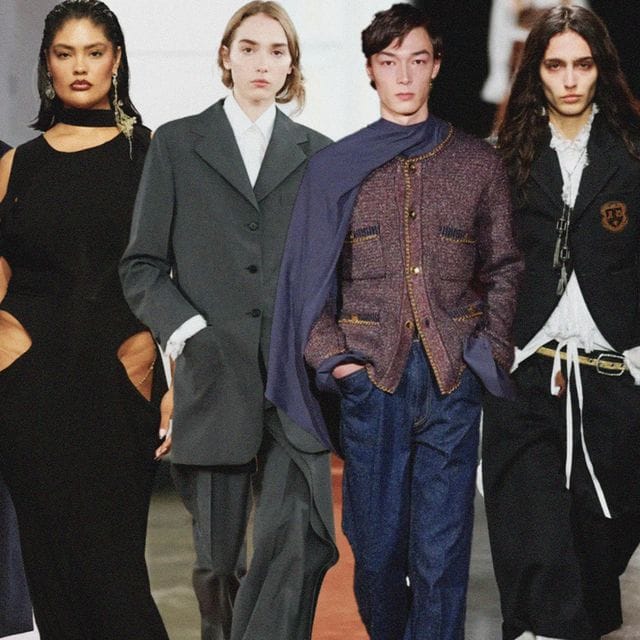
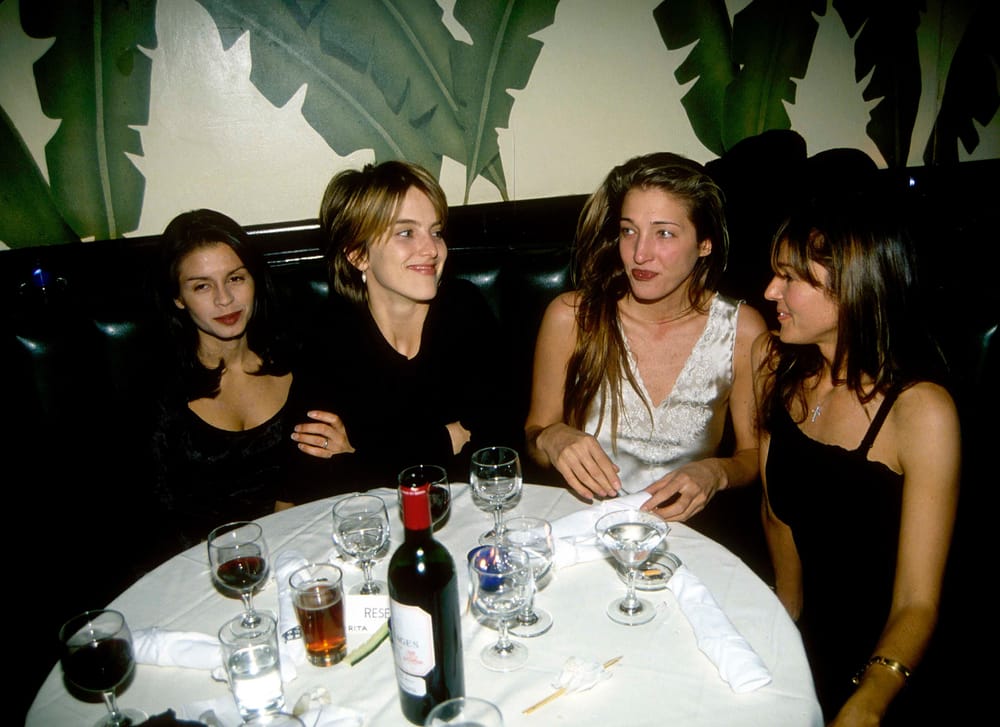
The cultural pattern here connects to a broader shift in how people relate to public space. The '90s were the last decade when you could be in a room full of people without being recorded. Parties happened and then ended. Conversations stayed private. Mistakes were forgotten rather than archived. The social cost of visibility was lower because visibility itself was temporary. Now, visibility is permanent, searchable, and monetizable. The '90s fashion revival isn't about wanting to dress like Kate Moss—it's about wanting to live at a moment when what you wore to a party stayed at the party.
This nostalgia also explains why the '90s revival has staying power that other decades don't. The '70s and '80s revivals were about aesthetics—patterns, silhouettes, colors. The '90s revival is about infrastructure. It's mourning the last moment before smartphones, before social media, before the algorithm. It's not about what people wore. It's about what people could do while wearing it. You could go to a party and leave without appearing in 47 Instagram stories. You could have a conversation without it being recorded. You could make a mistake without it following you forever.
The business strategy behind this nostalgia is straightforward: sell people the aesthetic of conditions they can't have back. Brands know that the actual conditions of the '90s—privacy, anonymity, the ability to disappear—are gone. So they sell the visual signifiers instead. The slip dress won't make you anonymous. The minimalist blazer won't get you off the algorithm. But they'll make you feel like you're opting out, even as you're being tracked more comprehensively than ever.
This is the same dynamic playing out across culture. People are buying vinyl records while streaming music. They're shooting on film cameras while their phones automatically back up every photo to the cloud. They're wearing '90s fashion while living at a moment when privacy has become a product feature rather than a default setting. The aesthetic choices are acts of mourning, not acts of resistance. They acknowledge what's been lost without actually changing the conditions that took it away.
The accountability lens here is sharp: the fashion industry is profiting from a nostalgia it helped create. The same brands selling '90s minimalism are collecting customer data, building algorithmic recommendation systems, and participating in the surveillance economy. They're selling the memory of privacy while actively eroding what's left of it. The slip dress is a perfect product for this moment—it looks like an escape, but it's just another way to be categorized, targeted, and sold to.
What makes this moment different from previous waves of nostalgia is that the thing being mourned isn't just an aesthetic or a cultural moment—it's a structural condition. The '90s didn't end because tastes changed. They ended because the infrastructure of daily life was rebuilt around surveillance. You can buy the clothes, but you can't buy back the conditions they came from. The party with no phones isn't coming back. The magazine launch where you could show up, be seen by the people in the room, and then leave without appearing in a searchable archive—that's gone. Fashion is selling the aesthetic of that moment while operating in the one that replaced it.
The '90s fashion revival will eventually fade, the way all trend cycles do. But the nostalgia driving it won't. Because it's not really about fashion. It's about the last moment in living memory when you could exist in public without being recorded, tracked, and monetized. The slip dress is just the uniform for that grief.