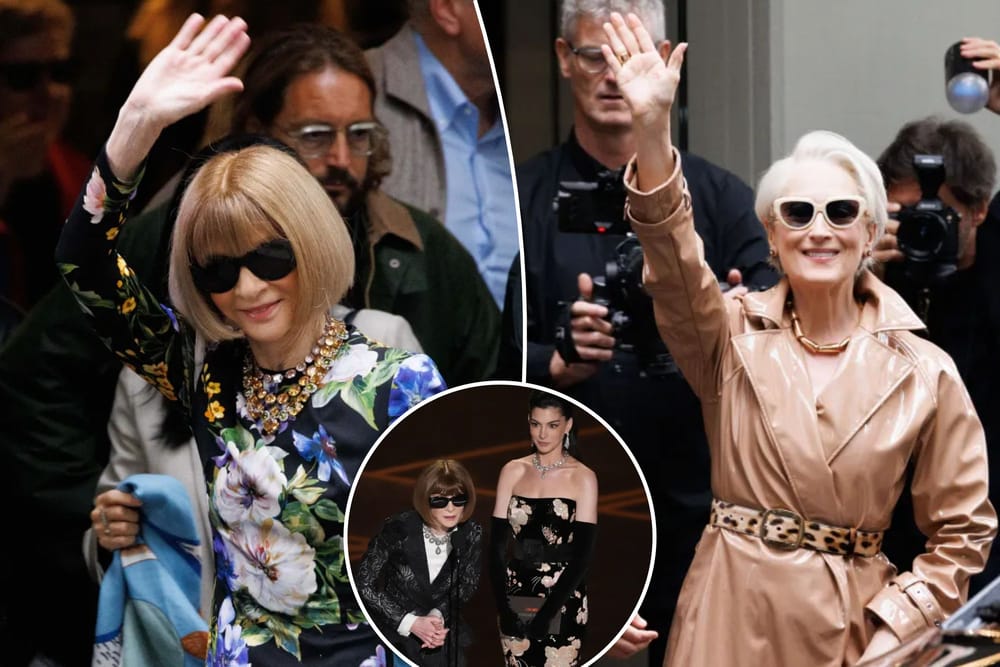
Anna Wintour walked onto the Oscars stage with Anne Hathaway on March 2, 2025, and nobody at Condé Nast knew it was happening. Not her publicists. Not her deputies. Page Six reports that Wintour kept the appearance—a surprise introduction for a Devil Wears Prada sequel announcement—entirely to herself until cameras were rolling. The secrecy wasn't paranoia. It was strategy. When you've spent twenty years being called the Devil, the only move left is to own the branding.
The original Devil Wears Prada premiered in 2006. Meryl Streep played Miranda Priestly, a fashion editor so terrifying her assistants developed stress disorders. The character was transparently based on Wintour—the bob, the sunglasses, the whispered demands, the professional cruelty presented as editorial rigor. Wintour never sued. Never issued a statement. Never tried to soften the portrait. She attended the premiere. She smiled for photographs. She let the myth calcify into fact.
That silence was the smartest business decision she never had to explain. By 2026, "The Devil" isn't an insult—it's a differentiator. In an industry where niceness has become a professional requirement and relatability is monetized on Instagram, Wintour's refusal to perform warmth is the last untouchable form of power. You can't cancel someone who never pretended to care what you thought.
The economics of this are straightforward. Wintour runs Vogue, but her real product is access. Designers pay for her approval in ad spend. Celebrities perform for her front row. The Met Gala—which she chairs—is the fashion industry's most valuable single night, generating millions in ticket revenue and billions in media exposure. None of that leverage works if she's your friend. It works because she's the gatekeeper, and gatekeepers don't apologize for the gate.
The Devil Wears Prada sequel, confirmed for production in 2025, will reportedly follow Miranda Priestly navigating a fashion industry where print magazines are dying and influencers have replaced editors as tastemakers. It's a premise that acknowledges Wintour's empire is under siege—and positions her as the last holdout against algorithmic taste. The movie becomes a defense of her relevance without requiring her to mount one herself. Hollywood is doing the PR work for free.
Wintour's Oscar appearance with Hathaway—who played the assistant Miranda psychologically tortured for two hours of screen time—was performance art disguised as celebrity banter. Hathaway has spent years deflecting questions about whether she regrets taking the role, whether she feels complicit in glamorizing workplace abuse. Wintour has never engaged the question at all. Standing next to each other on that stage, the power dynamic was clarified: Hathaway is still explaining herself. Wintour is still Vogue.
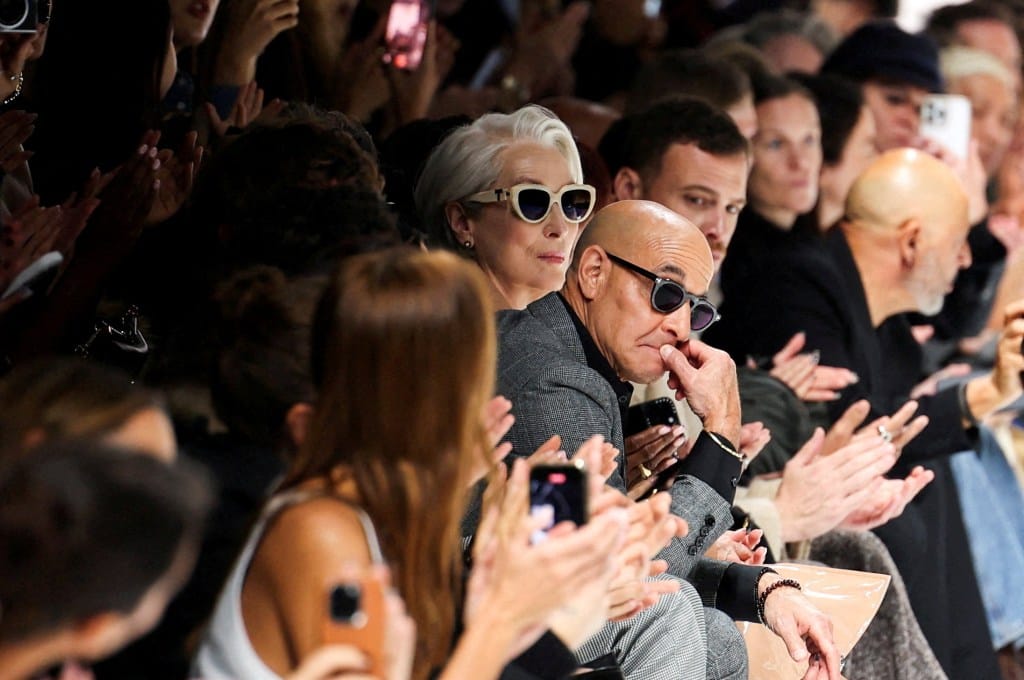
This is the same logic that allowed Wintour to authorize a documentary about Vogue with an Oscar-winning filmmaker. She's not opening the doors out of transparency—she's monetizing the mystique. Every documentary, every sequel, every red carpet appearance where someone nervously laughs about Miranda Priestly is another data point confirming that Wintour's brand is durable enough to survive being the villain. Most executives spend millions trying to rehab their image after a single bad profile. Wintour turned two decades of bad press into a media franchise.
The broader pattern here is how fashion's power brokers have learned to manage their public personas in the Instagram era. Designers perform accessibility. Influencers perform authenticity. Wintour performs nothing. She doesn't have a public Instagram account. She doesn't do confessional interviews. She doesn't issue apologies when former employees describe toxic work environments. The consistency is the brand. You don't build a fifty-year career by being likable—you build it by being necessary.
What makes this strategy viable is that Wintour's power is institutional, not personal. She's not a celebrity whose relevance depends on public affection. She's the editor-in-chief of American Vogue, the artistic director of Condé Nast, and the chair of the Met Gala. Those titles carry authority regardless of whether anyone likes the person holding them. The "Devil" persona doesn't threaten her position—it reinforces that the position is more important than the person. When she eventually steps down, the mythology stays with the role.
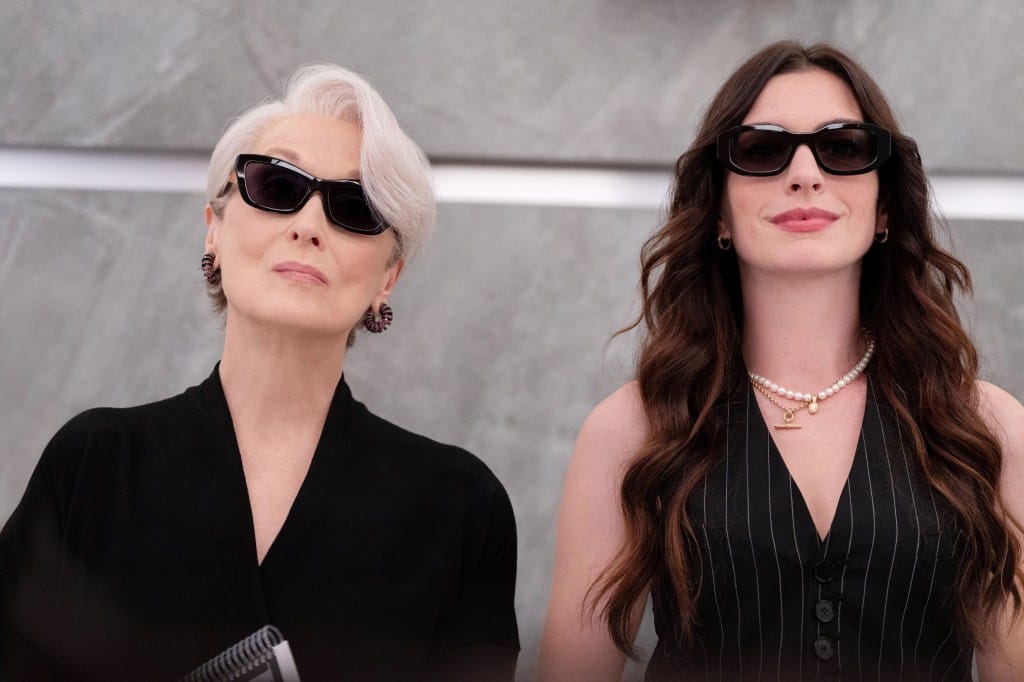
The Devil Wears Prada sequel arrives at a moment when Wintour's actual influence is more contested than ever. Print circulation is collapsing. Fashion's center of gravity has shifted from magazine editors to TikTok creators who can move product without ever sitting front row. The Met Gala still matters, but increasingly as a celebrity spectacle rather than a fashion arbiter. Wintour's power is real, but it's no longer unassailable. The sequel's premise—Miranda struggling to stay relevant—isn't hypothetical. It's reportage.
But here's what the movie also does: it reframes that struggle as a battle worth watching. It positions Wintour as the underdog defending editorial standards against algorithmic chaos. It turns her refusal to adapt into a form of integrity rather than obsolescence. Whether or not that narrative is true, it's useful. And Wintour has always understood that in fashion, useful is more valuable than true.
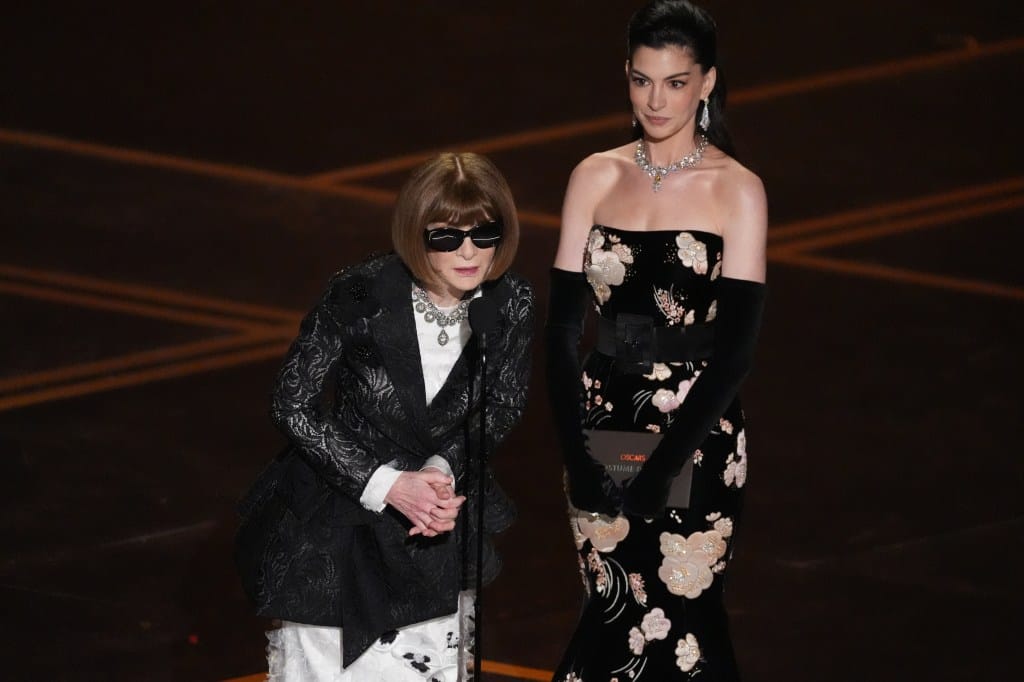
The fact that she didn't tell anyone about the Oscars appearance is the tell. She didn't need approval. She didn't need consensus. She walked onto that stage because she decided it served her interests, and nobody at Condé Nast was going to stop her. That's not how executives operate in 2026, when every public move is workshopped through communications teams and focus-grouped for backlash risk. Wintour still operates like it's 1995, when editors had final say and nobody questioned the gate. The Devil Wears Prada franchise has spent twenty years documenting that power. Wintour has spent twenty years proving it's not fiction.