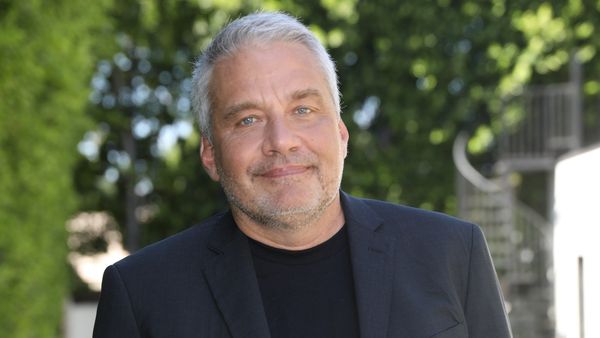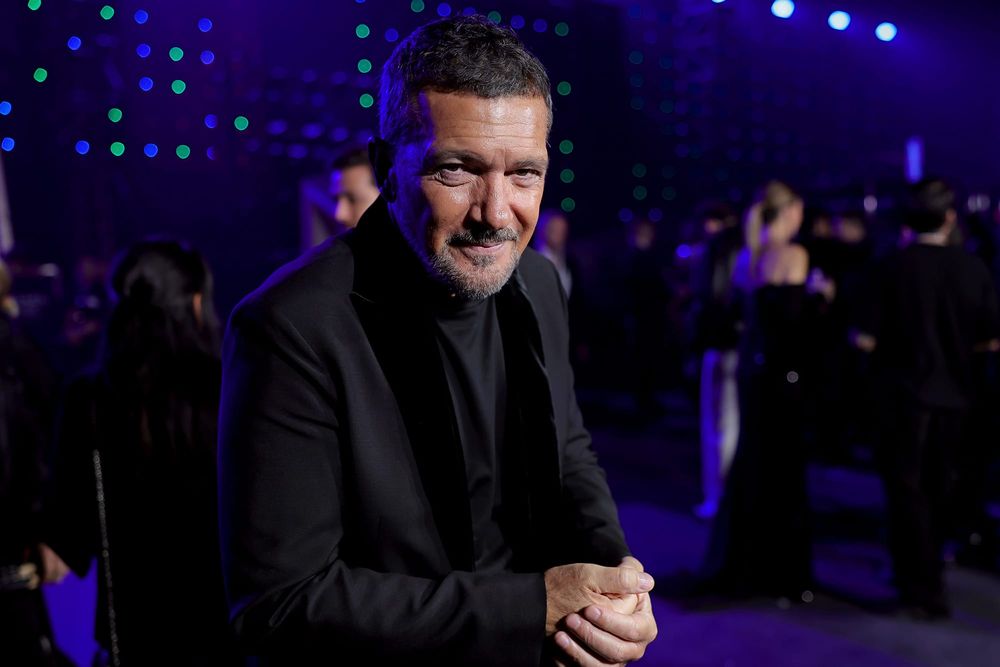
Antonio Banderas had a heart attack in 2017. He was 56, still bankable, still working steadily in the kind of mid-budget studio projects that have mostly disappeared. The health scare could have been a brief pause — a few months of recovery, a carefully managed press cycle about gratitude and perspective, then back to the grind. Instead, Banderas left Hollywood almost entirely and told Page Six he's "never been happier" running a theater company in his hometown of Málaga, Spain.
The move wasn't subtle. Banderas didn't gradually phase out of Hollywood projects while keeping a toe in the industry. He bought a theater, launched a production company, and spent the better part of a decade staging Spanish-language productions that will never play at a multiplex. He's directed, produced, and performed in work that has no IP value, no franchise potential, and no path to a streaming deal. By Hollywood's current logic, he's essentially retired — except he's working harder than most actors half his age.
What Banderas left behind was an industry that increasingly has no use for actors in their fifties who aren't already embedded in a franchise. The mid-budget star vehicle — the kind of project that once sustained careers like his — has been replaced by superhero sequels, IP reboots, and algorithm-optimized streaming content. Actors who built their careers on being leading men in original films now compete for supporting roles in universes they didn't create. Disney's structural problems are partly a symptom of this shift: the studio spent two decades training audiences to only care about franchises, and now it can't build new stars outside of them.
Banderas had options. He could have chased a Marvel role, taken a prestige TV gig, or signed on for a legacy sequel trading on nostalgia for his earlier work. Instead, he chose the least commercially viable path available: live theater in a mid-sized Spanish city. The decision only makes sense if you believe that creative autonomy and artistic control are worth more than another franchise check — a calculation Hollywood actively discourages.
The heart attack gave him permission to make a choice most actors don't feel they can afford. But the fact that leaving Hollywood entirely felt like the best option available says more about the industry than it does about Banderas. He didn't retire because he stopped loving acting. He left because the work Hollywood was offering him — the fifth lead in someone else's franchise, the prestige cameo, the algorithmically optimized streaming filler — wasn't worth the cost.
There's a reason actors like Banderas, who built their careers before the franchise era fully calcified, are increasingly opting out. The industry doesn't just prefer younger actors — it has structurally eliminated the kinds of projects that once sustained mid-career stars. Judy Greer and Kara Swisher's conversation about AI and aging in Hollywood highlighted how streaming already replaced older actors before automation even entered the equation. Banderas's exit is the same story with better PR.

The theater company in Málaga isn't a vanity project. It's a fully functioning production house that stages multiple shows a year, employs local actors and crew, and operates on a business model that has nothing to do with global box office or algorithmic engagement. Banderas has more creative control over a single stage production in Spain than he would over a $200 million Hollywood franchise film where his role would be decided by test screenings and studio notes.

Hollywood will frame this as a feel-good story about an actor finding happiness outside the industry. The better read is that one of the most successful actors of his generation looked at what the industry was offering and decided it wasn't worth staying for. Banderas didn't flee Hollywood because of a health scare. He left because the industry had already moved on from actors like him — and he was smart enough to move on first.