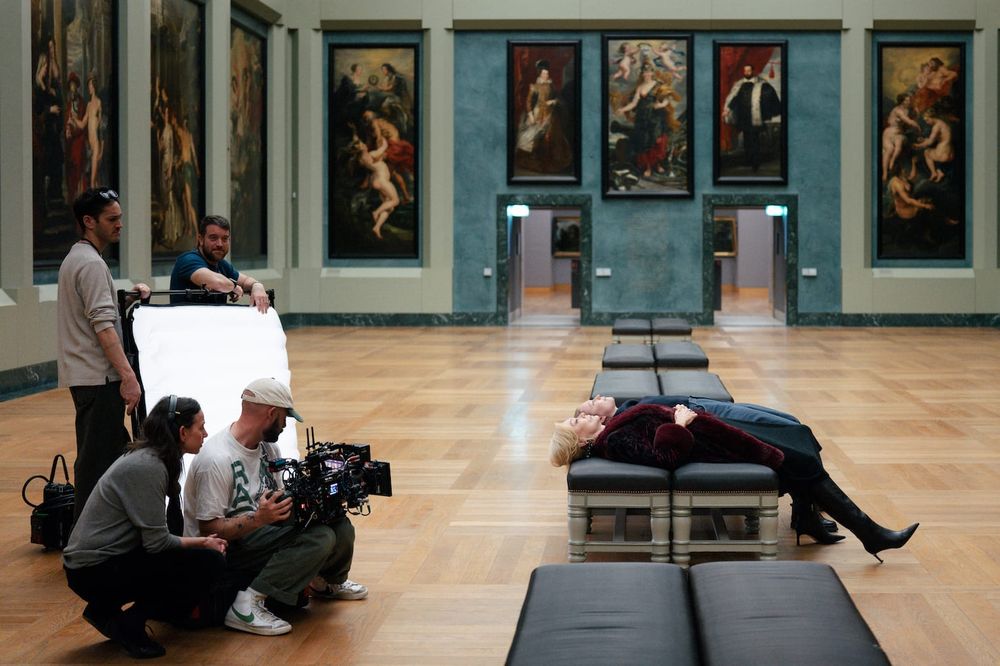
The Louvre closed to film crews after a high-profile art theft in 2025. Then Hacks showed up with cameras.
Creators Lucia Aniello, Paul W. Downs, and Jen Statsky told Variety they'd planned the Paris finale from the beginning. The Louvre was always the target — the most recognizable art museum in the world, home to the Mona Lisa, the exact kind of cultural landmark that makes a series finale feel monumental. What they didn't plan for was the museum locking down access after thieves walked out with millions in Impressionist paintings.
The heist changed the calculus. Museums tightened security protocols. Insurance premiums spiked. Productions that might have gotten a location permit suddenly faced months of additional vetting. The Louvre, already selective about who gets to shoot there, became nearly impossible. Hollywood films with nine-figure budgets get turned away. Prestige dramas with A-list casts get told no. The museum doesn't need the money, and it doesn't need the headache.
Hacks got in anyway.
The show's advantage wasn't budget — Max comedies don't operate at feature film scale. It wasn't star power, though Jean Smart's Emmy wins certainly didn't hurt. The advantage was specificity. Hacks needed the Louvre for a narrative reason that had nothing to do with spectacle. Deborah Vance's arc across four seasons built toward this moment: a comedian who spent decades fighting for respect finally getting it in the most rarefied cultural space imaginable. The location wasn't set dressing. It was the thesis.
That's the pitch that works when museums are risk-averse. Not "we want to shoot here because it looks cool," but "this story only makes sense here." The Louvre has turned down Marvel movies. It let Hacks in because the show could articulate why the space mattered to the character, not just the production design.
This is the gap prestige TV has learned to exploit. Films treat museums as backdrops — beautiful, yes, but ultimately interchangeable with any other grand European interior. TV shows, especially character-driven ones like Hacks, can afford to slow down and make the location feel earned. When Deborah walks through the Louvre in the finale, the audience has spent four seasons watching her claw her way to that level of cultural legitimacy. The space isn't just a flex. It's the payoff.
Hollywood has been trying to crack this code for years. Film festivals still matter because they offer the same kind of institutional validation — a space where art and commerce intersect in ways that feel meaningful rather than transactional. The Louvre operates on the same logic. It's not a rental. It's a co-sign.
The timing makes Hacks' access even more striking. Post-heist, the museum could have used the security concerns as cover to shut out all productions indefinitely. Instead, it made a calculation: the right project, with the right narrative justification, was worth the risk. That's a bet on storytelling quality that most institutions won't make anymore. Museums, like streaming platforms, default to risk mitigation. Hacks convinced the Louvre that the story was worth breaking protocol.
This won't become the new normal. The Louvre isn't suddenly opening its doors to every comedy with a Paris episode. But it does reveal where the leverage is shifting. Prestige TV, at its best, can now access cultural real estate that blockbuster films can't. Not because TV has more money — it doesn't. But because prestige TV has learned to build narratives that make institutions feel like partners rather than vendors.
The Hacks finale airs next month. When Deborah Vance walks through the Louvre, the scene will carry weight that most museum shoots don't. Not just because the location is iconic, but because the show earned the right to be there. In an industry where access is currency, that's the rarest flex of all.