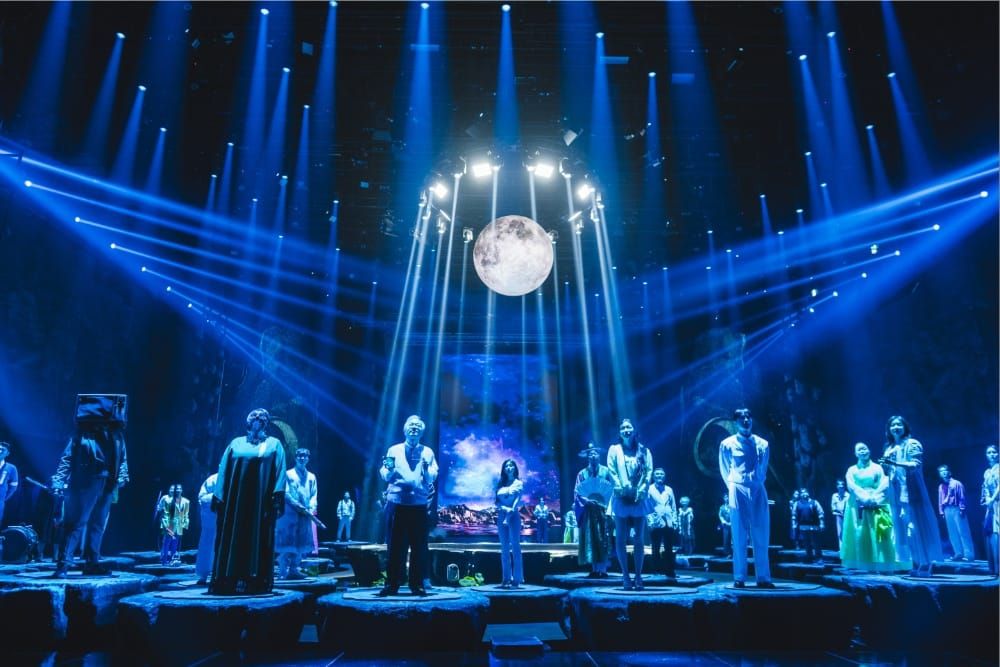
Twelve days. That's how long it took for a supernatural reality competition to dethrone Moving, the 2023 superhero drama that held Disney+ Korea's all-time premiere record for nearly three years. According to Variety, Battle of Fates—a reality show built around contestants competing in occult-themed challenges—didn't just edge past the previous benchmark. It shattered it, becoming the top-performing new series across Disney+'s entire Asia Pacific footprint in 2026.
The speed of the takeover matters. Moving was a prestige play: a $75 million K-drama with star power, high-concept storytelling, and the kind of production budget that signals platform ambition. Battle of Fates is a reality show. The fact that it outperformed a scripted tentpole in less than two weeks reveals something Disney+ has clearly already internalized: reality TV isn't just cheap filler anymore. It's the format that drives subscription retention, social conversation, and global adaptability in ways scripted IP increasingly can't.
The supernatural angle is the tell. Reality TV has cycled through dating (The Bachelor, Love Is Blind), cooking (Top Chef, The Great British Bake Off), survival (Survivor, Alone), and social strategy (Big Brother, The Traitors). The next frontier was always going to be the metaphysical—tarot readings, psychic challenges, ghost hunts, astrology-based eliminations. It's a genre that taps into the same cultural currents fueling the wellness industry's obsession with crystals and manifestation, the rise of WitchTok, and the mainstreaming of spiritual practices that were niche five years ago. Battle of Fates didn't invent this category, but its Disney+ Korea performance proves the format has global commercial viability at scale.
What makes this particularly significant is the platform. Disney+ has spent years positioning itself as the family-friendly alternative to Netflix's chaotic content library. A supernatural reality show topping its charts in one of its most competitive markets suggests the company is willing to stretch that brand identity further than it has historically. This isn't The Mandalorian or a Marvel series. It's a reality format that trades on the occult, which requires a different calculation about what the Disney brand can absorb without alienating its core audience. The fact that Disney+ greenlit it—and that it worked—signals confidence that the platform's audience is broader and more genre-flexible than its legacy IP might suggest.
The Korean market itself provides crucial context here. South Korea has long maintained a complex relationship with spiritual and supernatural content, where shamanism, fortune-telling, and ancestor veneration coexist alongside rapid technological modernization and Christian evangelicalism. This isn't a culture that treats the occult as purely entertainment or ironic kitsch. The spiritual marketplace in Seoul includes legitimate storefront fortune tellers, TV channels dedicated to paranormal investigation, and celebrity shamans with Instagram followings. When Battle of Fates positions itself around supernatural challenges, it's drawing from a deep well of cultural legitimacy that Western audiences might read as campy but Korean viewers engage with on multiple registers simultaneously—entertainment, curiosity, and genuine spiritual interest.
That cultural specificity makes the show's cross-regional success even more noteworthy. The format works in Korea for reasons rooted in local spiritual practice, yet Disney+ clearly sees adaptability in markets with entirely different relationships to the supernatural. A Japanese version might lean into yokai folklore and Shinto ritual. A Thai adaptation could incorporate Buddhist cosmology and spirit house traditions. The Philippines, with its own rich history of folk Catholicism and supernatural belief, represents another natural fit. The format's genius lies in its shell structure: competitive reality television that can be filled with whatever metaphysical content resonates locally, much like how streaming platforms have learned to program for niche rather than mass audiences.
The economic implications extend beyond Disney+. If supernatural reality proves sustainable as a format category—not just a one-off hit—it opens new revenue streams for production companies, creates opportunities for influencers and practitioners in the spiritual wellness space to transition into television, and potentially reshapes how advertisers think about reaching audiences who engage with metaphysical content. The wellness industry has already demonstrated that spiritual practice can be monetized at scale. Reality television simply offers another vector for that commercialization, one that comes with built-in narrative structure and parasocial investment.
Looking ahead, the question isn't whether other platforms will attempt their own supernatural reality formats—they will—but whether the genre can sustain multiple entries without exhausting audience interest. Reality TV thrives on novelty, and the occult provides enough subcategories (mediumship, astrology, witchcraft, paranormal investigation, energy healing) to support several distinct shows. The risk lies in oversaturation, particularly if every platform rushes to develop their own version without understanding what made Battle of Fates work beyond its surface-level gimmick. The show succeeded not just through its supernatural premise but through whatever production choices, casting decisions, and narrative engineering made it compulsively watchable—elements that aren't always replicable.
What's certain is that Disney+ has validated a new content category at exactly the moment when streaming platforms need formats that deliver consistent engagement without prestige-level budgets. The supernatural reality genre offers that promise. Whether it represents a durable shift or a fleeting trend will depend on how well subsequent entries execute on the format's potential, and whether audiences maintain their appetite for competitive metaphysics once the novelty fades. For now, the data from Korea suggests that appetite is substantial, global, and ready to be monetized at scale.
The global adaptations that Variety reports are now in development make the business thesis clear. Reality formats are infinitely more adaptable than scripted series. A Korean supernatural competition can be remade in 15 markets with localized hosts, contestants, and cultural references without losing its core appeal. That's the same model that turned The Voice and MasterChef into global franchises, and it's the reason streamers are increasingly investing in unscripted formats that can scale across regions without the translation friction or cultural specificity that limits scripted content.
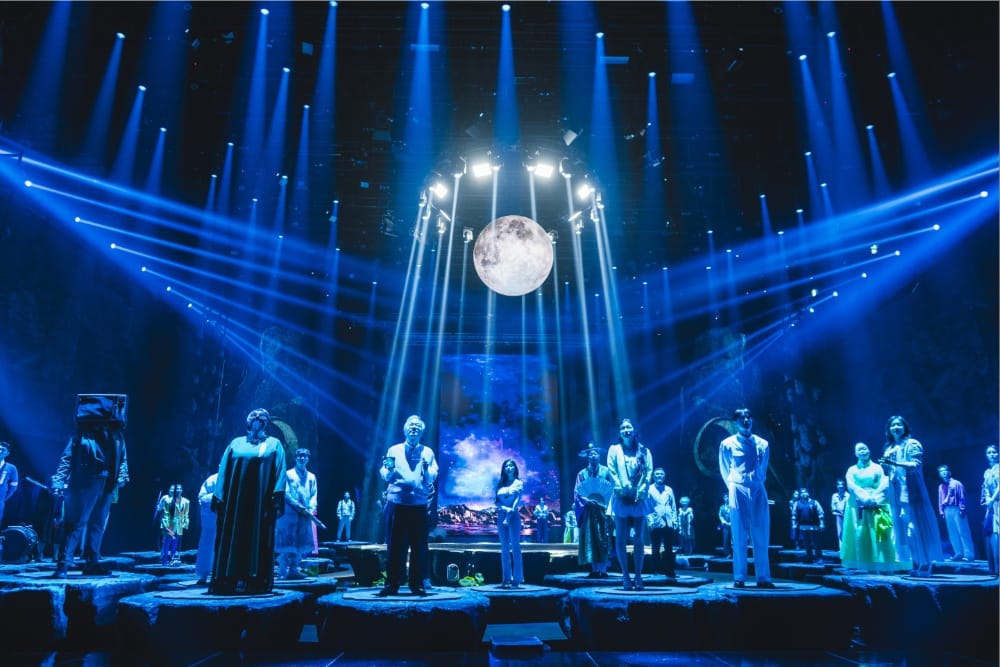
The timing also matters. Disney+ is still chasing Netflix's subscriber base in Asia Pacific, and reality TV is one of the few genres that can generate weekly conversation without requiring the kind of marketing budget a tentpole drama demands. Battle of Fates likely cost a fraction of what Moving did, yet it's delivering comparable—if not superior—engagement metrics. That's the kind of ROI that reshapes content strategy. Expect more supernatural reality formats, more occult-adjacent programming, and more evidence that the platforms have realized the genre's next evolution isn't another dating show. It's the metaphysical made competitive.
For more, see how the streaming wars work in 2026 and the death of monoculture.