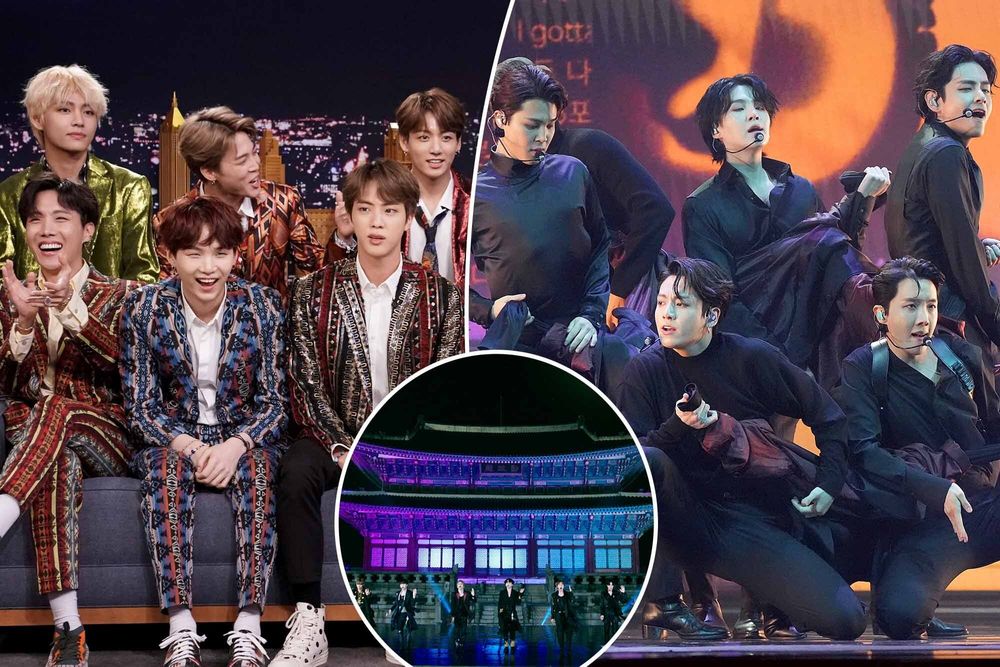
BTS is releasing an album, performing at a historic Seoul concert, appearing in New York City, and dropping a Netflix documentary — all in the same week. That's not a comeback schedule. That's a product launch.
The seven-member group's return from their four-year hiatus, which included mandatory South Korean military service for all members, arrives as ARIRANG, their first full album since the break. But according to Page Six, the album is just one component of a coordinated week that includes live performances, a streaming documentary, and multiple geographic touchpoints designed to maximize global visibility. It's the kind of rollout strategy that treats music releases not as standalone moments but as anchors for multi-platform cultural events.
K-pop groups have always understood spectacle — the industry built itself on synchronized choreography, visual storytelling, and parasocial fan engagement that makes Western pop marketing look amateurish. But BTS's comeback week signals something more calculated: the album itself is infrastructure. The Seoul concert gives domestic fans a pilgrimage moment. The New York appearance plants a flag in the U.S. market. The Netflix documentary provides evergreen content that extends the news cycle beyond the album drop and gives casual audiences an entry point that doesn't require buying into the fandom wholesale. Every piece serves a different audience segment, and together they create the illusion of ubiquity.
This is the opposite of the legacy reunion tour model, where nostalgia acts bank on a single live experience to monetize decades of dormant IP. BTS is 11 years into their career, but they're structuring this return like a debut — maximum visibility, maximum platform diversification, maximum control over the narrative. The group's label, HYBE, has spent years building the infrastructure to support this kind of rollout: in-house content production, direct-to-fan platforms like Weverse, and enough capital to negotiate premium placement on streaming services and live venues simultaneously.
The timing matters too. BTS went on hiatus at the peak of their commercial power, which meant their return was always going to be a news event regardless of the music's quality. But by consolidating that return into a single week rather than stretching it across months, they're forcing every entertainment outlet, streaming platform, and social media algorithm to cover them at once. It's not just about being everywhere — it's about being everywhere at the same time, so that the conversation becomes inescapable even for people who don't follow K-pop.
Other acts are watching. Radiohead's 20-show-per-year touring model treats scarcity as the product. BTS is doing the opposite: abundance as spectacle. The risk is overexposure, but the calculation seems to be that a week of saturation is less exhausting than a year-long album cycle. Get in, dominate the conversation, give fans and casual observers multiple ways to engage, then step back before fatigue sets in.
The Netflix documentary is the smartest piece of the strategy. Live performances are ephemeral. Albums get lost in streaming playlists. But a documentary gives the comeback a narrative spine that can be discovered and re-discovered long after the initial week ends. It's the same move Anna Wintour made by letting an Oscar-winning filmmaker document Vogue — turning access into content that reinforces the subject's cultural position while appearing to demystify it.
What's notable is how little of this strategy depends on radio play, traditional press cycles, or even chart performance. BTS has a direct relationship with their fanbase that bypasses most of the traditional gatekeepers, and HYBE has enough capital and infrastructure to self-fund a rollout that would bankrupt an independent label. The album is the center, but it's not the point. The point is reminding the industry — and the public — that BTS operates on a different scale than almost anyone else in pop music.
The question is whether this model is replicable or whether it only works for acts with BTS's level of infrastructure and fan devotion. Smaller K-pop groups are already trying to mimic the multi-platform approach, but without the capital to fund simultaneous global events or the leverage to demand Netflix real estate, they end up with a diluted version that feels more scattershot than strategic. BTS's comeback week works because every piece is premium. The moment any component feels like filler, the whole structure collapses into over-promotion.
For now, the strategy is working exactly as designed: BTS is the dominant entertainment story of the week, and they've given every audience segment a way to participate. Whether the music justifies the infrastructure is almost beside the point. The infrastructure is the story.