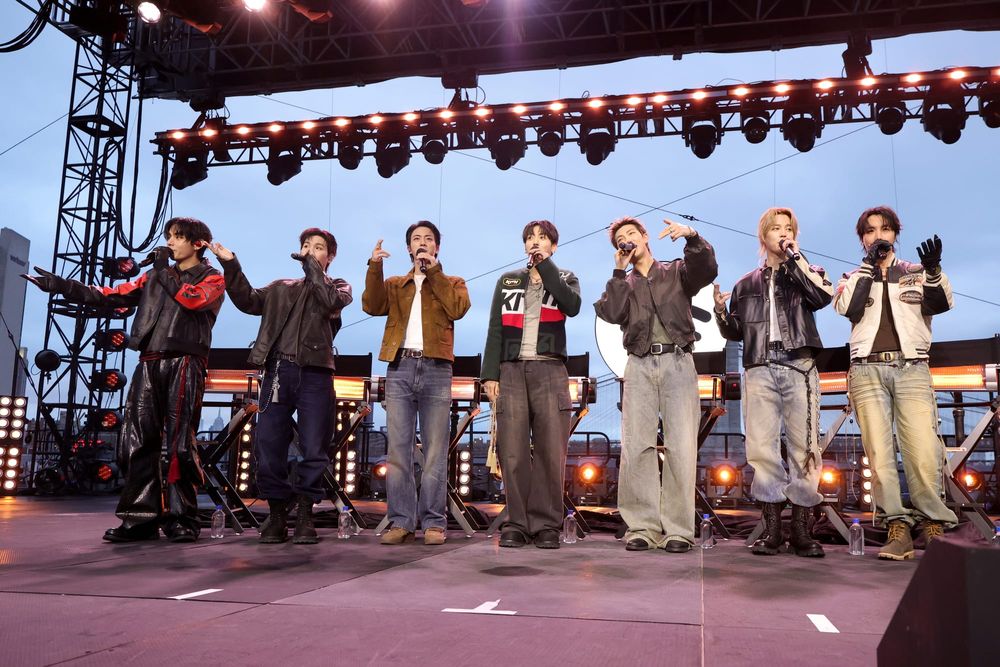
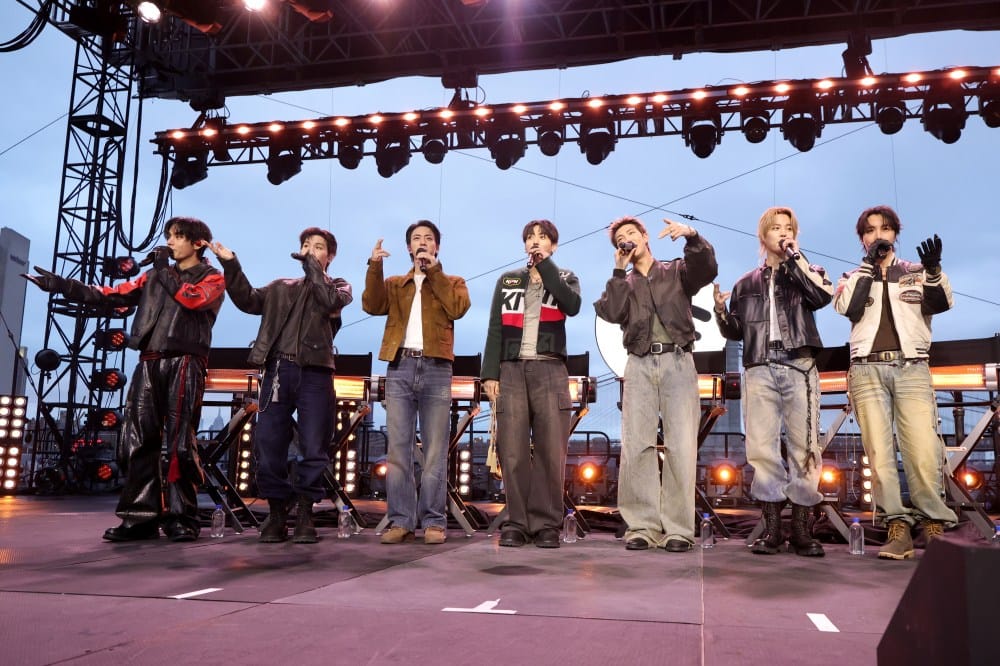
BTS performed at New York's Pier 17 on Monday for an exclusive Spotify event titled "Spotify x BTS: Swimside" — just 48 hours after their massive reunion concert at Seoul's Gwanghwamun Square. The logistics alone are absurd: a 7,000-mile journey, a completely different production setup, and an invite-only crowd instead of the tens of thousands who showed up in Korea. But the real story isn't the whiplash schedule. It's what BTS's willingness to make that trip signals about who holds power in the music industry now.
The event was loosely tied to "Swim," a track from the group's catalog, but the thematic justification hardly matters. What matters is that Spotify — a platform, not a label, not a promoter, not a traditional media partner — can summon the biggest group in the world to perform in New York two days after a homecoming show that felt like a national event. That's not promotional support. That's infrastructure.
Streaming platforms have spent the last decade positioning themselves as essential partners for artists, offering playlist placement, algorithmic promotion, and data insights in exchange for exclusivity windows, early releases, and promotional appearances. But somewhere along the way, the relationship shifted. Platforms stopped being one option among many and became the primary system through which music reaches audiences. When an act as globally dominant as BTS treats a Spotify event as non-negotiable — even at the cost of brutal travel logistics — it's because skipping it would mean ceding visibility in the ecosystem that now controls discovery, consumption, and revenue.
This isn't new for emerging artists, who have long understood that Spotify's editorial playlists and algorithmic recommendations can make or break a release. But BTS doesn't need Spotify for discovery. They sell out stadiums. They break YouTube records. Their fandom is organized, loyal, and global. And yet here they are, flying to New York 48 hours after Seoul, performing for an invite-only crowd at a waterfront venue, because even acts at their level can't afford to treat streaming platforms as optional.
The intimacy of the Pier 17 show — a stark contrast to the scale of Gwanghwamun Square — underscores the transactional nature of the relationship. This wasn't about reaching a mass audience. It was about maintaining the relationship with the platform that controls how their music gets heard between album cycles, how their catalog performs over time, and how new releases get positioned in front of listeners who aren't already ARMY. Legacy acts have learned this lesson the hard way — catalog visibility on streaming platforms is now more valuable than nostalgia tours for sustaining long-term relevance.
The timing also matters. BTS is coming off a period of mandatory military service that paused their group activities and scattered their momentum across solo projects. The Seoul reunion was emotional, symbolic, and massive in scale. The New York show, by contrast, was strategic. It was a signal to Spotify — and to the industry — that BTS understands where power sits now. Even acts with decades of leverage are recalibrating their touring strategies around the realities of streaming economics and platform relationships.
What's striking is how little pushback there seems to be. A decade ago, an artist flying across the world for a corporate promotional event 48 hours after a major concert would have been read as desperation or label pressure. Now it's just how the system works. Platforms have successfully normalized the expectation that artists — even the biggest ones — will show up, perform, and smile for the camera, because the alternative is losing algorithmic favor in a market where attention is curated by code.
The other artists watching this aren't missing the message. If BTS is making that trip, if they're prioritizing a Spotify event over rest or recovery or time with their families after a reunion show, then the rest of the industry knows exactly what's expected of them. Streaming platforms have become the new gatekeepers, and the price of access is availability. Not just your music — your time, your presence, your willingness to play the game. Streaming platforms are already dictating how music subcultures get packaged and sold — it's no surprise they're now dictating where and when artists perform.
BTS will fly home, recover, and move on to the next thing. But the precedent is set. The biggest act in the world just demonstrated that streaming platforms aren't partners you negotiate with — they're infrastructure you depend on. And infrastructure doesn't ask. It expects.