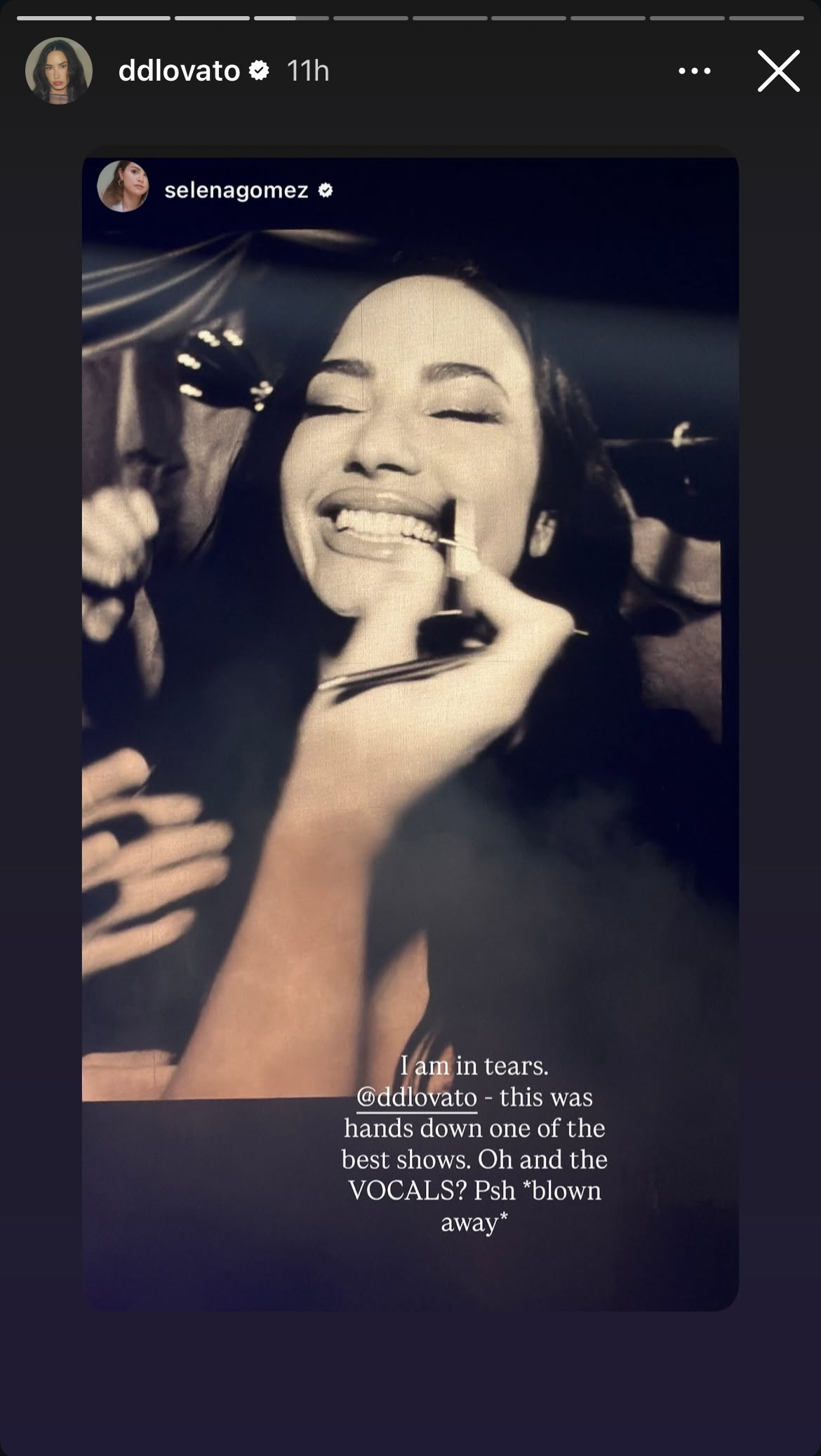
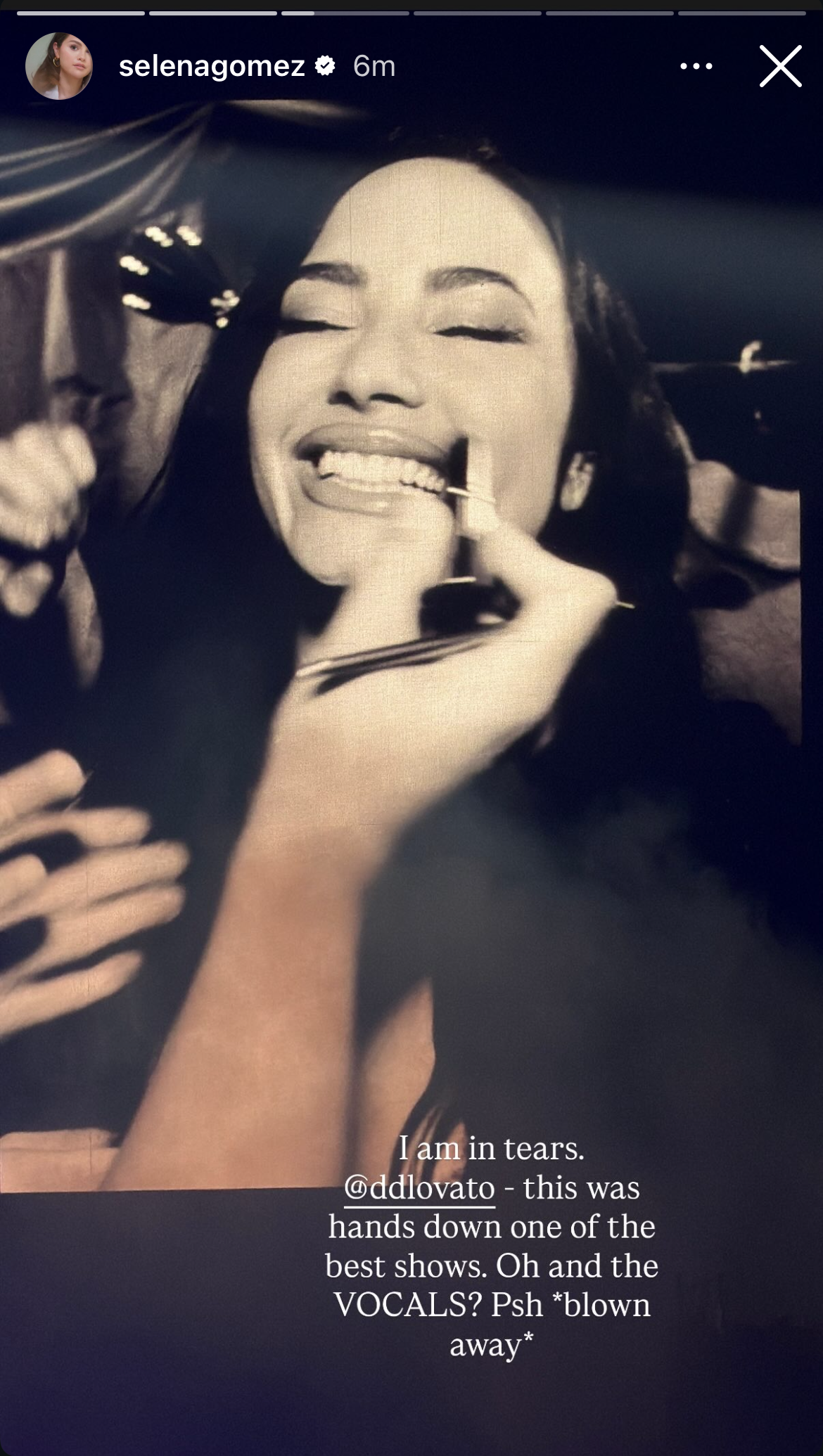
Selena Gomez walked into the Kia Forum in Los Angeles on April 4 for the opening night of Demi Lovato's It's Not That Deep tour. She posted about it. Lovato posted about it. Fans lost their minds. And for once, the story wasn't being told by tabloids parsing body language or inventing feuds—it was being told by the two women who lived it.
Gomez shared a photo on Instagram from the show with a caption that read simply: "So proud of you @ddlovato." Lovato responded in her own post, reflecting on their decades-long friendship: "Having you there meant the world to me. We've been through so much together, and I'm grateful we can still show up for each other." The mutual follows returned. The comments sections filled with nostalgia. And the Disney Channel generation—now in their thirties, many of them parents themselves—watched two of its most scrutinized stars reclaim a relationship the media had spent years treating as public property.
This wasn't a surprise reunion orchestrated by publicists or a calculated PR move timed to a project rollout. It was two friends showing up for each other in a way that required no explanation, no dramatic reconciliation narrative, no tabloid-friendly redemption arc. And that's exactly what made it significant. For the first time in their adult lives, Gomez and Lovato are controlling the terms of their own friendship story—and the fact that it looks this quiet, this normal, this unburdened by performance is the entire point.
The Disney Channel generation came of age under a level of scrutiny that prefigured the parasocial intensity of today's creator economy. Gomez and Lovato were child stars in an era when Us Weekly could still move the cultural conversation, when paparazzi photos were monetized at scale, and when every friendship, breakup, or rehab stint became a tabloid product. Their friendship—formed on the set of Barney & Friends when they were seven years old—was never allowed to be private. Every public appearance together was analyzed for signs of tension. Every period of distance was framed as a feud. Every attempt to set boundaries was read as shade.
The tabloid industry built an entire cottage economy around their relationship. Were they friends? Were they rivals? Was one jealous of the other's success? The questions were never really about Gomez and Lovato—they were about feeding a narrative machine that required conflict, drama, and the appearance of access. And because both women were navigating addiction, mental health crises, and the pressures of early fame in real time, the media had plenty of material to work with. Lovato's struggles with substance abuse were documented in real time. Gomez's lupus diagnosis, kidney transplant, and own mental health challenges were parsed for drama. And through it all, their friendship was treated as a subplot in someone else's story.
What's different now is that Gomez and Lovato are no longer participating in that framework. They're not explaining themselves. They're not offering timelines or justifications or carefully worded statements about "growing apart" or "finding their way back." They're just showing up—publicly, on their own terms, without the performance of reconciliation that celebrity culture has come to expect. Gomez went to the show. Lovato acknowledged it. They both posted about it. And that was enough.
This is the Disney Channel generation's endgame: taking back the narratives that were never theirs to control in the first place. Miley Cyrus spent 20 years running from Hannah Montana before realizing she could rewrite the story instead. Lovato has been open about rejecting the "role model" framework Disney imposed on her as a teenager. And Gomez has spent the last decade building a business empire—Rare Beauty, film production, a cooking show—that exists entirely outside the pop star persona she was groomed for. They've all learned the same lesson: the only way to win the game is to stop playing it.
The reunion also matters because of what it says about how celebrity friendships function now. In the creator economy, every relationship is content. Every dinner is an Instagram story. Every collaboration is a brand alignment. But Gomez and Lovato's dynamic predates that economy—it was formed in an era when child stars were still expected to maintain the illusion of normalcy, when friendships weren't yet monetizable assets. And because of that, their reunion reads differently. It's not a collab. It's not a campaign. It's just two people who grew up together, survived an industry designed to chew them up, and decided they still want to show up for each other.
That's the story the tabloids never wanted to tell: that sometimes friendships survive. That distance doesn't always mean drama. That two women can have complicated, evolving relationships without it being a referendum on their worth or their loyalty or their success. The media needed Gomez and Lovato to be rivals because rivalry is a better story than resilience. But resilience is what they're offering now—and it's the one narrative the tabloid machine was never built to handle.
The Disney Channel generation is in its thirties now. They're getting married, having kids, running companies, making art on their own terms. And the ones who survived the fame machine intact are the ones who figured out how to stop performing their lives for an audience that was never going to be satisfied. Gomez and Lovato showing up for each other—quietly, without fanfare, without needing to justify it—is what it looks like when that generation finally gets to write its own ending.