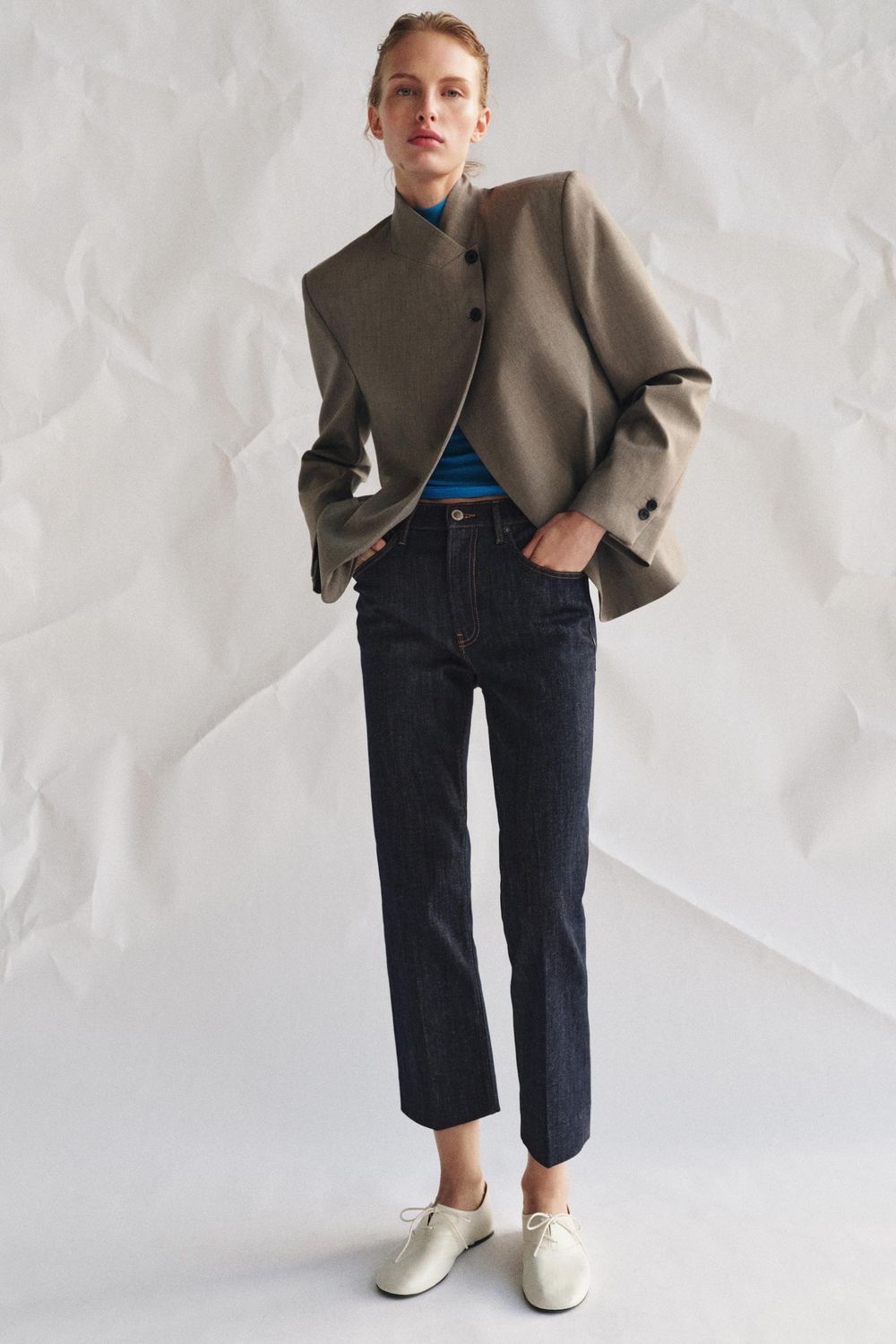
Serge Gainsbourg wore derby shoes with the same insouciance he brought to everything else: loose, unpolished, unbothered. The French singer-songwriter made them look like the natural endpoint of not trying too hard — a shoe that suggested intellectual credibility without the stiffness of an Oxford or the formality of a brogue. Decades later, Michael Rider's Celine has picked up that thread and woven it into women's fashion with enough force that Vogue is calling derby shoes the soft, supple alternative set to replace ballet flats this spring.
The shift is precise. Ballet flats have been the default feminine flat for the last decade — delicate, inoffensive, the shoe equivalent of not taking up space. They've been reissued, reimagined, and restocked by every brand from The Row to Repetto, but the cultural logic behind them has stayed the same: femininity as something small, quiet, and historically rooted in dance. Derby shoes offer a different proposition. They're lace-ups. They're structured. They come from menswear, and they don't apologize for it.
Michael Rider's Celine has been building this argument since he took over the house in 2024. His collections have consistently borrowed masculine codes — oversized blazers, wide trousers, boxy leather jackets — and placed them on women's bodies without softening the edges. The derby shoe is the logical footwear conclusion. It's not androgynous in the way fashion uses that term to mean "neutral." It's masculine, worn by women, and that distinction matters. Rider isn't blending gender codes — he's letting one overtake the other, and the market is responding.
The timing is strategic. Quiet luxury peaked, and its visual language — the ballet flat, the cashmere sweater, the minimalist loafer — became so ubiquitous it lost its signal value. The derby shoe offers a way out without abandoning the intellectual positioning that quiet luxury promised. It's still restrained. It's still expensive. But it's harder, more deliberate, and it carries a different set of references. Where ballet flats nod to Audrey Hepburn and mid-century European elegance, derby shoes reference Gainsbourg, Patti Smith, the kind of French intellectualism that came with cigarettes and paperbacks, not ballet studios.
What makes this shift culturally legible now is that women's fashion has spent the last five years testing how much traditionally masculine tailoring it can absorb before it stops reading as "borrowed from the boys" and starts reading as just fashion. The oversized blazer is no longer a statement piece — it's baseline. Wide-leg trousers are default workwear. The derby shoe is the next logical step, and Celine is leading the adoption curve. Other brands will follow, not because they're copying Celine, but because the visual logic Rider has been building is now strong enough to support a broader market shift.
The derby shoe also solves a practical problem ballet flats never could: structure. Ballet flats collapse. They wrinkle. They look elegant for about three wears and then they look tired. Derby shoes hold their shape. They're made from thicker leather, they have actual soles, and they don't require the same level of precious care. That's not incidental — it's part of the appeal. The shoe codes as intellectual and French, but it's also built to last, which makes it easier to justify the price point and easier to wear into the ground without looking like you're wearing something into the ground.
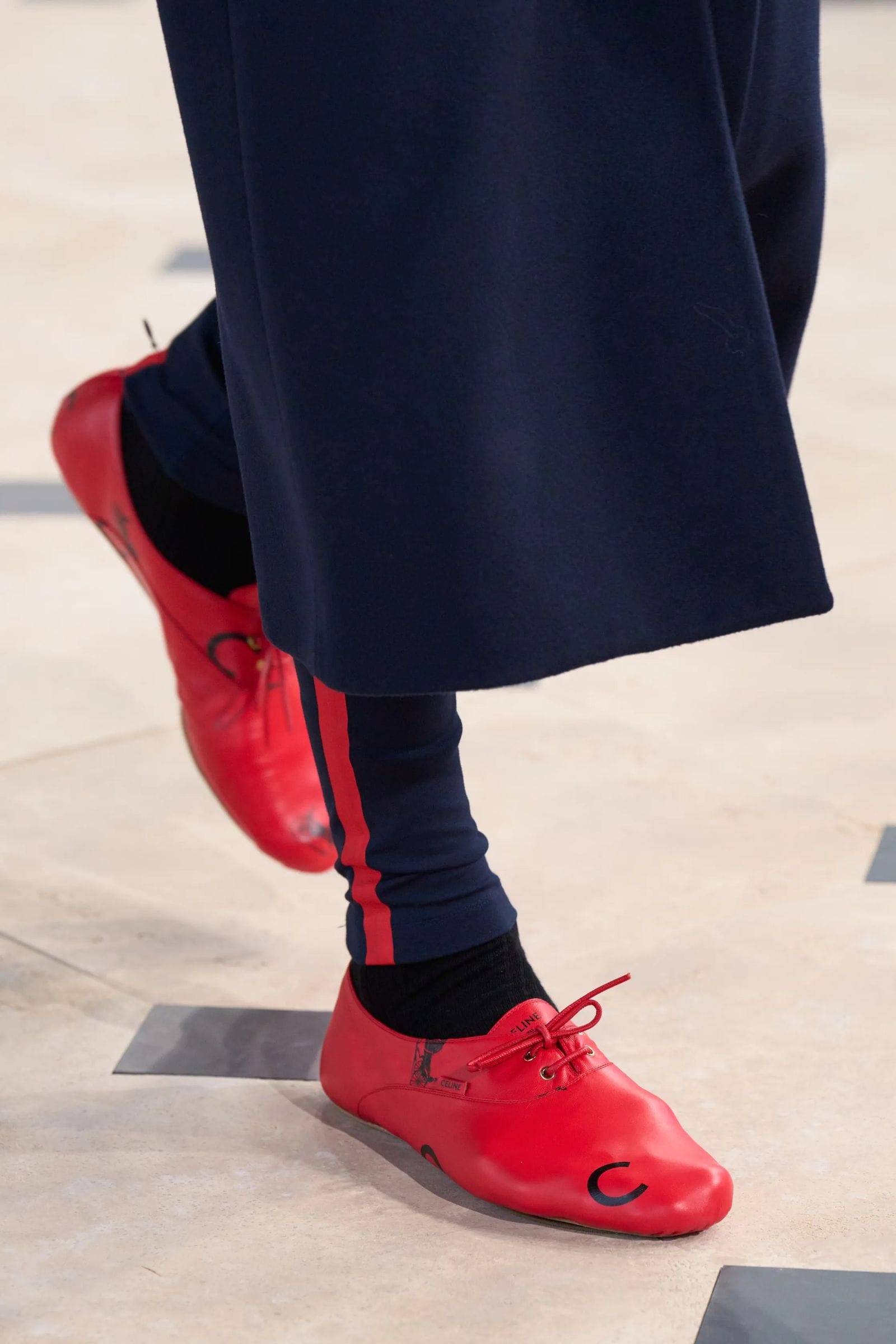
This isn't the first time menswear codes have migrated into women's fashion, but the speed and specificity of this shift is notable. Tokyo designers have been playing with masculine tailoring for years, but they've done it within a framework that still reads as experimental. Rider's Celine is making it commercial. The derby shoe isn't showing up in avant-garde editorials and niche boutiques — it's showing up in Vogue spring trend coverage, which means it's already crossed over into the kind of fashion advice that shapes what department stores stock and what stylists reach for.
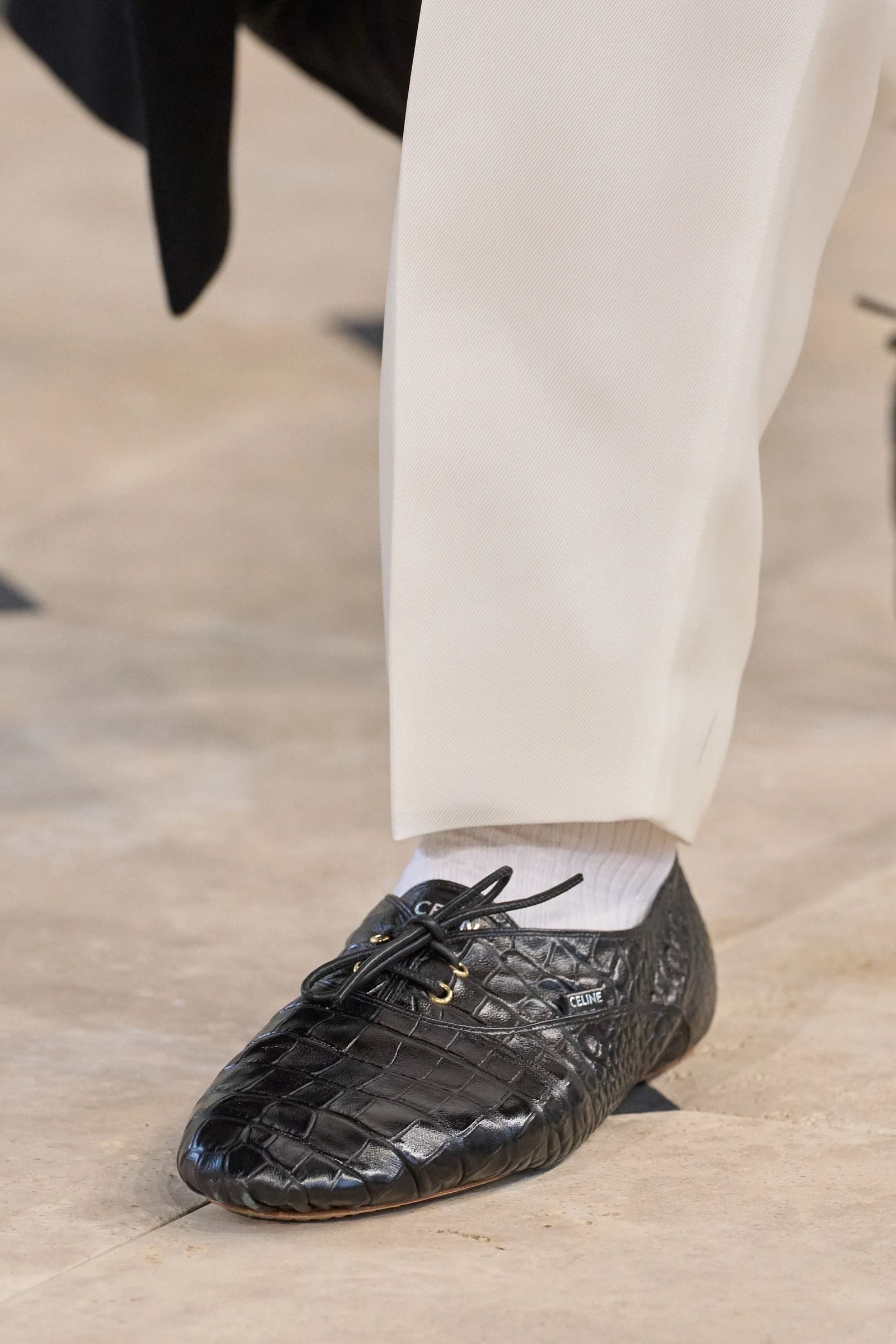
The ballet flat isn't dead — it's just no longer the default. And that's the real story. For a decade, the ballet flat was the unquestioned answer to "what's a chic flat that isn't a sneaker?" Now there's a second option, and it comes with a different set of cultural references, a different aesthetic lineage, and a different vision of what French style looks like on women. Michael Rider's Celine built that vision, and the market is catching up fast enough that by next fall, the derby shoe won't be a trend — it'll just be what people wear.