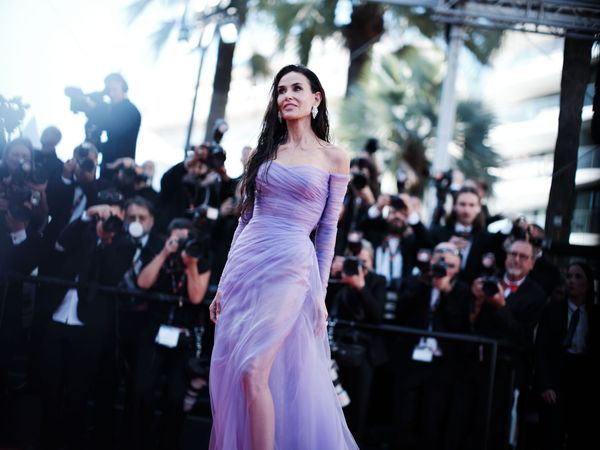
Sydney's Resort 2027 shows delivered street style that looked nothing like Paris, Milan, or New York — and that's exactly the point. Rachel Yabsley's photography for Vogue documented guests who layered creamy neutrals, fuzzy textures, and architectural silhouettes with the kind of ease that only comes from a fashion ecosystem building its own codes instead of borrowing someone else's.
The standout pieces weren't statement-making in the European sense — no maximalist prints, no logo plays, no obvious references to runway trends from the Northern Hemisphere's last fashion month. Instead: oversized blazers in oatmeal and stone, shearling coats worn over slip dresses, trousers with sculptural pleating that read as considered rather than showy. The palette stayed tight — cream, camel, charcoal, the occasional flash of rust or olive — but the layering was complex. A knit vest over a shirt over a turtleneck. A trench draped over shoulders like a cape. Textures doing the talking where logos used to.
This is what happens when a fashion week stops trying to prove it belongs in the global conversation and just starts having its own. Australian designers have spent the last decade building infrastructure — the same way Chinese designers did in Shanghai and Spanish designers are doing in Madrid — and the street style is the clearest evidence that the investment is paying off. The attendees aren't dressing for Instagram's algorithm or fashion editors in another hemisphere. They're dressing for each other, in clothes that make sense for their climate, their culture, their actual lives.
The architectural silhouettes feel particularly Sydney. Clean lines, structural integrity, nothing extraneous — the kind of design thinking that shows up in the city's modernist buildings and its approach to beachwear. A tailored coat isn't just sharp; it's engineered. A pair of trousers isn't just wide-leg; it's geometrically precise. This isn't minimalism for minimalism's sake. It's function meeting form in a way that reads as distinctly Australian rather than generically Scandinavian.
Layering in Sydney makes practical sense in a way it doesn't in Los Angeles or Miami. The city's climate shifts — cool mornings, warm afternoons, unpredictable spring weather — demand wardrobes that can adapt without looking like you're carrying backup outfits. The best-dressed guests at Resort 2027 treated layering as problem-solving, not styling. A chunky knit over a slip dress isn't a mood board composition; it's what you wear when the temperature drops fifteen degrees between breakfast and lunch.
What's striking about Yabsley's images is how unforced everything looks. No one's posing like they're auditioning for The Row's Instagram. No one's wearing five statement pieces at once hoping one will go viral. The most memorable looks are the ones that feel lived-in — a shearling coat that's clearly been worn for years, a pair of trousers hemmed to the exact right length, accessories that look chosen rather than curated. There's craft here, but it's quiet.

This is the visual language Australian fashion has been building while the rest of the industry was busy chasing the next viral moment. It's not loud. It's not desperate for validation. It doesn't need to be. The city's designers, stylists, and attendees have figured out what works for them — and the result is street style that looks like it has somewhere to be after the show, not like it exists solely to be photographed outside one.
Sydney's Resort 2027 street style won't dominate mood boards the way Paris does. It won't spawn a thousand knockoffs the way Milan's maximalism does. But it will keep building — season after season, collection after collection — until the rest of the industry realizes Australian fashion stopped waiting for permission years ago.
More from Tinsel Magazine