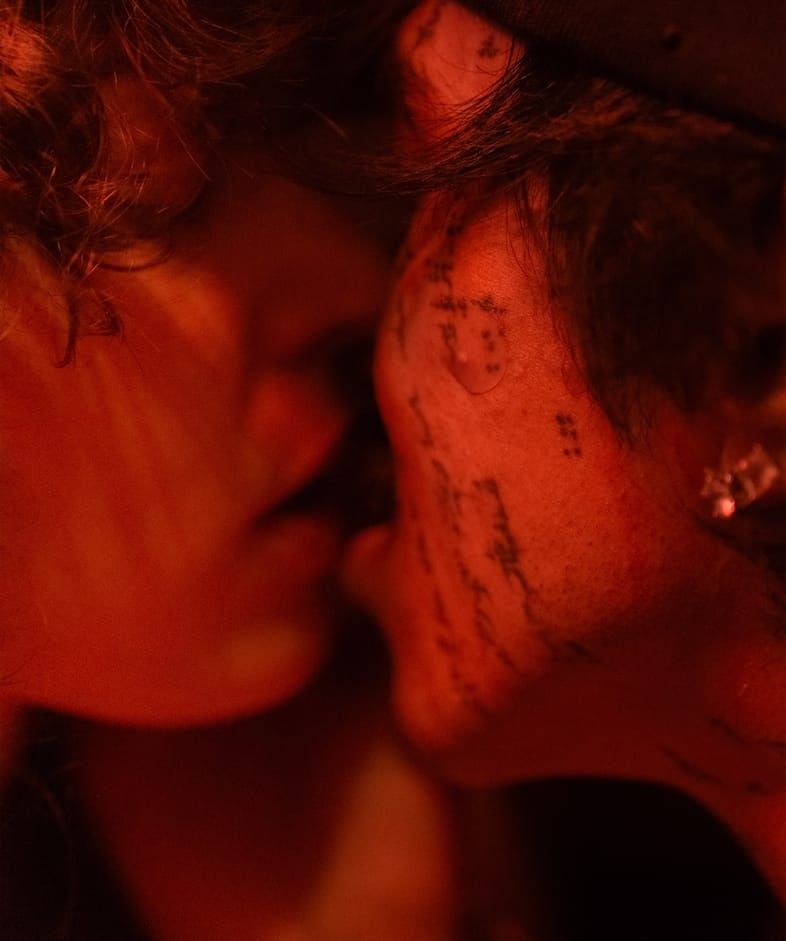
The political photograph and the intimate photograph used to be the same thing. For decades, queer visibility itself was an act of resistance—coming out on film was documentation and defiance in one frame. But Alexander Elkholm's new exhibition Exhalation, running at a London gallery through early spring, operates in a different register entirely. The images are sensual, private, tender. They show queer London at rest, not in resistance. And that shift—from protest as the primary mode of LGBTQ+ visual culture to intimacy as its own end—marks one of the most significant transformations in how queer life gets represented, and who that representation serves.
Elkholm's practice, as they told Dazed Digital, is shaped by an unlikely influence: ten years of childhood karate training. "It's a very controlled form of movement, and it's all about maximising potential: how fast can you kick, how balanced can you move?" That discipline—precision, restraint, economy of motion—translates directly into how Elkholm frames their subjects. There's no excess. No performance for the camera. The photographs in Exhalation feel like stolen moments, except they weren't stolen—they were offered.
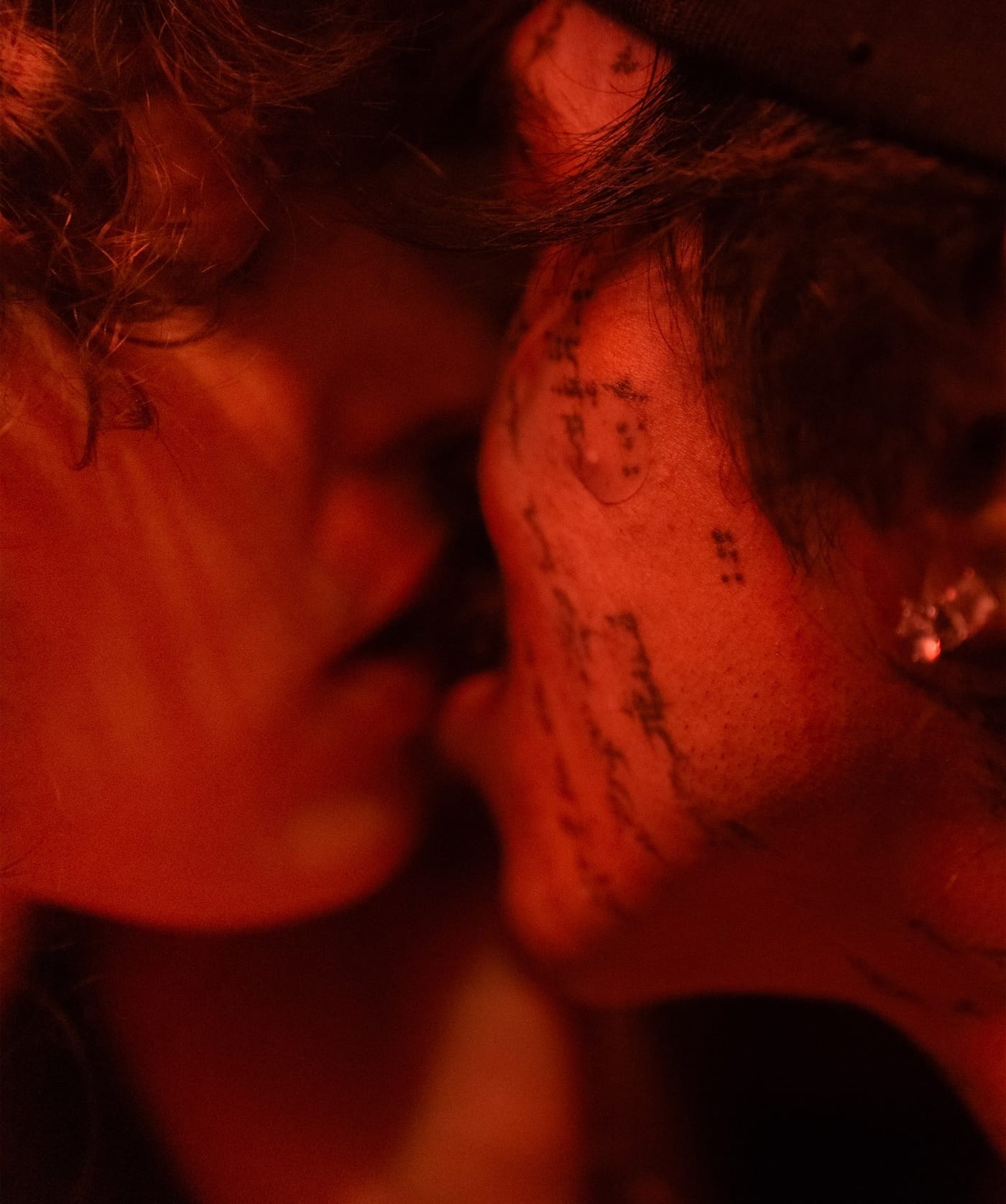
The subjects are lovers, friends, strangers in clubs, bodies in bedrooms. The compositions are tight, often cropped to isolate a hand on a hip, a face half-lit, skin against fabric. Elkholm shoots in natural light when possible, which gives the images a documentary weight even when the framing is highly controlled. The effect is intimate without being voyeuristic—a distinction that matters more now than it did even five years ago, as privacy has become the new luxury in a culture built on constant visibility.
What makes Exhalation culturally significant isn't just the quality of the images—it's what they're not doing. They're not making an argument. They're not asserting rights. They're not responding to a threat. They're simply documenting queer life as it is lived when no one is watching, or when the only people watching are the ones who already understand. That's a privilege, and it's one that earlier generations of queer photographers didn't have access to. Nan Goldin's The Ballad of Sexual Dependency was intimate, yes, but it was also survival documentation—proof that these lives existed in the face of a culture that wanted them erased. Elkholm's work doesn't carry that burden. It can afford to be quiet.
The shift from protest to privacy in queer visual culture tracks closely with broader changes in LGBTQ+ legal and social standing, particularly in urban centers like London. Marriage equality, anti-discrimination protections, and increased media representation have created space for queer artists to make work that isn't always in conversation with oppression. But that shift also complicates who gets to make quiet work, and whose intimacy gets elevated as art. Elkholm's subjects are young, urban, largely white, and economically secure enough to be photographed in private spaces that read as aspirational. The intimacy on display is a specific kind—one that depends on safety, access, and a degree of social capital.
This is where the cultural pattern lens gets complicated. Intimacy documentation as the dominant mode of queer visual culture is only possible because earlier artists fought to make visibility itself acceptable. But it also risks flattening the diversity of queer experience into a single aesthetic: soft, private, beautiful, palatable. The images in Exhalation are gorgeous, but they're also safe. They won't alienate a gallery audience. They won't challenge a collector. They won't make anyone uncomfortable who wasn't already uncomfortable with queerness in the first place. And that's both the point and the problem.
Elkholm's transition from karate to dance—"a similar, but more liberating, release," as they described it—is a useful metaphor for the shift in queer image-making. Dance allows for improvisation, emotion, messiness. But the photographs themselves retain the discipline of karate: controlled, precise, intentional. The tension between those two impulses—liberation and control—is what gives the work its texture. It's also what makes it legible to the art market, which has increasingly embraced queer artists as long as the work can be framed as universal rather than political.
The business strategy lens here is worth applying. Queer photography has become commercially viable in a way it wasn't even a decade ago. Galleries, museums, and collectors are actively seeking out LGBTQ+ artists, and the work that sells best tends to be the work that emphasizes beauty, intimacy, and humanity over anger, activism, or critique. That's not a moral judgment—it's a market reality. Elkholm's work fits neatly into that framework. It's museum-ready, auction-friendly, and unlikely to alienate institutional donors. The intimacy it documents is real, but it's also a product that the art world knows how to value and sell.
What gets lost in that transaction is harder to quantify. When intimacy becomes the primary mode of queer representation, what happens to the images that can't be made beautiful? The bodies that don't fit the aesthetic? The lives that are still precarious, still fighting, still angry? Exhalation doesn't claim to represent all of queer London—no single exhibition could—but its success, and the broader trend it represents, does shape what kinds of queer stories get institutional support and what kinds remain on the margins.
This isn't unique to queer photography. The same dynamic plays out across contemporary art's relationship to political subject matter: institutions want work that engages with social issues, but they prefer it packaged in a way that doesn't demand too much from the viewer. Intimacy is easier to consume than resistance. Privacy is more palatable than protest. And beauty, especially the kind Elkholm produces, is the safest bet of all.
The exhibition's title, Exhalation, suggests release—a letting go, a moment of rest. That's an apt description of the images themselves, and of the cultural moment they capture. Queer communities in cities like London have earned the right to exhale, to make work that isn't always bracing for the next fight. But exhalation is also temporary. It's the pause between breaths, not a permanent state. The real tension isn't whether queer artists should be allowed to make quiet, intimate work—of course they should. It's whether the art world's preference for that work over more confrontational modes reflects genuine progress or just a more sophisticated form of gatekeeping.
Elkholm's photographs are evidence that queer intimacy can be its own subject, its own justification, its own end. But they're also evidence that the market for queer art is still shaped by what makes straight audiences comfortable. The intimacy in Exhalation is real. The shift it represents is real. But so is the cost of making protest optional, and privacy the only story worth telling.