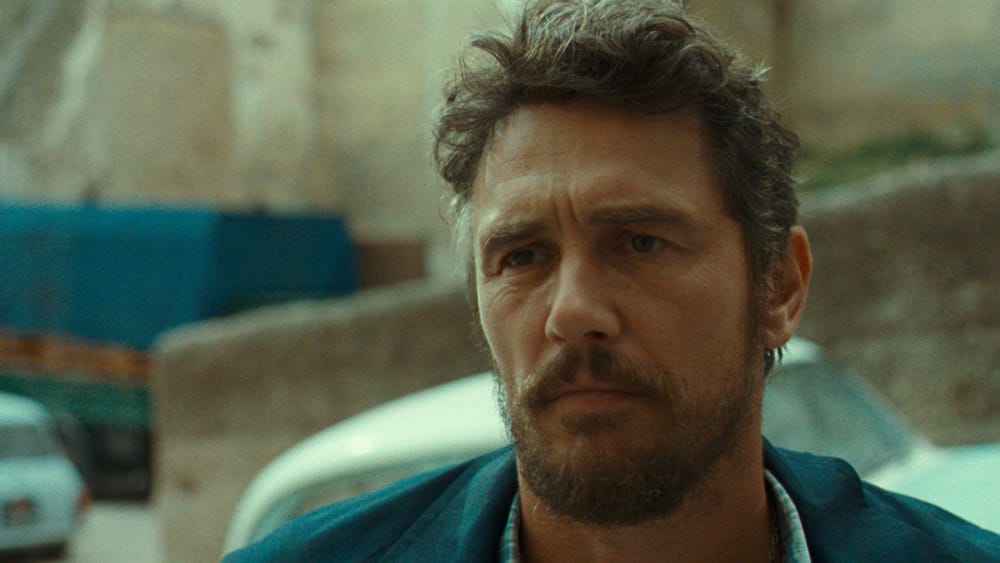
Studio Dome will release Hey Joe, an Italian WWII drama starring James Franco, in select U.S. theaters beginning March 20, according to Deadline. The Claudio Giovannesi-directed film — which follows an American veteran played by Franco — will launch with a special screening at LOOK Cinemas, followed by a Q&A with the actor. It's a modest rollout for a modest film, and that's precisely the point.
Franco isn't the first actor to rebuild through European arthouse projects, and he won't be the last. The pattern is now clear enough to call it a strategy: work with a respected international director, premiere at a festival, let the film exist in Europe for a year or two, then allow a small U.S. distributor to pick it up for a limited release. The actor never has to pitch themselves back to Hollywood directly — the film does the work. By the time Hey Joe reaches American audiences, it's already been validated by the international festival circuit and European critical reception. Studio Dome isn't taking a risk on Franco. It's licensing a product that's already been market-tested.
The genius of this roadmap is that it separates the actor's professional rehabilitation from the American media cycle that would otherwise dominate the narrative. Franco can do press in Italy, France, or wherever the film screens internationally without facing the same level of scrutiny he'd encounter on a U.S. junket. The work gets to exist as work — not as a referendum on his public image. By the time the film arrives stateside, the controversy has cooled, the performance has been reviewed by critics who don't care about TMZ, and the distribution deal is modest enough that it doesn't read as a major Hollywood forgiveness tour.
This is the same path other actors have quietly taken when American studios won't touch them but European filmmakers still will. Work abroad, stay out of the tabloid cycle, let the film build credibility on foreign soil, then allow a small distributor to bring it back home. It's not a comeback in the traditional sense — there's no apology tour, no Oprah sit-down, no carefully stage-managed return to the A-list. It's a slow reentry that relies on the legitimacy of international auteur cinema to provide cover.
Studio Dome's involvement is also telling. The distributor specializes in exactly this kind of acquisition: films that have already been made, already premiered, and already proven they have an audience somewhere. There's no development risk, no production financing, no liability if the project fails. The company is essentially licensing finished goods and testing whether there's a niche U.S. audience willing to show up. If Hey Joe performs decently on VOD, that's a win. If it doesn't, the investment was low enough that it doesn't matter.
The Q&A at LOOK Cinemas is the only moment where Franco will have to engage directly with an American audience, and even that's been carefully contained. It's a single screening in a specialty theater — not a press tour, not a red carpet, not a late-night talk show appearance. He'll talk about the craft, the director, the character, and then disappear back into whatever project comes next. The film will live on VOD, where it can find its audience quietly, without the spectacle of a wide release.
What's interesting is how sustainable this model has become. European filmmakers still operate in a system where casting decisions aren't entirely dictated by American tabloid culture, and festival programmers are more interested in the work than the actor's Wikipedia page. That gives actors a space to keep working when Hollywood won't have them — and it gives American distributors a way to acquire content that comes pre-validated by international critical reception. It's a version of the same logic that drives anime adaptations — bring in the original creator, and you've got built-in credibility that makes the project safer to touch.
The real test will be whether Franco can use Hey Joe as a stepping stone to bigger projects, or whether this becomes the ceiling — a steady stream of European indies that get small U.S. releases but never lead back to Hollywood proper. For now, the strategy is working exactly as designed. He's working, the work is being seen, and the distribution model allows him to rebuild without asking for permission from the industry that shut him out. Studio Dome didn't take a risk. It took a bet that had already been de-risked by everyone else.