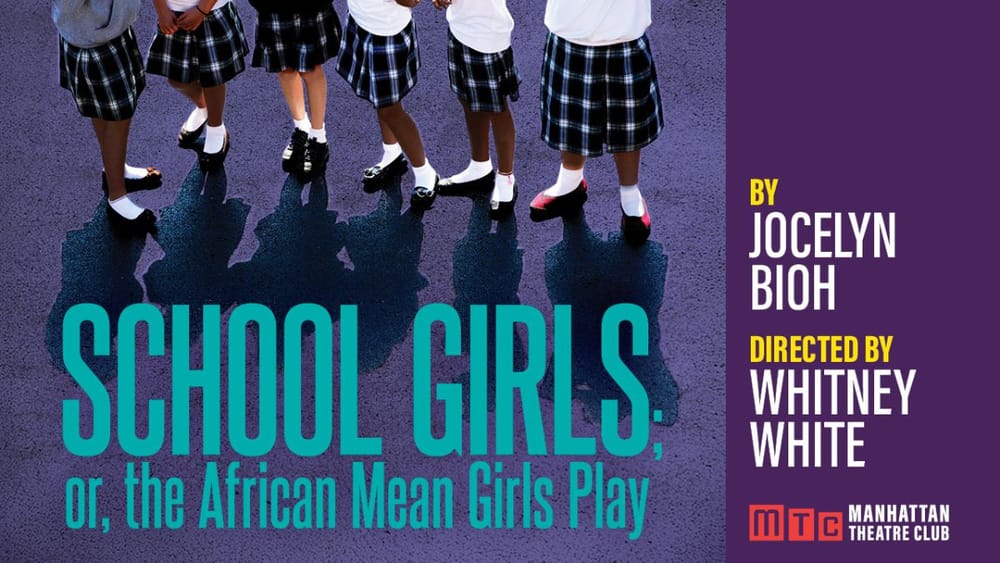
Jocelyn Bioh and Whitney White are returning to Broadway this September with School Girls; Or, The African Mean Girls Play, Manhattan Theatre Club announced. Performances begin September 8 at MTC's Samuel J. Friedman Theatre. The production reunites the Tony-nominated team behind Jaja's African Hair Braiding, which earned six nominations last season including Best Play and Best Direction. But where Jaja's told the story of Senegalese immigrants running a Harlem braiding salon, School Girls is set entirely in Ghana — at an elite all-girls boarding school in 1986, where a new student's arrival disrupts the social hierarchy ahead of the Miss Global Universe pageant.
The distinction matters more than it might seem. Jaja's African Hair Braiding succeeded on Broadway because it fit a narrative American theater already understood: the immigrant story, the diaspora experience, the dream deferred and pursued in a recognizable American context. Audiences could anchor themselves in Harlem. The characters spoke English inflected with accents that signaled "otherness" but within a framework that felt familiar. School Girls offers no such anchor. It's set on a different continent, in a specific historical moment, with characters whose concerns — social status, beauty standards, colonial legacy — exist entirely outside the American immigrant framework that has been Broadway's primary lens for African stories.
This is the test Bioh and White are walking into. Broadway has been willing to celebrate African stories when they're about coming to America or surviving in America. The industry has slowly learned that authenticity requires creator involvement and cultural specificity. But stories set in Africa, told on African terms, with no American character to serve as the audience's surrogate? Those have had a much harder time finding Broadway real estate. The commercial calculation has always been that American audiences need a point of entry, a recognizable emotional or geographical anchor. School Girls assumes its audience is sophisticated enough to meet the story where it is.
The play itself — which premiered off-Broadway at MCC Theater in 2017 and has since been produced regionally across the country — is sharp, funny, and structurally familiar in ways that should make it an easier Broadway sell. Bioh borrows the Mean Girls framework explicitly, which gives audiences a narrative shape they recognize even as the cultural context is entirely different. The "mean girls" here are Ghanaian teenagers navigating colorism, Western beauty standards, and the legacy of colonialism through the microcosm of a beauty pageant. It's a comedy with teeth, and it doesn't apologize for assuming you can keep up.
What makes this production particularly significant is that it's happening at Manhattan Theatre Club, a nonprofit with a subscription base and institutional support that can afford to take risks commercial producers won't. MTC has the infrastructure to develop work that might not survive the harsher economics of a purely commercial run. That's both a good thing — it means the play is getting a Broadway platform — and a telling thing. The fact that School Girls needed MTC rather than a commercial producer suggests the industry still sees African stories set in Africa as too risky for the open market.
The timing is also worth noting. Jaja's African Hair Braiding didn't win any of its six Tony nominations, but it was critically celebrated and commercially successful enough to prove Bioh and White could deliver. That track record should theoretically make School Girls an easier sell. But the question remains whether Broadway audiences — and more importantly, Broadway investors — are ready to support African narratives that don't offer the comfort of the American setting. The industry's awards infrastructure loves to celebrate diversity in theory, but the commercial machinery still operates on risk aversion.
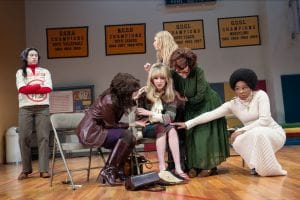
If School Girls succeeds, it won't just be a win for Bioh and White — it will be a signal that Broadway's appetite for African stories extends beyond the diaspora narrative. It will mean that American theater audiences are willing to engage with work that doesn't center their experience, that doesn't translate itself into familiar terms, that trusts them to do the work of meeting the story on its own ground. That's a bigger shift than it sounds like, and it's one that has implications far beyond this single production.
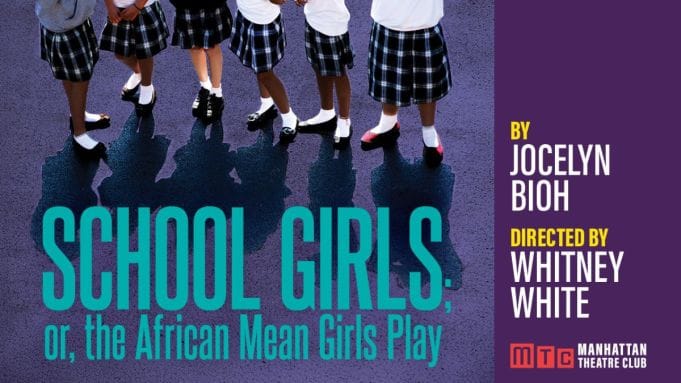
The alternative is that School Girls gets celebrated critically, earns a few Tony nominations, and quietly closes after a respectable but not blockbuster run — reinforcing the industry's belief that African stories only work on Broadway when they're about America. That would be the more familiar outcome, and the one that keeps the gates exactly where they are. September will tell us which way this goes.