Lily Allen brought West End Girl to the West End on Friday night — literally. The London-born singer-songwriter closed the tour for her latest album at a venue blocks from where she grew up, performing songs that Variety described as "no-holds-barred songwriting purportedly about her divorce from 'Stranger Things' star David Harbour." The show wasn't built on pyrotechnics or choreography. It was built on emotional catharsis — and the audience paid for the intimacy.
Allen's West End Girl tour represents a shift in how pop stars are structuring live experiences. Instead of spectacle, she offered theater. Instead of distance, she offered proximity to her anger, her grief, and her receipts. The album's songwriting doesn't just reference her divorce — it names it, dissects it, and performs it with the kind of specificity that makes audiences feel like they're witnessing something private. That's the entire appeal. The concert didn't obscure that dynamic. It amplified it.
This is the same strategy driving Miley Cyrus's recent reclamation of her Hannah Montana narrative — turning personal history into public performance, but on the artist's terms. Allen's show functions as a controlled detonation of her public persona. She's not hiding behind metaphor or production value. She's using the stage as a space to process in real time, and the audience is there to witness it. That's not a concert. That's a ritual.
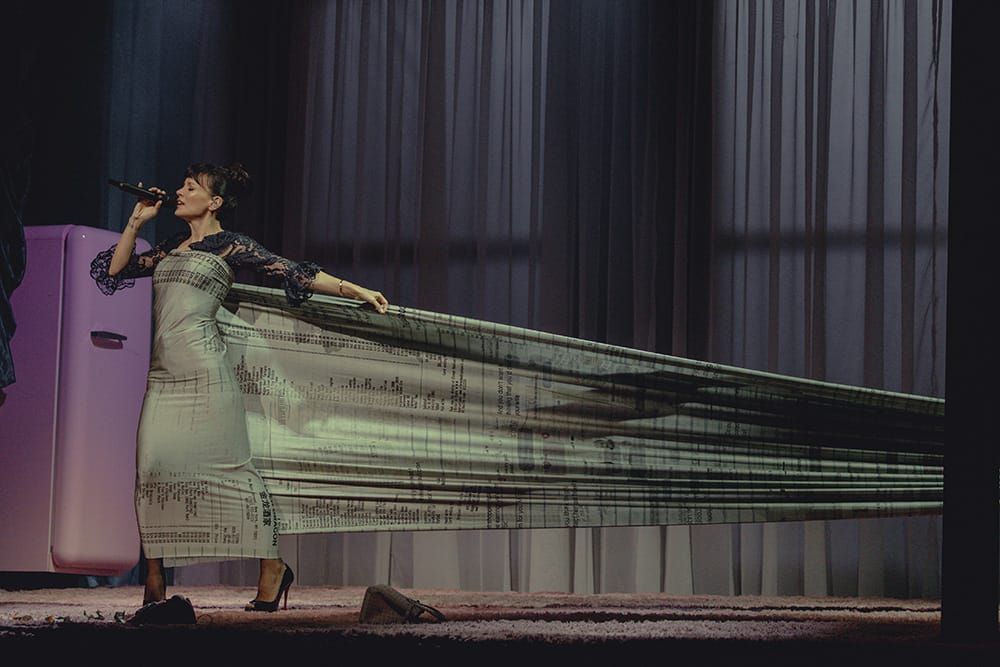
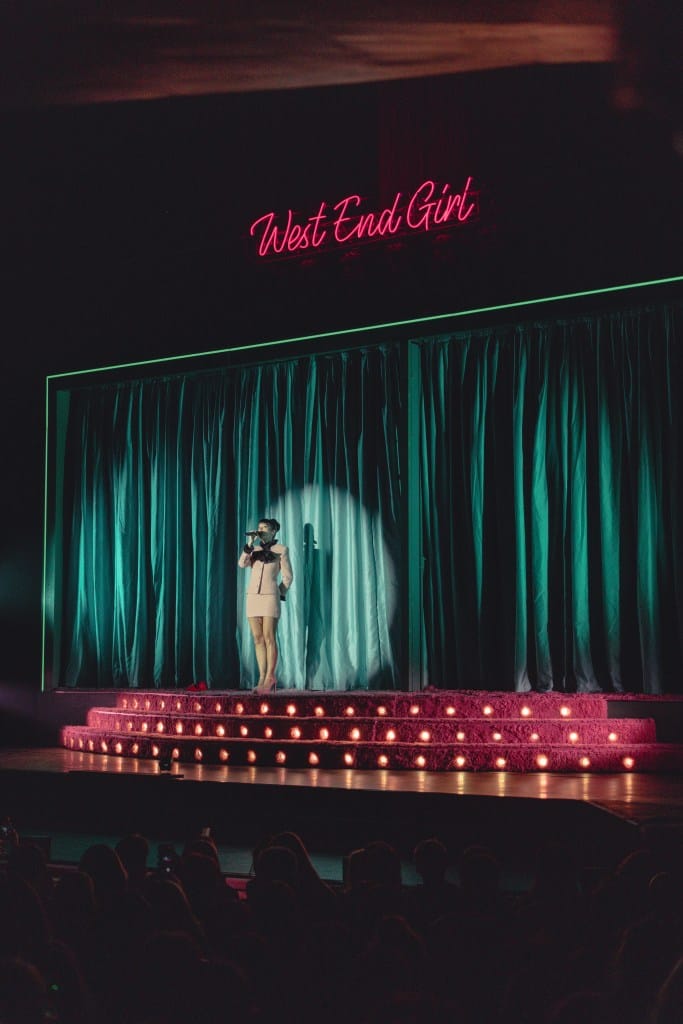
The theatrical framing matters. Allen didn't just perform songs — she structured the show as a narrative arc, complete with set design that reportedly included visual references to the album's themes of domesticity, betrayal, and self-reconstruction. The production leaned into the idea that the concert was an event with a beginning, middle, and end — not just a setlist. That's a bet that audiences value emotional coherence over sonic variety.
It's working. The West End Girl tour sold out across multiple cities, and the London show became a full-circle moment for Allen's career. But the commercial success isn't just about nostalgia or star power. It's about the product itself. Allen is selling access to her interior life, packaged as entertainment. That's a different value proposition than what most pop tours offer. It's closer to what theater offers — the promise that you'll leave changed, not just entertained.
This model is spreading. Radiohead's 20-show-per-year plan operates on a similar principle: fewer shows, higher emotional stakes, more deliberate curation. Legacy acts are realizing that spectacle has diminishing returns. Audiences are willing to pay more for intimacy, for the sense that they're seeing something unrepeatable. Allen's show delivers that by design. The songs are about real people, real events, real consequences. The performance doesn't soften that. It leans in.
The risk is that this strategy only works if the artist is willing to be genuinely vulnerable — or at least perform vulnerability convincingly. Allen has spent her career oscillating between those two modes, and West End Girl doesn't clarify which one she's operating in now. That ambiguity is part of the appeal. The audience doesn't know if they're watching confession or performance art, and that uncertainty keeps them engaged.
What's clear is that the concert economy is bifurcating. On one end, you have stadium tours built on scale and spectacle. On the other, you have theatrical experiences built on intimacy and emotional catharsis. Allen's West End Girl show is a case study for the latter. It's not trying to compete with arena productions. It's offering something those productions can't — the feeling that you're watching someone work through something real, in real time, with receipts. That's a product audiences are willing to pay for, and more artists are going to start building tours around it.