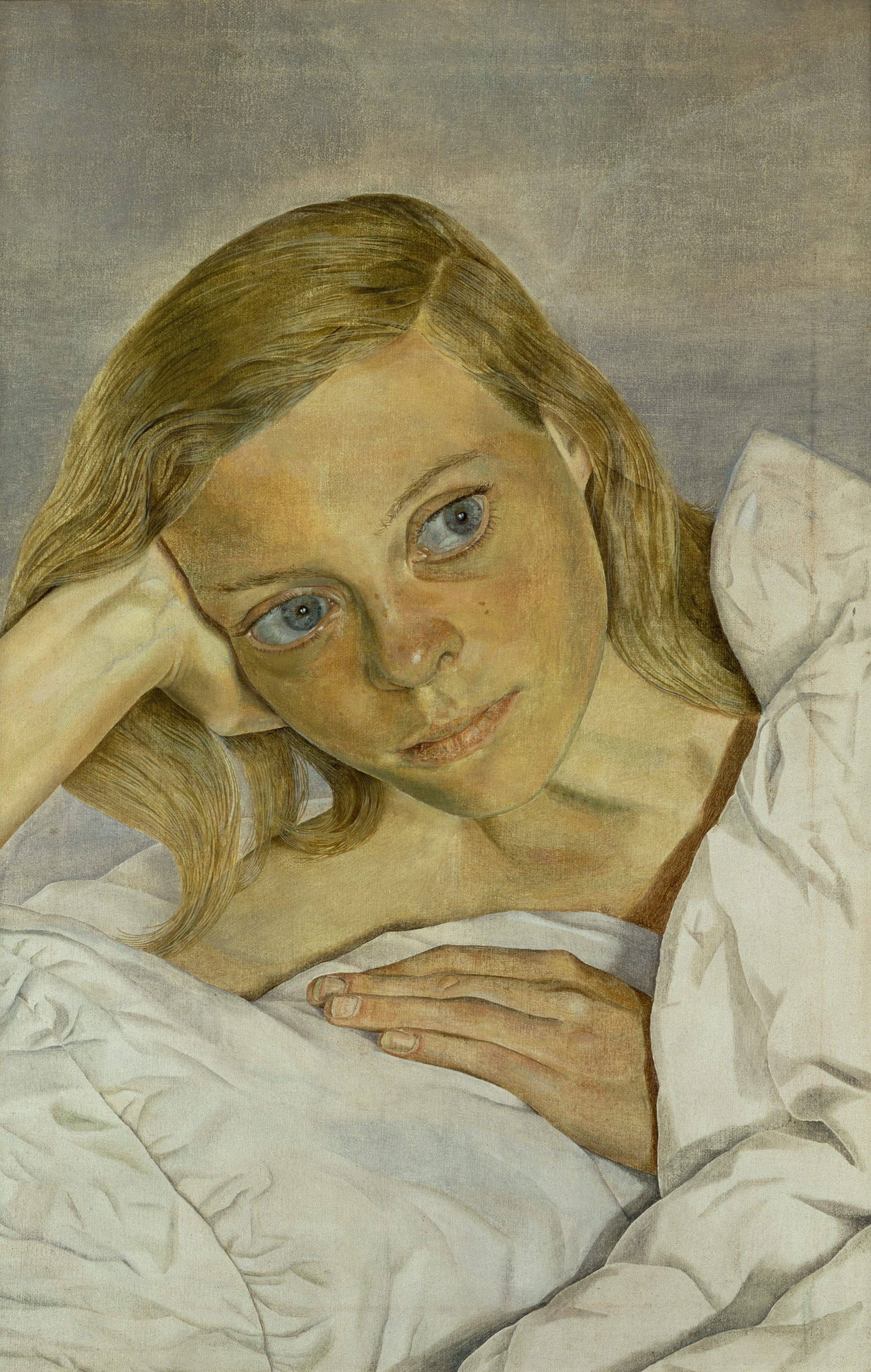
The National Portrait Gallery's new Lucian Freud exhibition opens with a problem most portraiture tries to solve: what do you do when your subject doesn't want to be seen? Freud's answer, according to Hyperallergic, was to paint that resistance itself—the way people look when they're painfully adrift from their own bodies, their own faces, their own sense of who they're supposed to be.
Where most portrait painters flatter or at least stabilize their subjects, Freud destabilized them. His sitters look caught—not in the act of posing, but in the act of being themselves when they'd rather not be. The exhibition's framing around "lostness" is precise: these aren't people who don't know who they are. They're people who know exactly who they are and can't reconcile it with the person staring back from the mirror.
That's a different project than most figurative painting, which tends to treat the body as a site of revelation or beauty or at least coherence. Freud treated it as a site of discomfort. His nudes don't celebrate flesh—they interrogate it. His clothed portraits don't dignify—they expose. The technical skill is undeniable, but the skill is in service of something more unsettling: the gap between how we present ourselves and how we actually feel inside our own skin.
The art market has always known what to do with Freud. His work sells for tens of millions at auction. Major institutions collect him. But the cultural conversation around his work has been slower to catch up to what he was actually doing. For years, the discourse centered on his technique—the thickness of the paint, the hours of sitting time he demanded, the almost forensic attention to skin texture. That framing made him legible as a traditionalist, a figurative painter swimming against the tide of abstraction and conceptualism.
But this exhibition reframes him as something more contemporary: a painter of psychological dislocation. That's a lens that makes more sense now than it did when he was alive. Alienation isn't subtext anymore—it's the dominant emotional register of how people experience their own identities. Social media has made self-presentation a full-time job. The performance of coherence is exhausting. Freud's portraits, which show people failing at that performance, feel more relevant in 2026 than they did in 1986.
The National Portrait Gallery's decision to center an exhibition around this reading is smart institutional positioning. Figurative painting has been having a commercial moment for years, but the critical conversation has struggled to articulate why it matters beyond nostalgia for pre-digital modes of looking. Freud offers a way out of that trap: his work isn't about returning to the body as a site of truth, but about recognizing the body as a site of irreconcilable tension. That's a framework that works for a generation that grew up with filters and FaceTune and the constant, exhausting gap between how you look and how you feel.
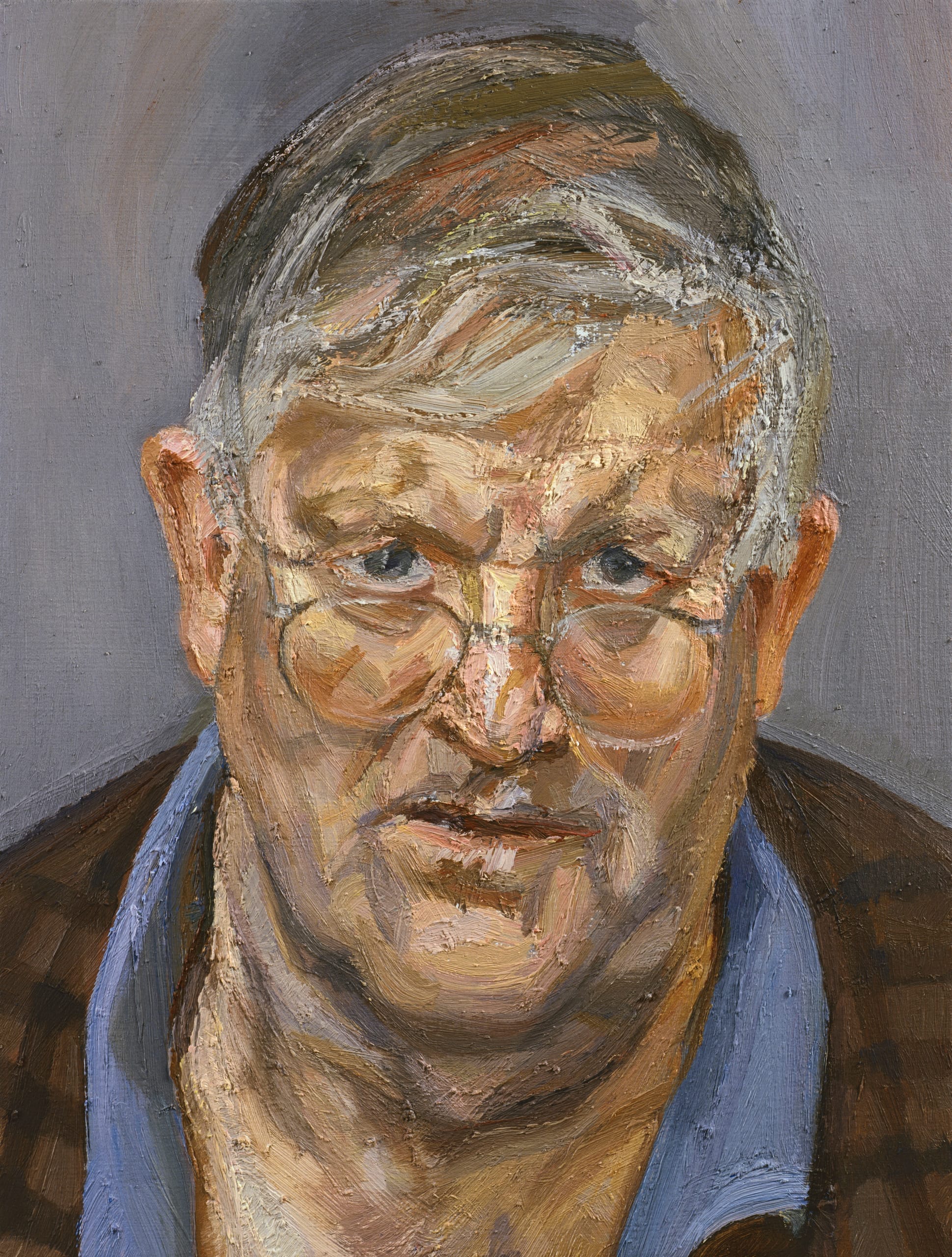
It's also a framework that makes Freud's cruelty—and he was cruel, both as a painter and as a person—feel less like a personal failing and more like an artistic strategy. If the point is to paint people at their most uncomfortable, then making them uncomfortable becomes part of the method. The long sitting times, the unflattering angles, the refusal to idealize—it's all in service of capturing something most portrait painters smooth over. Whether that justifies the cruelty is a different question, but it at least makes the cruelty legible as something other than sadism.
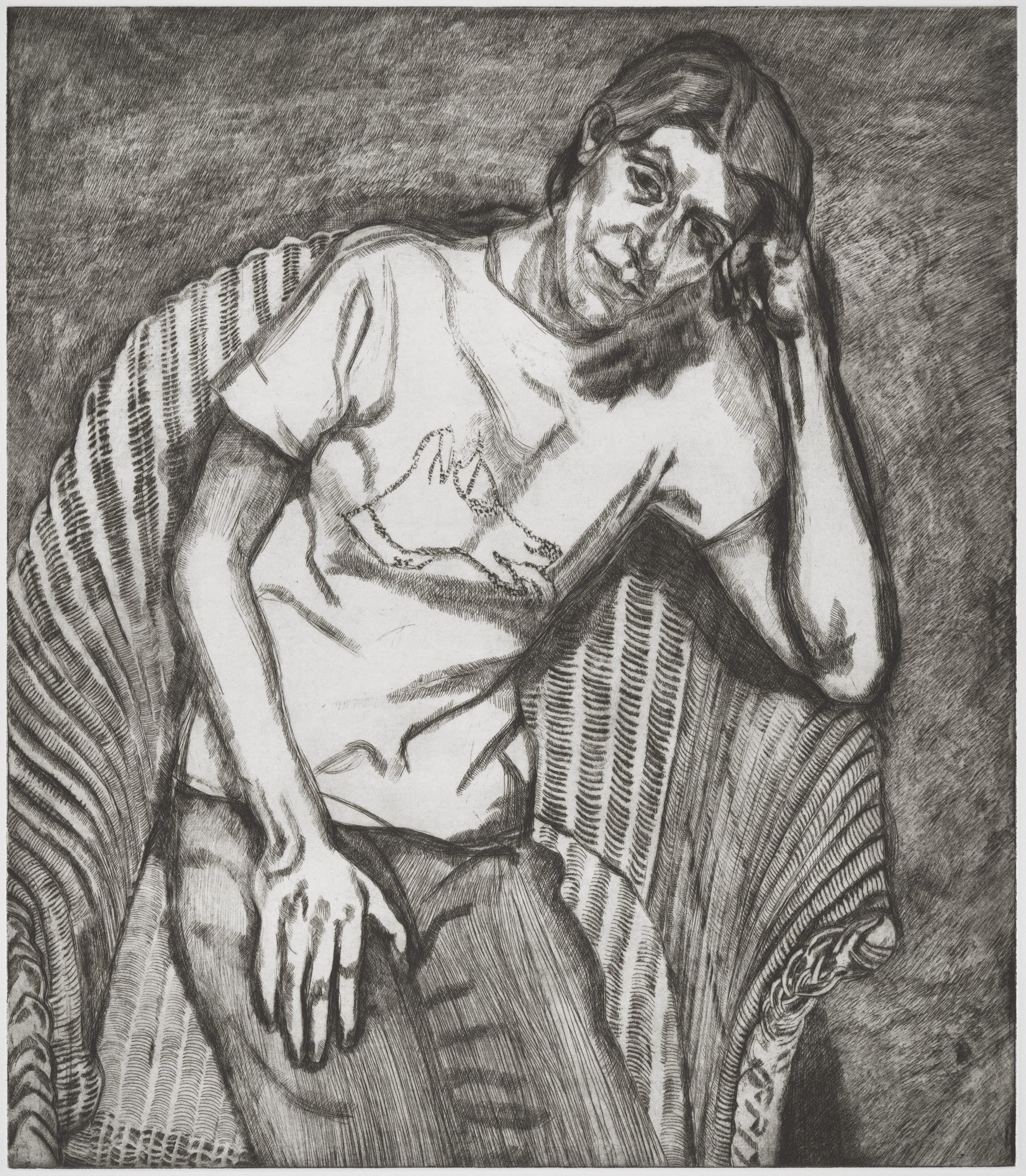
The risk for institutions showing Freud now is that his work can feel like permission to treat discomfort as depth. Not every painting of someone looking miserable is a painting about alienation—sometimes it's just a painting of someone looking miserable. But Freud earned the distinction. His technical rigor, his willingness to sit with ugliness without resolving it into beauty, and his refusal to let his sitters off the hook made him one of the few figurative painters who could paint lostness without romanticizing it. That's harder than it looks, and rarer than the market's appetite for figurative work would suggest.