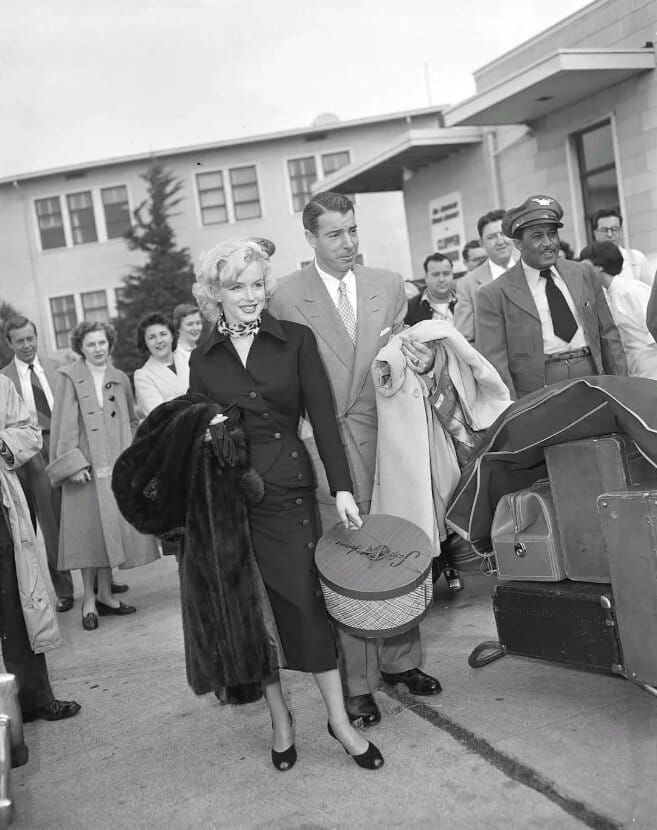
Heritage Auctions is releasing a collection of Marilyn Monroe's personal artifacts to the highest bidders this June, timed to what would have been the Hollywood icon's 100th birthday. The trove includes handwritten letters, photographs, clothing, artwork, and accessories—items that belonged to Monroe but were never meant to belong to the public. According to Variety, this marks the first time many of these pieces will be available for purchase.
The auction includes poetry Monroe wrote by hand. Not typed scripts or public statements—her private thoughts, in her own handwriting, now priced and cataloged for collectors. The intimacy she guarded so fiercely in life is the commodity being sold a century after her birth. Monroe spent her career performing vulnerability while protecting the actual person beneath the image. The auction flips that equation: the performance is free on YouTube, but the real Marilyn costs whatever someone is willing to bid.
Monroe's image has been monetized relentlessly since her death in 1962—licensing deals, biopics, museum exhibitions, red carpet heritage dressing that treats her archive like a brand catalog. But auctioning her handwritten poetry crosses a line that even Hollywood's most aggressive IP managers usually respect. It's not just selling the legend—it's selling the evidence that there was a person underneath it. The market for Monroe memorabilia has always been strong, but this auction makes explicit what was always implicit: her privacy is worth more dead than it ever was alive.
The timing is deliberate. A centennial is a cultural milestone, and Heritage Auctions knows how to capitalize on nostalgia. But Monroe's centennial is also a reminder of how little control she had over her own story. She died at 36, and the estate that manages her likeness has spent 64 years extracting value from her image. The auction is just the latest iteration of that extraction—only now, it's the private Marilyn being sold, not the public one.
Monroe's handwritten notes and letters are the kind of artifacts that belong in archives, not auction houses. They're historical documents, not collectibles. But the Monroe estate has always treated her legacy as a business, and businesses maximize revenue. The auction includes clothing and accessories too—items that could have gone to a museum, where context and curation might have preserved their meaning. Instead, they'll go to the highest bidder, who will own them the way you own a stock certificate: as an asset that appreciates.
The market for celebrity memorabilia has always been uncomfortable, but Monroe's case is extreme. She was Hollywood's most commodified star while she was alive, and that commodification has only intensified since her death. The business of fame used to stop at the grave. Now it just shifts strategies. Monroe's image is public domain in most contexts, but her personal writings are still private property—until they're not. The auction turns privacy into inventory.
What makes this auction particularly bleak is that Monroe spent her life trying to be taken seriously as an artist and intellectual, not just a sex symbol. She studied at the Actors Studio. She read Dostoevsky. She married Arthur Miller and tried to build a life that wasn't just performance. Her handwritten poetry was part of that private self—the person she was when she wasn't being Marilyn Monroe. Now that private self is being sold to collectors who will own it the way they own a Warhol print or a vintage Chanel bag.
The auction will likely be successful. Monroe memorabilia always is. But success in this case just means that the commodification continues, that the most famous woman in Hollywood history is still being monetized a century after her birth. The auction doesn't honor Monroe's legacy—it just proves that the machinery that turned her into a product is still running, still efficient, still profitable. And the most valuable thing left to sell is the part of her she tried hardest to keep private.
More from Tinsel Magazine