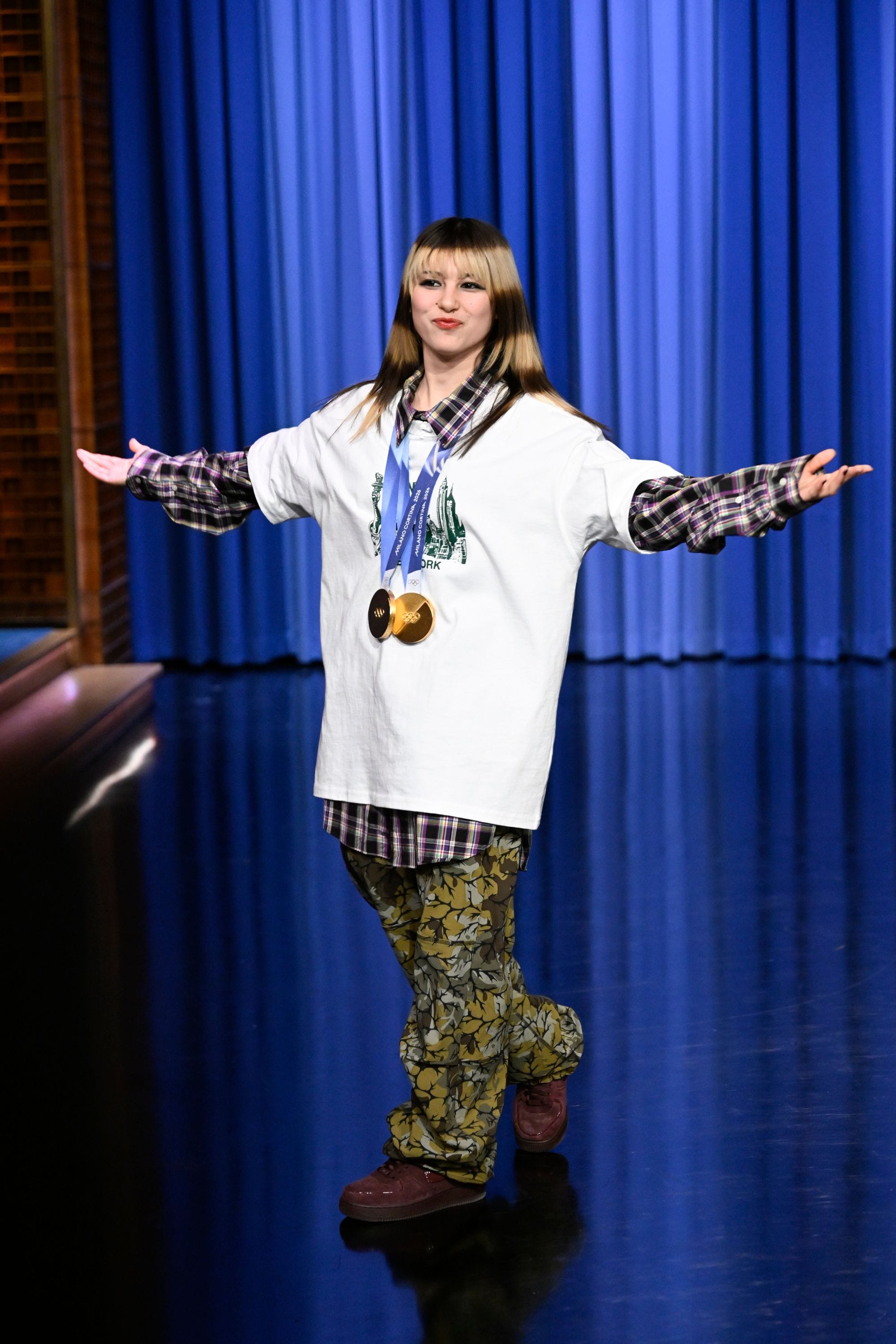
Miyako Bellizzi, the costume designer behind Uncut Gems and the Oscar-nominated Marty Supreme, is now styling Olympic figure skater Alysa Liu. According to GQ, Bellizzi—who calls Liu her "lil town sis"—is dressing the gold medalist in Jacquemus Nikes and camo for her post-Olympics press appearances, effectively translating the gritty, texture-heavy aesthetic she's honed with the Safdie Brothers into a sports context.
It's an unexpected pairing, but it tracks. Bellizzi's work with the Safdies has always been about specificity—layered, lived-in looks that signal character without costume-y theatrics. That sensibility doesn't typically show up in athlete styling, which tends toward sleek activewear partnerships and red-carpet safe bets. But Liu, who's navigating the transition from competitive skating to whatever comes next, gets something more interesting: a wardrobe that reads as cool without trying too hard, the kind of thing that could just as easily belong to a Lower East Side regular as an Olympic champion.
The broader signal here is about how athletes are thinking about image-building in a post-monoculture media environment. Liu isn't going the traditional endorsement route—she's borrowing from indie film's visual vocabulary, the same way legacy fashion brands have started courting younger audiences by leaning into subculture credibility rather than aspirational polish. Bellizzi's involvement suggests Liu understands that the most compelling athlete personas right now aren't the ones that look like athletes. They're the ones that look like people with taste who happen to compete at the highest level.
What makes this collaboration particularly sharp is the timing. Liu retired from competitive skating at 16—an age when most athletes are still being packaged by agents and brand managers into whatever demographic research says will sell. Instead, she's building an identity that feels more aligned with how Gen Z actually consumes culture: through aesthetic codes borrowed from film, music, and streetwear rather than traditional sports heroism. The Safdie Brothers' visual language—chaotic, textured, deeply specific to place and class—translates surprisingly well to that project. It's anti-aspirational in a way that reads as more authentic than the usual Olympic champion glow-up.
Bellizzi's approach to costuming has always been about making characters feel like they exist in a real economic context. Howard Ratner's wardrobe in Uncut Gems wasn't just "Diamond District guy"—it was a specific kind of Diamond District guy, with specific taste, specific insecurities, specific ideas about what looking successful meant. That level of attention doesn't usually get applied to athlete styling, where the goal is often to sand down specificity in favor of broad appeal. But Liu's post-competitive career doesn't require broad appeal. It requires a point of view.
The move also positions Bellizzi as part of a broader shift in how costume designers are being utilized outside traditional film contexts. As the lines between entertainment sectors continue to blur, the logic of hiring someone who dressed Sandler and Pattinson to style a skater's press tour makes perfect sense. Everyone's building a character now. Bellizzi just knows how to make it look effortless.
There's also a business angle here that's worth noting. Costume designers rarely become household names, even when their work defines a director's visual signature. But Bellizzi's move into athlete styling suggests she's building a practice that extends beyond film production cycles—a model that looks more like what celebrity stylists have been doing for years, but with the credibility and specificity that comes from working with auteur directors. If Liu's image-building pays off, Bellizzi becomes the go-to for athletes who want to look like they have taste rather than just endorsement deals.
The comparison point here is how musicians have been working with fashion designers for decades—not just wearing their clothes, but collaborating on visual identity in ways that blur the line between costume and personal style. Athletes are late to that game, largely because the sports industrial complex has been slower to recognize that image-building is now a core part of the product. But as athletes gain more control over their own brands and media presence, the ones who figure out how to borrow credibility from adjacent creative industries will have an edge.
Liu's choice to work with Bellizzi rather than a traditional stylist or activewear partnership signals she understands that. It's the same calculation that drives which celebrities sit front row at Paris Fashion Week—not just about being seen, but about being seen in the right context, with the right visual codes, signaling the right kind of cultural literacy. For an athlete transitioning out of competition, that kind of positioning matters more than another Nike campaign.
What remains to be seen is whether this approach scales beyond Liu. If Bellizzi starts dressing more athletes, it becomes a trend. If it stays singular, it's just a smart move by one skater who happened to have good taste. Either way, it's a reminder that the most interesting cultural shifts often happen at the intersections—when someone from one world borrows the language of another and makes it look like it was always supposed to work that way.