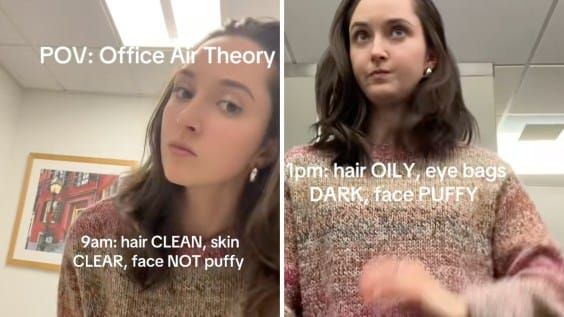
A search for "office air" on TikTok returns thousands of videos documenting the same phenomenon: people filming themselves before and after work, cataloging the visible toll of eight hours at a desk. Dark circles. Dull skin. Puffy faces. The diagnosis is unanimous — it's the air. Recycled, fluorescent-lit, HVAC-pumped office air that's apparently making an entire generation of desk workers physically uglier.
The meme has all the ingredients of good internet culture: a specific villain (air quality), a relatable complaint (looking worse after work), and just enough pseudoscience to make it feel legitimate. The Daily Dot rounded up dermatologists who confirmed that yes, poor ventilation and dry air can affect your skin. Yes, fluorescent lighting is unflattering. Yes, sitting still for hours impacts circulation. The "office air glow-down" is real in the sense that all of those things are real.
But calling it an "air quality" problem is like diagnosing a broken leg as a shoe-fit issue. The air isn't the problem. The problem is that desk jobs are structurally designed to make people physically miserable, and blaming the HVAC system is a convenient way to avoid naming what's actually happening: eight hours of sedentary labor under artificial light in spaces optimized for productivity, not human comfort.
The office air discourse is processing something genuine — the visible, physical toll of modern work — but it's directing that frustration at the most depoliticized target possible. Air quality is a maintenance issue. It's something facilities can theoretically fix with better filters or more plants or whatever wellness consultants are selling this quarter. It doesn't implicate anyone. It doesn't require structural change. It's just bad air.
What it actually is: a workforce that sits motionless for the majority of their waking hours, eats lunch at their desks because break culture has been pathologized as inefficiency, stares at screens that strain their eyes and disrupt their circadian rhythms, and then goes home too exhausted to do anything that might counteract the damage. The "glow-down" isn't a ventilation problem. It's what happens when your body is treated like an accessory to a laptop.
This isn't the first time internet culture has turned a labor complaint into a wellness issue. The same thing happened with "burnout," which started as a term for the systemic exhaustion caused by overwork and quickly became a personal failing you could fix with self-care. It happened with "Zoom fatigue," which was less about video call technology and more about the fact that remote work erased the boundaries between professional and personal time. And it's happening now with office air, which has become a catch-all for the physical consequences of jobs that were never designed with human biology in mind.

The meme's popularity makes sense. It's easier to say "the air is bad" than to say "my job is making me sick and I can't afford to quit." The former is a complaint. The latter is a structural critique that implicates your employer, your industry, and the economic conditions that make leaving feel impossible. Blaming air quality is a way to name the problem without threatening your paycheck.
But the discourse also flattens something important: not all office jobs are created equal, and not all workers have the same access to the language or the leverage to push back. The people making "office air" videos are largely white-collar workers with the time and platform to document their discomfort. They're not the warehouse workers whose bodies are being destroyed by quotas, or the service workers standing for eight-hour shifts, or the gig workers with no workplace at all. The "glow-down" is real, but it's also a relatively privileged complaint in a labor market where millions of people would take the desk job and the bad air in a heartbeat.
That doesn't make the complaint invalid. It just means the framing matters. When internet culture turns a labor issue into a wellness trend, it strips the political weight from the observation. "Office air" becomes something you solve with a humidifier and a SAD lamp, not something you organize around or demand your employer address. It becomes an individual problem with individual solutions, which is exactly how capital prefers workers to process their dissatisfaction.

The same dynamic is playing out across platform-driven health discourse, where TikTok has become the place people go to name symptoms the medical establishment dismisses. "Office air" fits neatly into that tradition — it's a crowd-sourced diagnosis for a problem that doesn't have an official name because naming it would require admitting that the modern office is a hostile environment for human bodies. But unlike genuinely under-researched conditions, this one has a clear cause: the structure of work itself.
The office air meme will eventually fade, the way all TikTok health trends do. Someone will sell a product that promises to fix it. Employers will add plants to conference rooms and call it wellness infrastructure. The discourse will move on to the next physical complaint that can be safely depoliticized. But the underlying issue — that millions of people spend the majority of their lives in environments that make them tangibly worse — will remain, because addressing it would require rethinking what we've decided to accept as normal working conditions.
What the "office air glow-down" actually reveals is how little room we have to complain about work without framing it as a personal health issue. You can say the air is bad. You can say the lighting is unflattering. You can say you look worse at 5 p.m. than you did at 9 a.m. What you can't say — at least not without sounding like you're asking for too much — is that the job itself is the problem. That the eight-hour day is arbitrary. That productivity metrics are incompatible with human biology. That even billion-dollar platforms built on engagement can't outrun the basic fact that people have limits.

So instead, we blame the air. And buy the humidifier. And keep showing up.