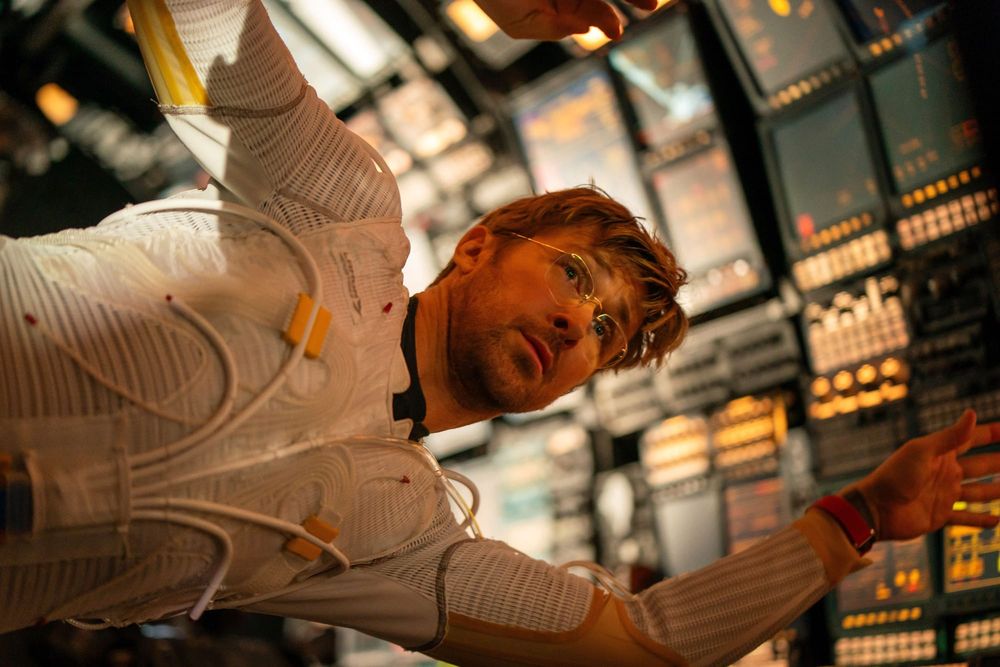
Ryan Gosling spends most of Project Hail Mary acting opposite a tennis ball on a stick. The tennis ball will eventually become Rocky, a spider-like alien voiced by an actor who wasn't on set. The emotional arc of the film — a space survival story adapted from Andy Weir's novel — hinges on Gosling selling a friendship with a character that doesn't exist yet. According to Variety, Oscar voters are already circling his name. That's not just early buzz. It's recognition that A-list actors have mastered a technical skill that didn't exist a generation ago: making you believe in a scene partner who won't be rendered until post-production.
Phil Lord and Christopher Miller directed Project Hail Mary, and their Oscar-winning track record (Spider-Man: Into the Spider-Verse) gives them credibility with Academy voters who still treat animation and VFX work as lesser crafts. But Gosling's performance is doing something more specific than just "good acting in a blockbuster." He's navigating the structural problem that defines modern tentpole filmmaking: how do you create emotional intimacy when half the scene doesn't exist yet?
This isn't new technology. Andy Serkis pioneered performance capture as Gollum in The Lord of the Rings two decades ago. But Serkis was playing the CGI character. Gosling is playing opposite one. The technical challenge is different. Serkis had to make himself believable. Gosling has to make nothing believable. He's reacting to a voice track recorded months later, to a creature design he's only seen in concept art, to blocking that will be finalized in an editing bay. The performance has to work in real time and in reverse — convincing enough that VFX artists can build a character around his reactions.
The business reason this skill matters: blockbusters are built on VFX spectacle, and VFX spectacle is expensive. Studios need actors who can deliver emotional stakes without requiring expensive reshoots when the CGI doesn't land. Disney's recent struggles are partly a story about bloated VFX budgets and director cuts that didn't justify the spend. An actor who can sell a scene in one take — even when the scene partner is a placeholder — is worth more than their quote. They're insurance against post-production chaos.
Gosling has been building toward this for years. Blade Runner 2049 required him to play opposite a holographic AI girlfriend who flickered in and out of existence. First Man put him inside a spacecraft cockpit where most of the environment was green screen. Barbie was a practical-set comedy, but it was also a performance entirely dependent on selling a plastic doll's emotional interiority. He's been learning how to act in environments where half the frame doesn't exist until someone builds it in post.
The Oscar angle here is not accidental. The Academy has historically undervalued performances in VFX-heavy films, treating them as spectacle rather than craft. But that bias is cracking. Awards season is a power management system, and the power in Hollywood has shifted toward directors who can deliver profitable tentpoles. Lord and Miller are Oscar winners. Gosling is a two-time nominee. Project Hail Mary is a space survival story with a $100M+ budget and a spring release date. If it works — commercially and critically — the Academy will reward it because the industry needs to prove that blockbusters can still be prestige.
The performance itself is being framed as a technical achievement. Variety's early coverage emphasizes the "wildly entertaining" tone and Gosling's ability to carry the film alone. That framing is strategic. It positions Project Hail Mary as a character study that happens to be a VFX spectacle, not the other way around. The comp is Gravity or The Martian — survival stories where the actor's performance anchors the spectacle. Both were Oscar contenders. Both proved that VFX-heavy films could be taken seriously if the emotional stakes landed.
The broader pattern: Hollywood has spent two decades training its A-list to perform in environments that don't exist. Marvel actors deliver quippy one-liners to green walls. Streaming IP is now valuable enough that studios are reverse-engineering theatrical releases from VFX-heavy shows. The skill set required to sell emotional stakes in these environments is now the baseline for bankable stars. If you can't act opposite a tennis ball and make it feel real, you're not a movie star — you're a theater actor who occasionally does films.
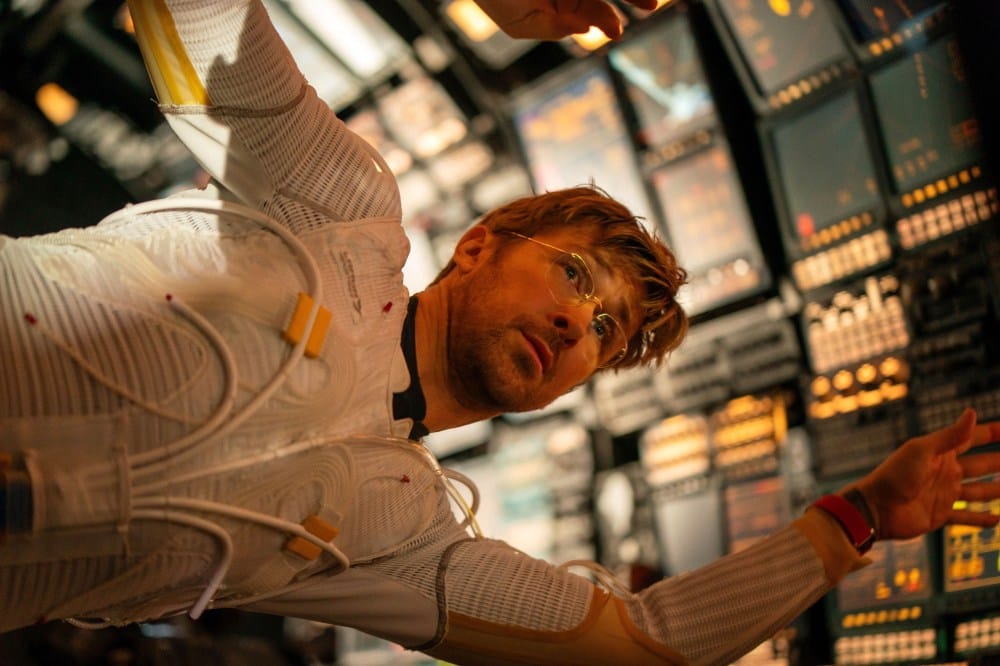
The risk for Gosling is that the performance only works if the VFX lands. If Rocky the alien looks ridiculous or the vocal performance doesn't sync with Gosling's reactions, the whole thing collapses. That's the structural vulnerability of VFX-dependent performances: the actor is only as good as the post-production team's ability to build a believable scene partner. Gosling has mitigated that risk by working with Lord and Miller, whose animation background means they understand how to build characters that feel emotionally coherent even when they're entirely synthetic.
The cultural argument embedded in this performance: emotional intimacy doesn't require physical presence anymore. Gosling's friendship with Rocky is as real as any buddy-cop dynamic or romantic-comedy pairing — even though Rocky is a spider-like alien who exists only as code. That's a bigger shift than it sounds. It suggests that audiences have been trained to accept synthetic characters as emotionally legitimate, which has implications for everything from AI-generated performances to the future of animated storytelling. If Gosling can make you cry over a CGI rock, what else can be synthesized?
The Oscar campaign will lean into this. Expect behind-the-scenes footage of Gosling acting opposite nothing. Expect interviews where he talks about the technical challenge of building a performance in reverse. Expect the narrative to position him as an actor who elevated blockbuster filmmaking into something more serious. That narrative works because it's true — but also because it serves the industry's need to prove that tentpoles can still be prestige. If Project Hail Mary lands Gosling a nomination, it won't just be about his performance. It'll be about Hollywood validating a skill set that defines modern stardom: the ability to sell emotional stakes when half the scene doesn't exist yet.