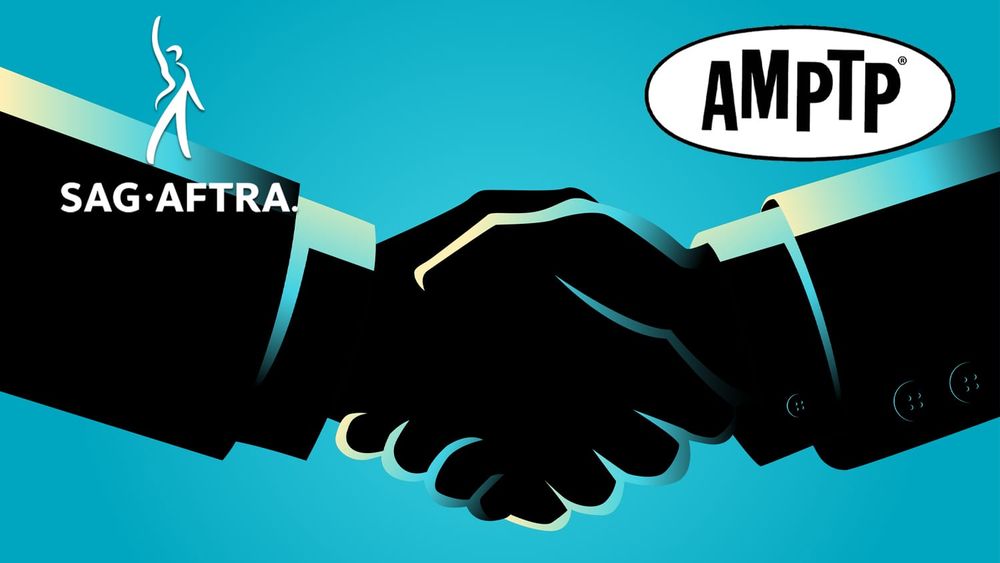
SAG-AFTRA and the Alliance of Motion Picture and Television Producers reached a tentative four-year agreement this week, as Deadline first reported. The deal includes AI protections, wage increases, and streaming residual improvements. The 160,000-member guild will vote on ratification in the coming weeks. If approved, Hollywood avoids another strike. If rejected, the industry faces the same labor standoff that shut down production for months in 2023.
What the headlines won't tell you: this is the third major entertainment labor negotiation in three years. Writers struck in 2023. Actors struck in 2023. Now both guilds are back at the table before the ink on the last contracts has dried. Hollywood's labor peace isn't infrastructure anymore—it's a subscription service that renews every few years, and each renewal costs more than the last.
The deal's specifics matter. AI protections prohibit studios from using digital replicas of actors without consent and compensation. Streaming residuals increase based on subscriber counts and viewership metrics. Minimum wage increases follow inflation adjustments. These are real gains. The Writers Guild won similar terms in 2023. The Directors Guild negotiated comparable protections in 2024. Every guild is now fighting the same battles on staggered timelines, which means Hollywood is perpetually one negotiation away from another shutdown.
The four-year term is the tell. Contracts used to run seven years, sometimes longer. The 1980s and 1990s saw decade-long stretches without major strikes. Stability was the default. Now every guild negotiates on compressed cycles because the industry's economics shift faster than any contract can anticipate. Streaming residuals didn't exist fifteen years ago. AI protections weren't a line item five years ago. By the time a four-year deal expires, the technology and business models it governs are already obsolete.
This creates a structural problem that no single negotiation can solve. Guilds can't lock in protections for technologies that don't exist yet. Studios can't agree to revenue-sharing models when they don't know what revenue streams will look like in three years. So both sides negotiate the last war, sign a deal, and start preparing for the next one before the current contract is halfway through its term.
The AI provisions illustrate the tension. The deal prohibits unauthorized digital replicas and requires consent for any AI-generated performance. That's a win. But it doesn't address the next iteration of AI tools—systems that don't replicate specific actors but generate performances in the style of an actor's previous work. It doesn't cover voice synthesis trained on an actor's filmography without using their actual voice. It doesn't anticipate AI that can age, de-age, or composite performances in ways that blur the line between human and synthetic labor. The contract protects against 2026's AI. It can't anticipate 2028's.
Streaming residuals face the same obsolescence risk. The new formula ties payments to subscriber counts and viewership metrics. That works as long as streaming platforms operate on subscription models. But the industry is already testing ad-supported tiers, pay-per-view hybrids, and bundled services that don't fit the residual structure this contract just locked in. The streaming wars are fragmenting faster than contracts can adapt, which means the residual formulas negotiated today will need renegotiation before the contract expires.
The pattern holds across every recent labor deal. The WGA's 2023 agreement won AI protections and streaming residuals. Within a year, studios were testing workarounds—hiring non-union writers for AI-assisted scripts, structuring deals to minimize residual triggers, offshoring production to jurisdictions with weaker labor protections. The DGA's 2024 deal included similar terms. Studios responded by consolidating production under fewer projects, reducing the number of union-covered jobs while increasing output through non-union digital content. Every contract closes one loophole and opens three more.
This isn't a conspiracy. It's how systems work when the ground shifts faster than the rules can keep up. Studios aren't trying to undermine labor protections—they're trying to survive in an industry where profitability models change every eighteen months. Guilds aren't being unreasonable—they're trying to protect members whose livelihoods depend on revenue streams that didn't exist when they started their careers. Both sides are negotiating in good faith. The problem is that good faith can't outrun technological and economic disruption.
The real cost isn't the negotiations themselves—it's the perpetual instability. Productions plan around contract expirations. Studios stockpile content before strikes. Writers and actors defer projects until labor peace is guaranteed. The entire industry operates on a boom-and-bust cycle that mirrors the contract timeline. When a deal is signed, production ramps up. As expiration nears, studios front-load development to avoid shutdowns. When negotiations stall, everything stops. The cycle is predictable, and it's getting shorter.
The four-year term means Hollywood will be back at the negotiating table in 2030. By then, AI will have advanced beyond the protections this contract includes. Streaming will have evolved beyond the residual formulas it just locked in. And both sides will be fighting over terms that feel outdated before the ink dries. The next negotiation will demand the same concessions, the same protections, the same wage increases—because the industry's economic foundation keeps shifting faster than any contract can stabilize it.
This isn't sustainable. At some point, Hollywood will need to build labor infrastructure that doesn't require renegotiation every three years. That could mean automatic adjustment clauses tied to inflation and technology adoption. It could mean profit-sharing models that scale with revenue regardless of delivery platform. It could mean portable benefits that follow workers across projects instead of tying protections to individual contracts. None of these solutions are easy, and all of them require studios and guilds to cede control over terms they've spent decades fighting to define.
But the alternative is the current system: perpetual negotiation, periodic shutdowns, and an industry that plans its production calendar around contract expirations. SAG-AFTRA's new deal avoids a strike in 2026. It doesn't solve the problem that guarantees another negotiation in 2030. Hollywood's labor peace isn't infrastructure. It's a timer that keeps resetting, and each cycle costs more than the last.