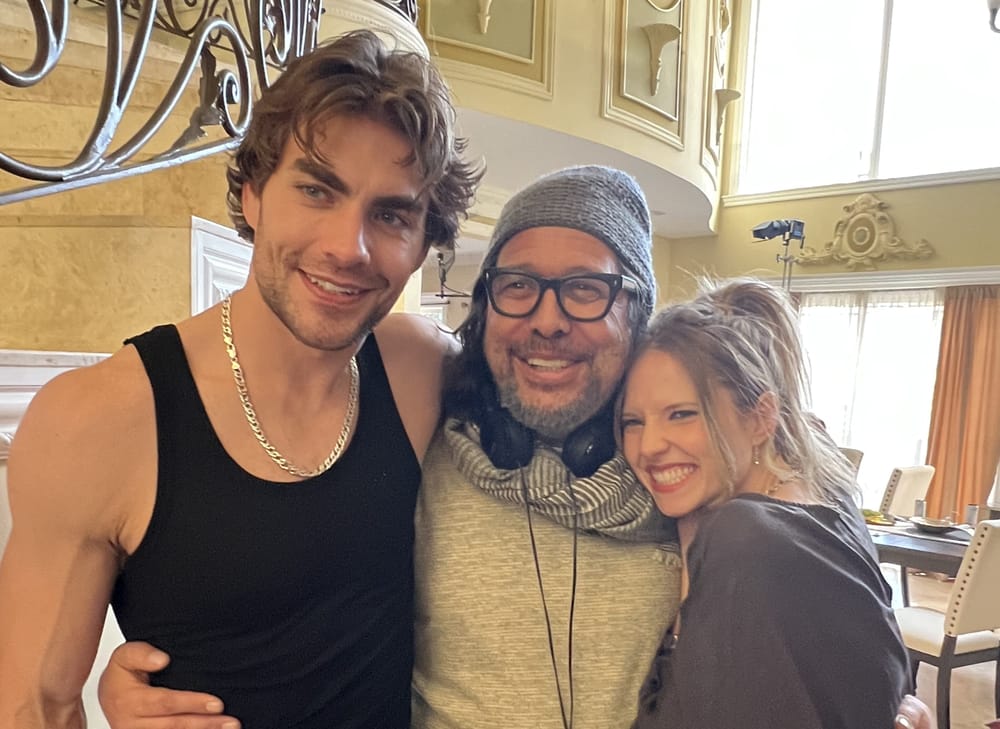
Salvador Paskowitz co-wrote The Age of Adaline, a 2015 theatrical feature starring Blake Lively that grossed $65.7 million worldwide. Now he's launching Super Punchy Studios with business partner Timothy "Timo" Nelligan to produce microdramas—vertical video series designed for mobile consumption. The company's first title, Step By Step, stars Nicole Mattox, Seth Edeen, Molly Anderson, and Haley Lohrli, names that read like TikTok credits, not IMDb pages. It's 60 episodes, shot vertically, built for scroll-stopping rather than award consideration.
This isn't a side project or a pandemic experiment. Paskowitz is building infrastructure for a format Hollywood spent the last five years pretending didn't matter. The microdrama economy is already massive in China—platforms like ReelShort and FlexTV are monetizing serialized vertical dramas with ad-supported models and pay-per-episode mechanics that make Netflix's subscription churn look quaint. What's new is that Hollywood screenwriters with traditional feature credits are now entering the space as founders, not refugees.
The creator economy's first wave was built by people who never wanted Hollywood careers in the first place. YouTubers, TikTokers, and podcast hosts built audiences without studio gatekeepers and turned influence into income streams traditional media couldn't replicate. The second wave is different: it's Hollywood talent realizing the platform economy pays faster, distributes wider, and doesn't require pitching a room of executives who think vertical video is a fad. SWZZ Media hired a producer to scale LA microdramas in January. Super Punchy Studios is the same bet with a different pedigree.
Microdramas solve a structural problem streaming platforms created but can't fix: the cost of prestige content has made volume impossible. Netflix spent $17 billion on content in 2023 and still struggles to keep its library feeling full. Microdramas cost a fraction of episodic TV, shoot in days instead of months, and can be tested, iterated, and killed without the sunk-cost fallout of a canceled prestige series. They're designed for the way people actually watch video on their phones—in bursts, between tasks, optimized for the thumb, not the remote.
The talent Super Punchy Studios cast for Step By Step tells you everything about where the format sits culturally. Nicole Mattox, Seth Edeen, Molly Anderson, and Haley Lohrli are not unknown—they have followings, credits, and the kind of platform fluency that makes them legible to audiences who don't care about IMDb depth. They're also not stars in the way Hollywood traditionally defines stardom. They're creator-adjacent talent who understand performance for vertical video, which is a different skill set than acting for features. The blocking is tighter. The pacing is faster. The emotional beats have to land in 60 seconds or the scroll moves on.
What's interesting is that Paskowitz isn't treating this as a step down. Super Punchy Studios is framed as a company launch, not a pivot born of necessity. The press language around the announcement is confident, not defensive. There's no "we're experimenting with new formats" hedging—just a straight declaration that this is what they're building now. That tone matters. It signals that Hollywood's relationship to the creator economy has shifted from observation to participation, and the people making that shift aren't treating it like slumming.
The economics are straightforward. Microdramas monetize through ad revenue, microtransactions, and subscription tiers on platforms built specifically for the format. ReelShort reportedly generates millions in monthly revenue by charging users to unlock episodes or remove ads. FlexTV operates on a similar model. The margins are thinner than a studio feature, but the volume makes up for it, and the speed of production means a single hit can fund a slate. For a writer-producer used to waiting two years between greenlight and release, the microdrama model is immediate, iterative, and weirdly liberating.
The risk is that Hollywood talent entering the space brings Hollywood's worst habits with it: overproduction, risk aversion, and a belief that prestige framing can make anything work. Microdramas succeed when they're cheap, fast, and unapologetically designed for the platform. The moment a studio-trained producer tries to make them look like "real" TV, the format breaks. Super Punchy Studios will succeed or fail based on whether Paskowitz understands that vertical video isn't a compromised version of features—it's a different medium with different rules. The best microdrama studios in China treat the format like its own genre. Hollywood's incoming wave will have to do the same, or they'll just be making expensive content for a platform that rewards speed over polish. The creator economy doesn't care about your résumé—it cares whether you can make something people won't scroll past.