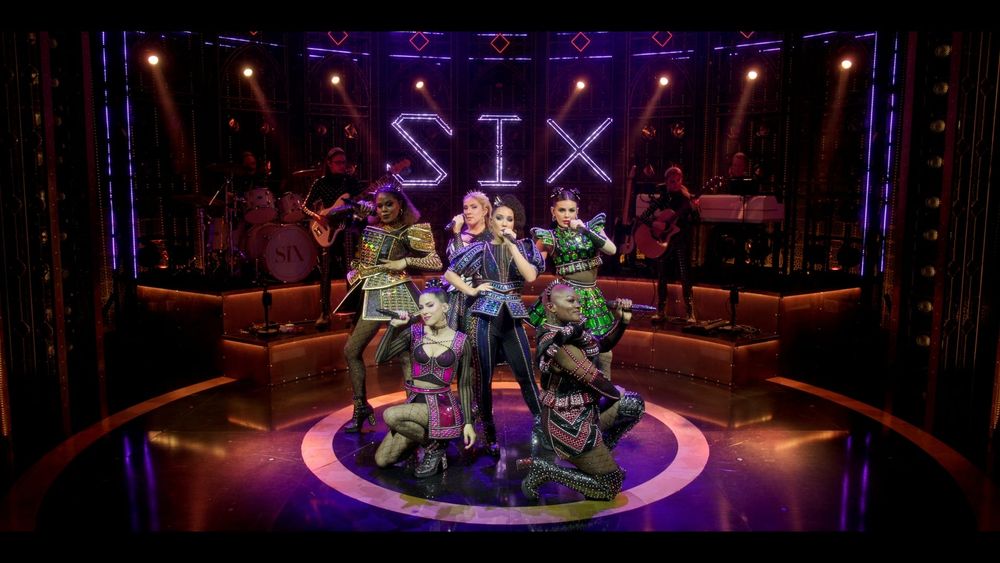
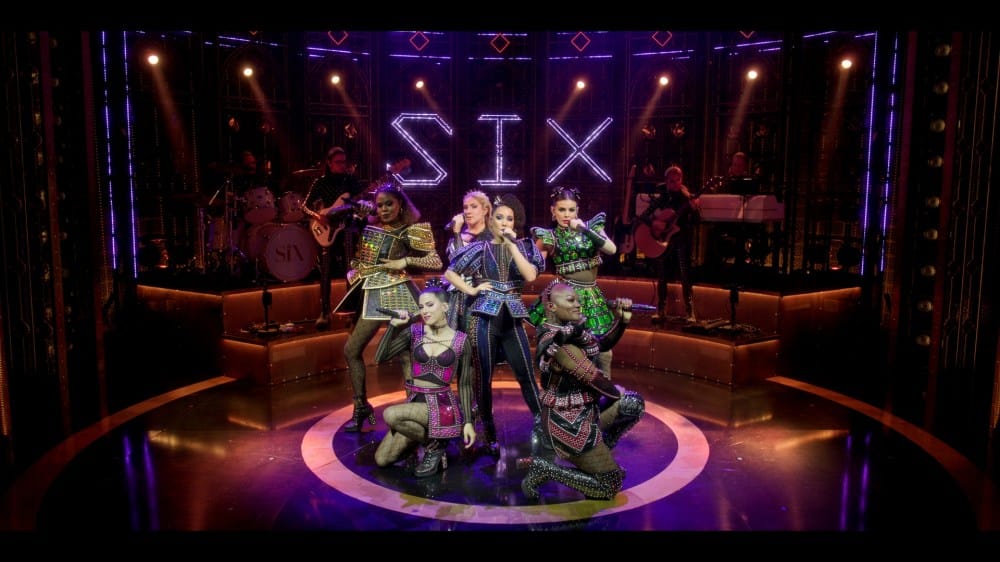
Focus Features will release Six the Musical Live in domestic theaters on August 14, Variety reports. The filmed version of the Broadway hit—which reimagines the wives of Henry VIII as pop icons in a concert-style production—was recorded at London's Vaudeville Theatre with the original West End cast. It's a straightforward business decision dressed up as cultural programming: Focus is betting that filmed theater can become a repeatable theatrical genre, not just a pandemic-era anomaly.
The question is whether audiences will show up. Hamilton hit Disney+ in July 2020, when theaters were closed and streaming was the only game in town. It logged 2.7 million U.S. households in its opening weekend and became a cultural event because there was nothing else to do and nowhere else to go. Six is landing in a completely different market: theaters are open, Broadway is back, and the scarcity that made Hamilton feel like an event no longer exists. If Six works theatrically, it's because the format has intrinsic value. If it doesn't, Focus just confirmed that filmed Broadway was always a pandemic workaround, not a sustainable business.
The economics are tricky. Filming a stage production is cheaper than producing a traditional feature—no location shoots, no months-long production schedules, no sprawling crew. But theatrical distribution is expensive, and the audience for filmed theater is still unproven outside of lockdown conditions. Hamilton worked because Lin-Manuel Miranda's cultural ubiquity and Disney's platform reach turned it into appointment viewing. Six has a passionate fanbase and a TikTok-friendly premise, but it doesn't have Miranda's mainstream penetration or Disney's marketing machine. Focus is betting that the show's pop concert structure and younger-skewing appeal can translate to a theatrical audience that didn't grow up on traditional Broadway. That's a smart thesis, but it's untested at scale.
What makes this release particularly interesting is the timing. Six is opening in mid-August, a traditionally dead zone for prestige releases but a viable window for counter-programming. Focus isn't trying to compete with summer blockbusters—it's aiming for the audience that wants something different, the same strategy that's made romance adaptations reliable counter-programming in a franchise-saturated market. If Six can carve out even a modest theatrical foothold, it opens the door for other filmed stage productions to follow. If it flops, the genre dies before it ever gets started.
The broader implication is whether filmed theater can exist as a middle-tier theatrical product—something that doesn't need Super Mario Galaxy numbers to justify its existence but can still generate enough revenue to make the theatrical window worthwhile. Gaming IP has become Hollywood's most reliable blockbuster formula, but there's a growing appetite for lower-budget, higher-margin releases that don't require nine-figure marketing campaigns. Filmed Broadway could occupy that space—if the audience materializes.
The challenge is that Broadway's core audience already has access to the live product. Filming a stage show doesn't expand the market unless it reaches people who wouldn't otherwise see it—either because they don't live near a major city with touring productions or because ticket prices are prohibitively expensive. Six tickets on Broadway run $100 to $200. A movie ticket is $15 to $20. If Focus can position Six the Musical Live as an accessible alternative rather than a substitute for the live experience, the economics work. If it's perceived as a lesser version of the real thing, it's dead on arrival.
What Six has in its favor is that the show was designed to feel like a concert, not a traditional narrative musical. That structure translates more naturally to film than something like Dear Evan Hansen, which required a full cinematic adaptation and still bombed because the stage-to-screen translation felt awkward. Six doesn't need to be reimagined—it just needs to be captured well. That's a lower creative bar, but it's also a narrower margin for error. If the filmed version feels flat or loses the energy of the live performance, the whole premise collapses.
Focus Features is treating this as a test case, and the industry is watching. If Six works, expect more filmed Broadway releases to follow—not just from Focus, but from studios looking for cost-effective IP with built-in fanbases. If it doesn't, filmed theater goes back to being a streaming curiosity rather than a theatrical product. Either way, August 14 is the day we find out whether Hamilton was the beginning of something or just a pandemic fluke.