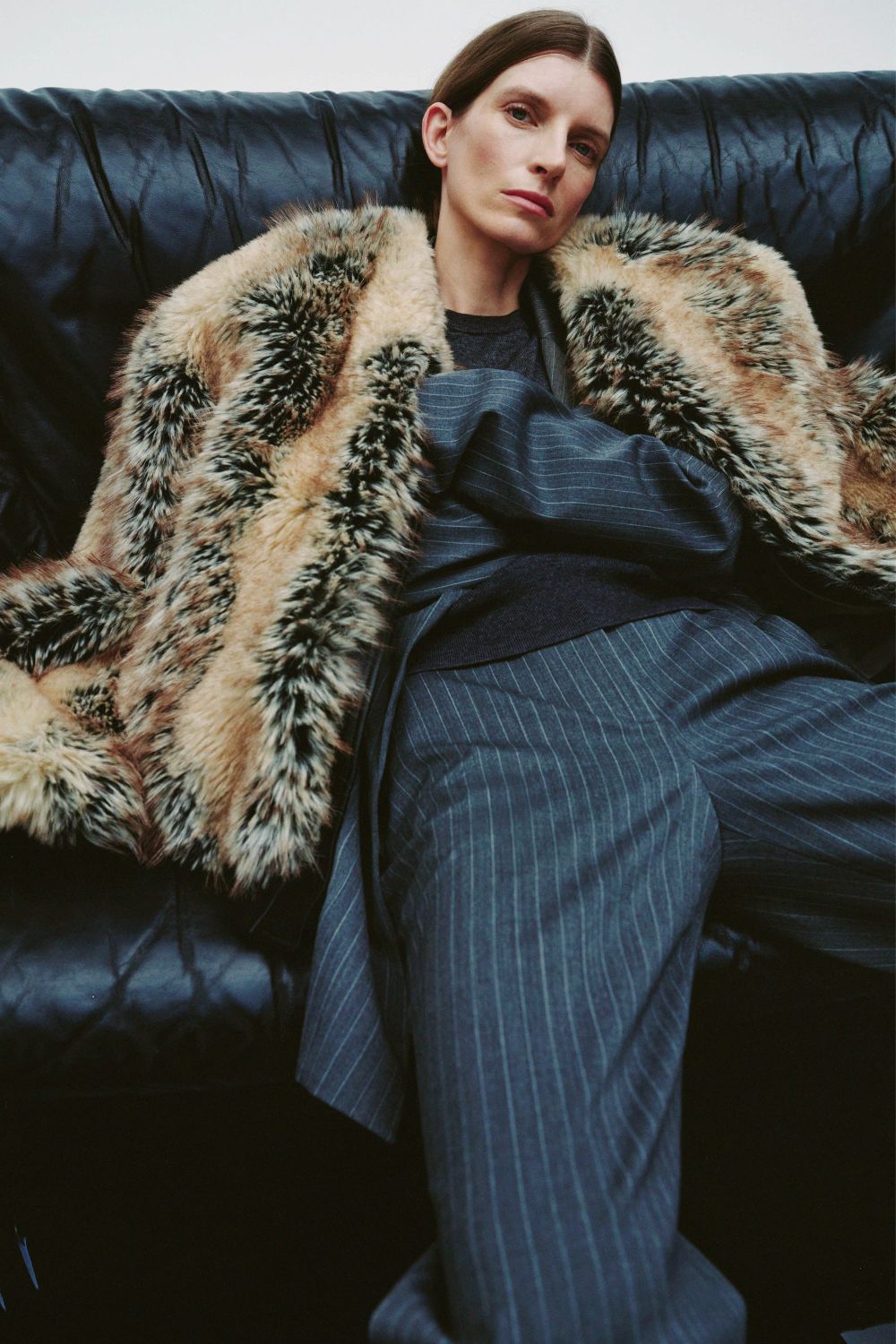
The Frankie Shop showed 32 looks at Paris Fashion Week Fall 2026, and if you scrolled past the collection on Instagram without reading the caption, you might have thought it was just another product drop. Oversized blazers in camel and charcoal. Wide-leg trousers. Boxy leather jackets. A few knit dresses that looked expensive in that deliberately undone way. The palette was beige, black, brown, grey—the same colors that have been selling out on the brand's website since 2014. According to Vogue, the collection leaned into "effortless tailoring" and "modern wardrobe essentials." Which is to say: it looked like The Frankie Shop.
That's not a criticism. The Frankie Shop built a cult following by doing one thing exceptionally well—making the kind of understated, expensive-looking basics that photograph beautifully and layer into any wardrobe without demanding attention. The brand's success has always been about consistency, not reinvention. But showing at Paris Fashion Week changes the terms. A runway show isn't a product drop. It's a statement. And The Frankie Shop's statement was that it doesn't need to make one.
The gamble here is whether the brand's Instagram-era minimalism can hold its own in a context that still rewards spectacle, narrative, and creative risk. Paris Fashion Week is where designers are expected to show range—not just what they do well, but what they're thinking about, where they're going, what they're arguing for. The Frankie Shop's collection didn't argue for anything. It restated the brand's existing identity with slightly better fabrics and a bigger budget. That works when you're building a direct-to-consumer brand with a loyal customer base. It's less clear whether it works when you're competing for editorial coverage against designers who are using the runway to make a case for why fashion still matters.
The brand's downtown cool has always been its edge. The Frankie Shop doesn't look like luxury—it looks like someone with taste who doesn't care about logos. That aesthetic resonates because it feels like a rejection of the industry's maximalist playbook. But bringing that aesthetic to Paris Fashion Week risks exposing the tension at the heart of the brand's identity. If The Frankie Shop is about rejecting fashion's traditional hierarchies, what does it mean to show up at one of fashion's most traditional institutions and play by its rules? And if the brand is about accessibility and wearability, what does it mean to charge runway prices for clothes that look like they could have come from COS?
The collection's strength is also its limitation. The tailoring is sharp, the proportions are flattering, the styling is restrained in a way that feels confident rather than boring. But none of it feels new. The oversized blazer has been The Frankie Shop's signature piece for a decade. The wide-leg trouser is a staple in every minimalist brand's lineup. The neutral palette is safe, commercial, and entirely predictable. For a brand that built its reputation on being the antidote to trend-chasing, the Fall 2026 collection felt less like a statement of independence and more like a refusal to evolve.
What's interesting is that The Frankie Shop doesn't need Paris Fashion Week to sell clothes. The brand's e-commerce business is strong, its Instagram following is loyal, and its retail strategy—flagship stores in New York, Paris, and Los Angeles—has been successful without the validation of the traditional fashion calendar. Showing at Paris Fashion Week isn't about proving the brand can compete. It's about signaling that The Frankie Shop has arrived. The problem is that arrival implies ambition, and ambition requires more than repetition.
Other brands have navigated this transition successfully. Cecilie Bahnsen built her brand on hyper-feminine, voluminous silhouettes and has managed to scale to Paris Fashion Week without losing the craftsmanship that made her work distinctive. ArdAzAei used the Paris runway to show emerging designers can bring conceptual rigor without sacrificing wearability. Both brands understood that showing at Paris Fashion Week meant raising the stakes—not just showing up with a bigger budget version of what they were already doing.
The Frankie Shop's Fall 2026 collection isn't a failure. It's competent, commercial, and will almost certainly sell. But competence isn't what makes a Paris Fashion Week debut memorable. The brand proved it can execute its aesthetic at a higher level. What it didn't prove is whether it has anything left to say.