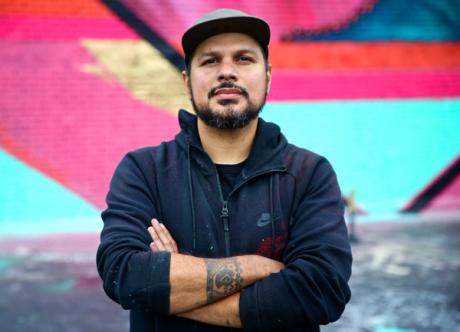
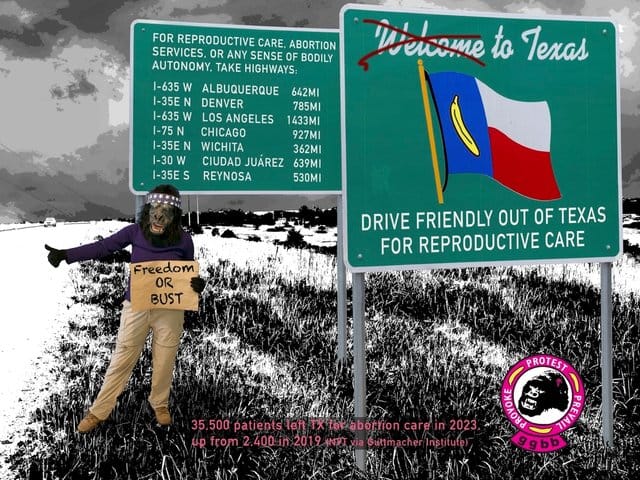
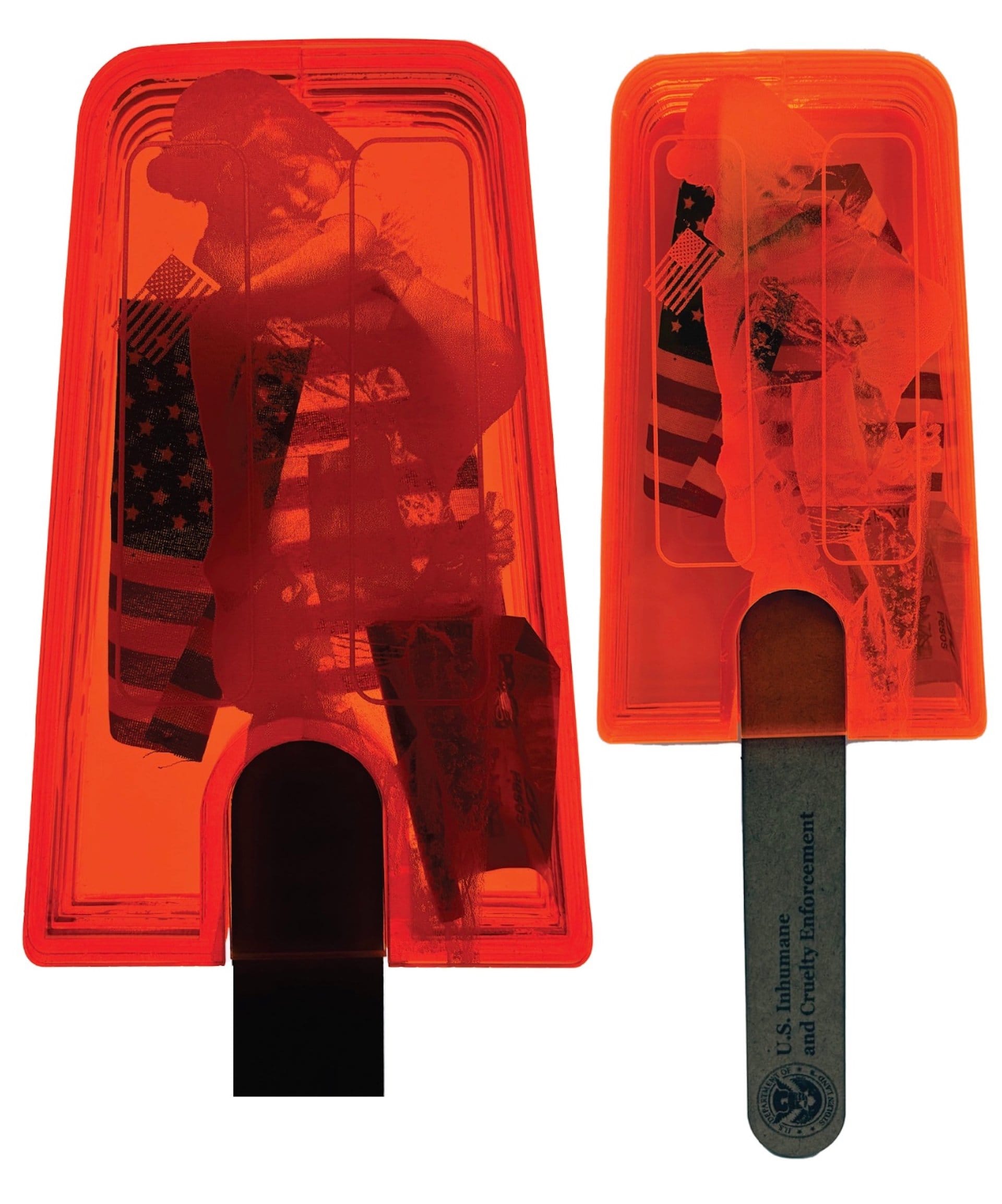
Victor Quiñonez's exhibition at the University of North Texas was scheduled to run through the end of March. It didn't make it past opening week. The show, which included works critical of Immigration and Customs Enforcement and explored the artist's family history of migration, was removed without public explanation, according to The Art Newspaper. No official statement. No rationale. Just an empty gallery where politically charged work had been hanging days before.
The removal wasn't accompanied by the usual institutional theater of a controversy — no community complaints cited, no safety concerns raised, no procedural violations alleged. That silence is the point. Public universities in conservative states have learned that the cleanest way to suppress politically inconvenient art isn't to ban it outright. It's to make it disappear quietly, administratively, without creating the kind of public record that triggers First Amendment scrutiny or faculty outcry.
UNT's decision follows a pattern that's become familiar at public universities in Texas, Florida, and other states where conservative governance has turned academic institutions into ideological battlegrounds. The strategy is administrative opacity: pull the work, offer no explanation, let the absence speak for itself. It's censorship that refuses to call itself censorship, which makes it harder to challenge and easier to repeat.
What makes this case particularly instructive is what wasn't cited. There was no allegation that Quiñonez's work violated university policy. No claim that it disrupted campus operations or endangered anyone. The exhibition had been approved through the standard curatorial process. It opened. Then it closed. The gap between those two events — the space where an explanation should be — is where the real story lives.
This is how institutional censorship works in 2026. It doesn't announce itself. It doesn't defend its reasoning. It simply acts, banking on the fact that most people won't notice an exhibition that's no longer there. The artist loses the platform. The university avoids accountability. The public never gets to see the work or decide for themselves whether it merited removal.
The subject matter — immigration, ICE, the lived experience of migration — is almost certainly why the show was pulled. These are topics that have become flashpoints in states where political leadership has made opposition to immigration policy a defining issue. But the absence of stated reasoning means there's no official record of political interference, no paper trail connecting the removal to external pressure or internal ideology. That's the design. Censorship that leaves no evidence is censorship that's nearly impossible to prove.
Public universities occupy a legally protected space for free expression. Faculty and students are supposed to be able to engage controversial ideas without fear of administrative retaliation. But that protection depends on transparency — on the ability to challenge decisions, demand explanations, and hold institutions accountable when they overstep. When a university removes an exhibition without explanation, it short-circuits that entire process. There's nothing to challenge because there's nothing on the record.
The removal also sends a signal to other artists, curators, and faculty: work that touches on politically sensitive topics will be tolerated only until it isn't. The line isn't clear because it's not supposed to be. Ambiguity is the mechanism. If you don't know exactly what will trigger removal, you're more likely to self-censor — to propose safer work, to avoid immigration or policing or any subject that might draw scrutiny. That's the chilling effect in action, and it doesn't require a single official policy to achieve it.
This isn't unique to UNT. Public universities across the country are navigating increasing political pressure to suppress work that challenges conservative orthodoxy, particularly on issues like immigration, race, and gender. What varies is how overtly they do it. Some states have passed legislation restricting what can be taught or displayed. Others rely on administrative discretion — the quiet removal, the denied exhibition proposal, the budget cut to a program that hosts controversial work. The result is the same: less space for dissent, fewer opportunities for artists to engage the political realities shaping their communities.
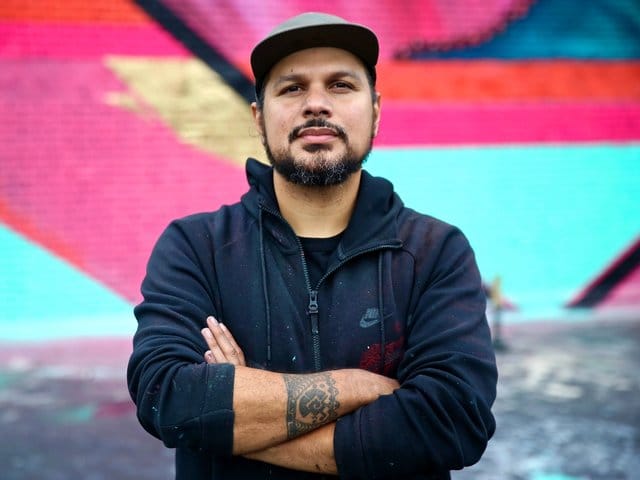
The Quiñonez case also highlights the precarious position of artists working within institutional frameworks. University galleries are supposed to provide a platform for emerging and regional artists who might not have access to commercial gallery systems. But that platform comes with strings — approval processes, curatorial oversight, and the ever-present risk that the institution will prioritize its own political safety over the artist's freedom of expression. When a show gets pulled, the artist loses not just the exhibition but the professional credibility and exposure that come with it.
What's particularly insidious is that the university doesn't have to defend the decision because it hasn't officially made one. There's no ban to protest, no policy to challenge. Just an exhibition that's no longer on view. The artist can speak out, but without institutional acknowledgment of what happened or why, the story becomes a claim rather than a documented fact. The university's silence turns the artist into the only voice in the room — and the one with the least power.
The broader pattern is clear: public universities in conservative states are becoming enforcement mechanisms for political orthodoxy, not through overt censorship but through administrative discretion that operates below the threshold of legal challenge. The work disappears. The institution says nothing. The message to artists and curators is received. This is how you suppress dissent in an era where outright bans generate too much attention. You just make the work go away and refuse to explain why.
The question now is whether other institutions will take note — and whether artists will continue to propose work that risks the same fate. Because the real censorship isn't just what happened to Quiñonez's exhibition. It's every show that won't be proposed, every piece that won't be made, every artist who decides the risk isn't worth it. That's the long-term damage. And it doesn't require a single policy to take effect.