Val Kilmer died in 2025. He's about to star in a movie anyway.
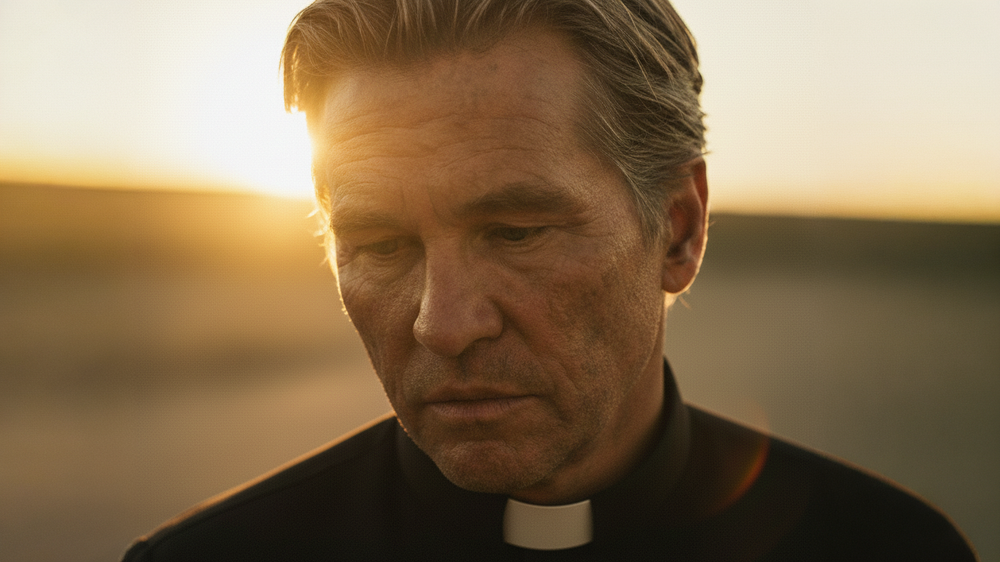
Five years before his death, Kilmer was cast as Father Fintan—a Catholic priest and Native American spiritualist—in As Deep as the Grave, a supernatural thriller that director wanted him for specifically. But Kilmer, battling throat cancer, never made it to set. Now, according to Variety, the production is using AI to reconstruct his performance posthumously, making this Hollywood's first fully AI-generated lead performance of a deceased actor in a theatrical feature.
The technology isn't new—Kilmer himself authorized AI recreation of his voice in Top Gun: Maverick while he was alive, and Netflix has poured $600 million into Ben Affleck's AI production startup specifically to automate visual effects and performance capture. What's new is the ethical framework collapsing in real time. A living actor consenting to AI assistance for a role he can physically perform is one thing. A dead actor being digitally resurrected for a role he never shot is another. And Hollywood just decided the difference doesn't matter enough to wait for consensus.
The production reportedly secured permission from Kilmer's estate, which makes this legal. It doesn't make it precedent-proof. Every estate that controls a deceased actor's likeness rights is now watching to see if As Deep as the Grave works—not artistically, but financially. If the film performs, the floodgates open. Studios have been sitting on incomplete projects, shelved scripts, and unmade sequels for decades, waiting for the technology to catch up to the economics. It just did.
The business case is obvious. Casting a dead actor eliminates scheduling conflicts, salary negotiations, and the risk that the talent says no. It's the ultimate studio insurance policy: a performer who can't age out of the role, can't demand backend points, and can't turn down the sequel. The estate gets paid—once, upfront, with terms the actor never agreed to because they didn't exist when the original contract was signed. The studio gets infinite reusability. The actor gets turned into intellectual property.
This is where Europe's AI resolution becomes directly relevant. The EU has been drawing hard lines around consent, attribution, and the use of human likenesses in AI-generated content—lines American studios are testing by jurisdiction-shopping their productions. As Deep as the Grave will premiere in the U.S. first, where regulatory frameworks are softer and estate law is more favorable to commercial use. If it works here, studios will push it everywhere else.
The cultural pattern this fits into is bigger than one actor. Streaming platforms have already strip-mined IP nostalgia to the point where revivals and reboots are collapsing under their own weight. Hollywood has been trying to solve the "original idea" problem by leaning harder into established IP, but even that has limits—actors age, actors retire, actors die. AI removes the last constraint. If Val Kilmer can be resurrected digitally, so can anyone. James Dean has already been cast in a posthumous role. Carrie Fisher appeared in Star Wars films after her death using archival footage and digital compositing. The difference now is that the technology no longer requires archival material. It can generate performances from scratch.
The accountability lens here is stark: who benefits, and who loses? The estate benefits financially—once. The studio benefits indefinitely. The actor, obviously, doesn't benefit at all, because they're dead. But the living actors watching this happen are doing the math. If studios can replace deceased performers with AI, how long before they decide living performers are just more expensive versions of the same asset? The 2023 SAG-AFTRA strike already fought this battle over AI likeness rights and residuals. The studios agreed to restrictions. As Deep as the Grave is the first test of whether those restrictions actually hold when the actor can't renegotiate.
There's also the question of what this does to performance itself. Kilmer was cast because the director wanted him—his presence, his choices, his interpretation of Father Fintan. What the AI will deliver is a simulation of Val Kilmer based on previous performances, voice samples, and directorial input. It's not a performance. It's a composite. The director told Variety that Kilmer was "the actor I wanted to play this role," but the actor he wanted doesn't exist anymore. What he's getting is a digital approximation trained on the actor he wanted. That's not the same thing, and pretending it is flattens what acting actually is.
The theological implications are almost too on-the-nose to ignore. Kilmer is playing a priest in a film about mortality, spirituality, and the boundaries between life and death—while being digitally resurrected to do it. The film's themes and its production method are in direct conversation, whether intentionally or not. If the marketing leans into that, it's a provocation. If it doesn't, it's just irony.
What happens next depends entirely on whether As Deep as the Grave works as a film. If it's critically panned or commercially ignored, the experiment dies here. If it works—if audiences accept the AI performance as legitimate, if the box office justifies the cost, if the estate is happy with the payout—then this becomes the model. Studios will start writing AI resurrection clauses into contracts with living actors. Estates will start negotiating posthumous performance rights as a standard term. Agents will have to advise clients on how to protect their likenesses not just during their careers, but after their deaths.
The SAG-AFTRA agreement included language around AI use, but it was written for living actors. Estate law varies by state, and likeness rights are inconsistently enforced. California has some of the strongest posthumous likeness protections in the country, but even those have carve-outs for artistic use, and As Deep as the Grave will argue it qualifies. The legal framework is reactive, not proactive. Hollywood is moving faster than the law can.
The real test isn't whether the technology works—it does. It's whether audiences care. If viewers accept AI-generated performances as legitimate, the industry will treat that as permission. If they reject it, studios will pull back and wait for the next generation of technology to make it seamless enough that no one notices. Either way, the line just moved. Val Kilmer is the first posthumous AI lead in a major feature, but he won't be the last. The question isn't whether this will happen again. It's whether anyone will be able to stop it.