Nearly 200 artists, curators, and cultural workers signed an open letter demanding the cancellation of Israel's national pavilion at the 2026 Venice Biennale. The signatories—including Alfredo Jaar, Yto Barrada, Rosana Paulino, Meriem Bennani, and Cauleen Smith, alongside curators Binna Choi and Carles Guerra—according to The Art Newspaper, are calling for the pavilion's removal on the grounds of Israel's ongoing military actions in Gaza. The letter frames participation as complicity, positioning the Biennale itself as a site where political neutrality is a fiction and institutional silence is a choice.
The move isn't unprecedented. The art world has deployed the cultural boycott before—against South Africa during apartheid, against Russia following the invasion of Ukraine. But the frequency with which boycotts have become the primary response to geopolitical violence reveals something uncomfortable: the contemporary art world has no other functional mechanism for holding states or institutions accountable. Boycotts aren't strategies born from strength—they're last-resort tools deployed when every formal channel has already failed.
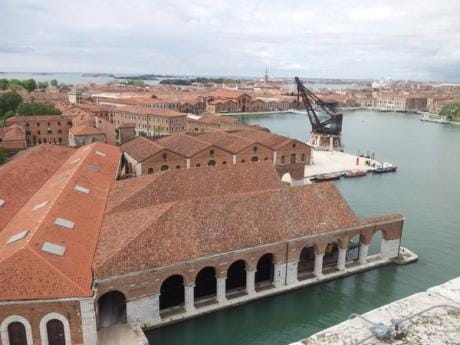
The Venice Biennale operates as one of the art world's most visible stages. National pavilions are state-funded, state-curated, and state-branded. They exist to project soft power, to position nations as culturally sophisticated and politically legitimate. Israel's pavilion, like every other national pavilion, is not a neutral presentation of art—it's a diplomatic tool wrapped in aesthetic language. The protest letter The Art Newspaper covered makes this explicit: participating in the Biennale alongside Israel normalizes the state's actions, grants it cultural legitimacy, and allows it to use the art world as cover.
The signatories are right. But the fact that an open letter is the only available response exposes how little structural power artists actually have within the institutions they populate. The Biennale has no formal process for adjudicating these questions. There is no board that weighs state violence against participation criteria. There is no transparency around how national pavilions are vetted or what ethical standards—if any—govern inclusion. The institution simply accepts that nation-states will use culture as propaganda, and it provides the venue.
This isn't unique to Venice. Major galleries and institutions routinely operate without mechanisms for accountability, relying instead on vague commitments to diversity, equity, and inclusion that rarely translate into structural change. When artists push back, they do so from the outside—through open letters, through boycotts, through withdrawal. They have no seat at the table where decisions are made, no leverage beyond their own refusal to participate.
The cultural boycott, in this context, is not a tool of power—it's a symptom of powerlessness. Artists can refuse to show. They can refuse to attend. They can call on others to do the same. But they cannot force the institution to change. They cannot compel the Biennale to establish ethical criteria for national participation. They cannot create accountability where none exists. The boycott is a moral gesture that carries symbolic weight but limited material consequence. The Biennale will proceed. Israel's pavilion will open. The institution will absorb the protest, acknowledge the discomfort, and continue operating as it always has.
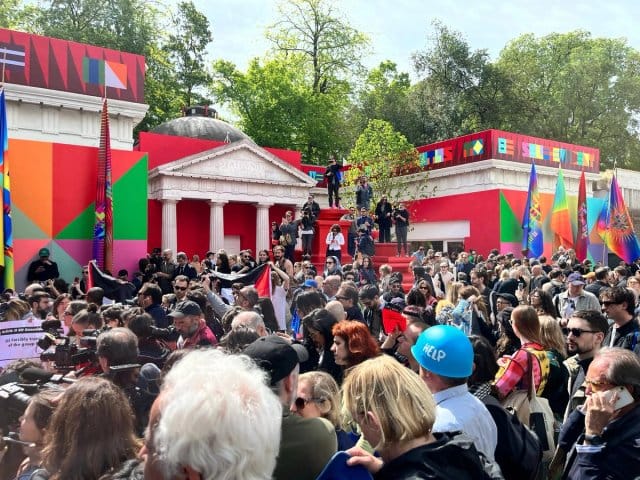
This is where the cultural boycott reveals its limits. It works—when it works—by creating reputational risk. South Africa's cultural isolation during apartheid contributed to the broader pressure that eventually forced political change. But that boycott was sustained, coordinated, and backed by international political will. The contemporary art world's boycotts are more fragmented. They emerge in response to specific crises, attract significant attention, and then dissipate as the news cycle moves on. The institution weathers the storm. The structural conditions that allowed the crisis remain unchanged.
The Venice Biennale protest letter also highlights a deeper tension within the art world: the belief that culture should be separate from politics, even as culture is constantly deployed for political ends. Institutions routinely censor or suppress work that challenges state power, while simultaneously insisting that art transcends politics. National pavilions at the Biennale are explicitly political—they exist to represent nations, to project national identity, to compete for cultural prestige. Yet the institution itself claims neutrality, positioning itself as a space where art is evaluated on aesthetic merit alone.
This neutrality is a fiction that serves the powerful. It allows states to use cultural platforms for propaganda while shielding those platforms from accountability. It positions artists who protest as divisive, as introducing politics into a space that should be apolitical. But the space was never apolitical. The politics were always there—they were just the politics of the status quo, the politics of institutional inertia, the politics of allowing nation-states to use culture as a legitimizing force without scrutiny.
The signatories of the Venice letter understand this. Their demand is not for the Biennale to become apolitical—it's for the institution to acknowledge that it is already political and to make decisions accordingly. If the Biennale is going to function as a stage for national representation, it needs to establish criteria for what kinds of states deserve that platform. If it's going to accept state funding and state curation, it needs to grapple with what that funding represents and what complicity looks like.
But the Biennale, like most major art institutions, is structurally incapable of making those decisions. It was not built for accountability. It was built to serve the interests of collectors, donors, and state sponsors—the same interests that benefit from maintaining the status quo. The institution has no incentive to establish ethical criteria for participation, because doing so would require it to turn away funding, alienate powerful actors, and take positions that carry political risk. It's easier to absorb the protest, acknowledge the discomfort, and continue as planned.
This is the structural failure the protest letter exposes. The art world has no formal mechanisms for adjudicating these questions because it was never designed to. The institutions that dominate contemporary art—biennales, museums, fairs—operate on models that prioritize access to capital over ethical accountability. They rely on private wealth, state funding, and corporate sponsorship. They answer to boards of trustees and government ministries, not to the artists whose work they display. When artists push back, they do so from a position of profound structural disadvantage.
The cultural boycott, then, is not a sign of the art world's moral clarity—it's evidence of its institutional bankruptcy. It's what happens when the only tool available to artists is refusal, when the only power they have is the power to withdraw. The Venice Biennale protest letter will generate headlines, spark debate, and force uncomfortable conversations. But unless the institution itself changes—unless it builds mechanisms for accountability, establishes ethical criteria for participation, and redistributes power away from states and donors and toward artists and communities—the next crisis will produce the same response. Another open letter. Another boycott. Another moment of symbolic resistance that leaves the structure intact.