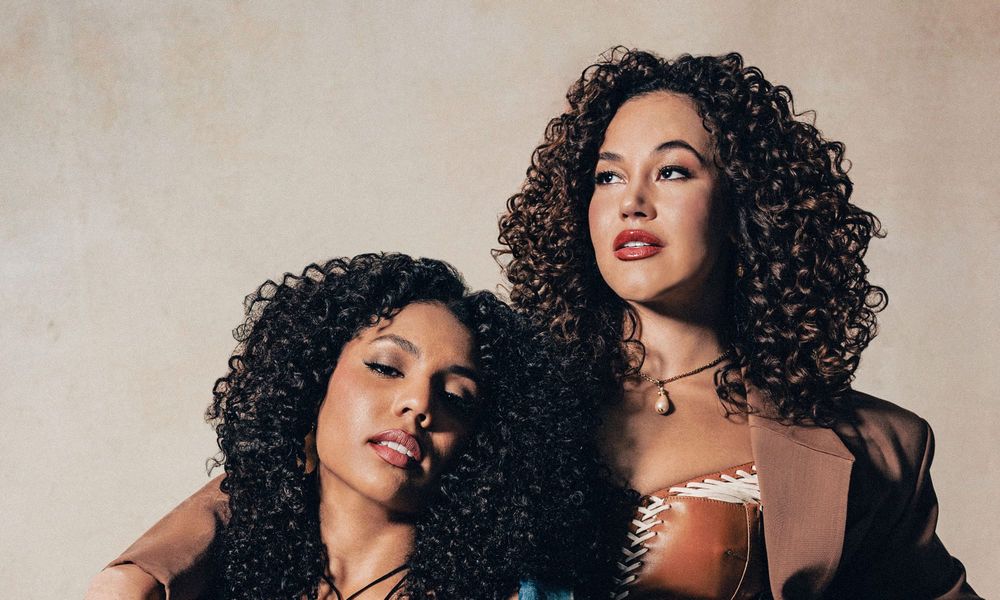
A Broadway musical opening in fall 2026 about Black twin sisters who passed as white in 1893 Texas arrives at a cultural moment when Hollywood has already strip-mined this territory for prestige content. Wanted, formerly titled Gun & Powder, will begin previews at The James Earl Jones Theatre on October 15, starring Solea Pfeiffer and Liisi LaFontaine as Mary and Martha Clarke. The real-life sisters lived as white women in a state where being discovered meant death—not metaphorical erasure, actual violence. That story is now a musical with a fall opening, a Broadway house, and two leading actors whose names will anchor the marketing.
The timing is notable because theater, which once led the cultural conversation on race and identity, is now arriving after film and television have already turned passing narratives into a reliable content category. Hollywood's recent slate of civil rights stories has demonstrated that there's an audience for Black historical narratives—but also that the industry often defaults to trauma as spectacle rather than context. Wanted has the opportunity to do something different, but Broadway's economic structure makes that harder than it sounds.
The musical's creative team will need to solve a specific design problem: how to stage a story about survival without turning survival into entertainment. Passing narratives carry inherent dramatic tension—the threat of discovery, the psychological cost of living a double life, the violence waiting on the other side of exposure. But that tension can easily become the entire point, reducing the Clarke sisters to their fear rather than their agency. The best historical theater treats its subjects as full human beings who made calculated decisions within impossible systems. The worst turns them into symbols whose suffering validates the audience's emotional catharsis.
Broadway has a mixed record here. The industry has produced work that interrogates power structures with precision—and it has produced work that flattens complex histories into easily digestible narratives designed to make audiences feel like they've learned something. Prestige storytelling, whether on stage or screen, often mistakes representation for critique. Wanted will be judged not just on whether it tells the Clarke sisters' story, but on whether it tells it in a way that resists the commodification of Black women's pain.
The casting of Pfeiffer and LaFontaine is significant. Both actors bring the kind of vocal and dramatic range that suggests the production is aiming for complexity rather than spectacle. Pfeiffer, who has built a career on roles that demand both technical precision and emotional depth, has the tools to play a character who had to perform whiteness as survival strategy. LaFontaine's stage presence suggests she understands the difference between playing trauma and playing a person who experienced trauma. The question is whether the material gives them room to do that work.
Broadway's economic realities complicate this further. A fall opening at the James Earl Jones Theatre means the production needs to sell tickets at a price point that requires broad appeal. That economic pressure can push creative teams toward safer choices—more spectacle, clearer heroes and villains, emotional beats that land with certainty rather than ambiguity. The best Broadway productions resist that pressure. The worst ones give in and call it accessibility.
The title change from Gun & Powder to Wanted is worth noting. The original title emphasized violence and danger—the literal tools of survival and threat. The new title shifts focus to the sisters themselves, framing them as subjects of pursuit rather than agents of their own story. That could be a more nuanced approach, centering their perspective rather than the violence surrounding them. Or it could be a marketing decision designed to make the show feel less confrontational. The production will reveal which instinct won.
What's clear is that Wanted arrives at a moment when audiences have more context for these stories than they did even five years ago. The conversation about who gets to tell whose story has shifted the expectations around historical drama. Wanted will be measured not just against other Broadway musicals, but against the broader cultural reckoning with how Black women's histories have been told, sold, and sanitized. Broadway has the tools to do this well—live performance, direct audience engagement, the kind of emotional immediacy that film can't replicate. Whether the production uses those tools or defaults to the safer playbook Hollywood already exhausted remains to be seen.