Tokyo Fashion Week has historically functioned as a talent incubator for Paris — a place where emerging Japanese designers showcase work before relocating their ambitions westward. Yushokobayashi's Fall 2026 collection suggests that calculus is shifting. Designer Yuya Shokobayashi presented a collection that didn't pitch itself as a Paris audition. It looked like a designer who had already decided Tokyo was enough.
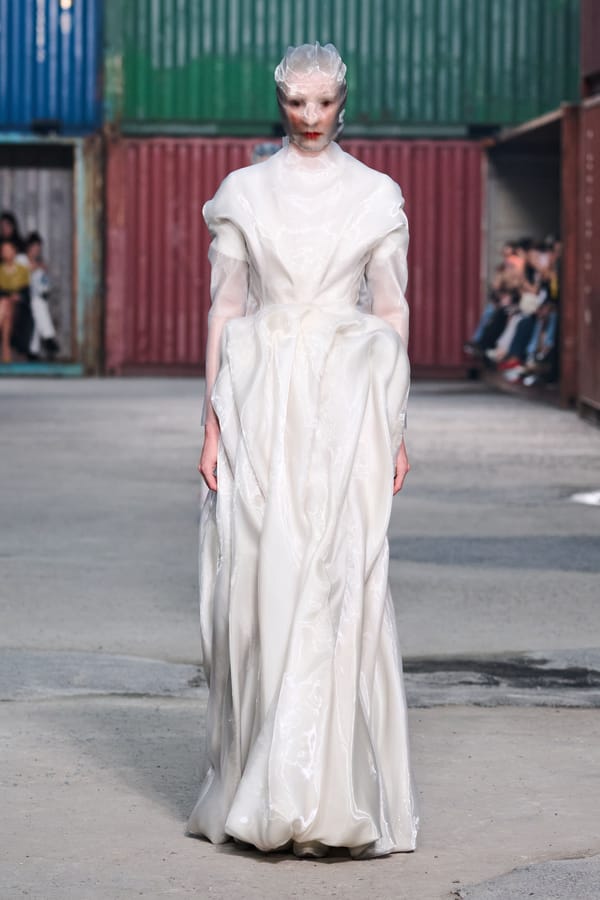
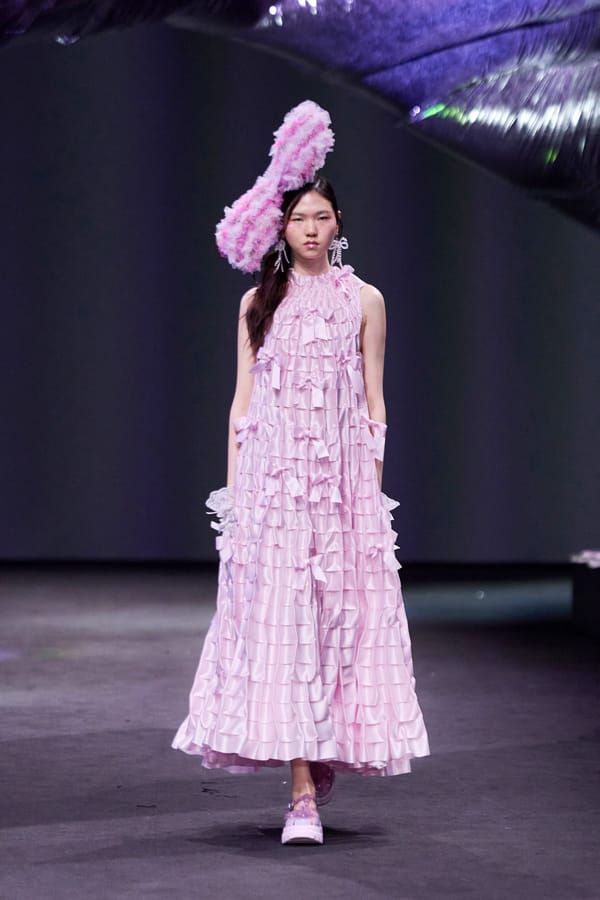
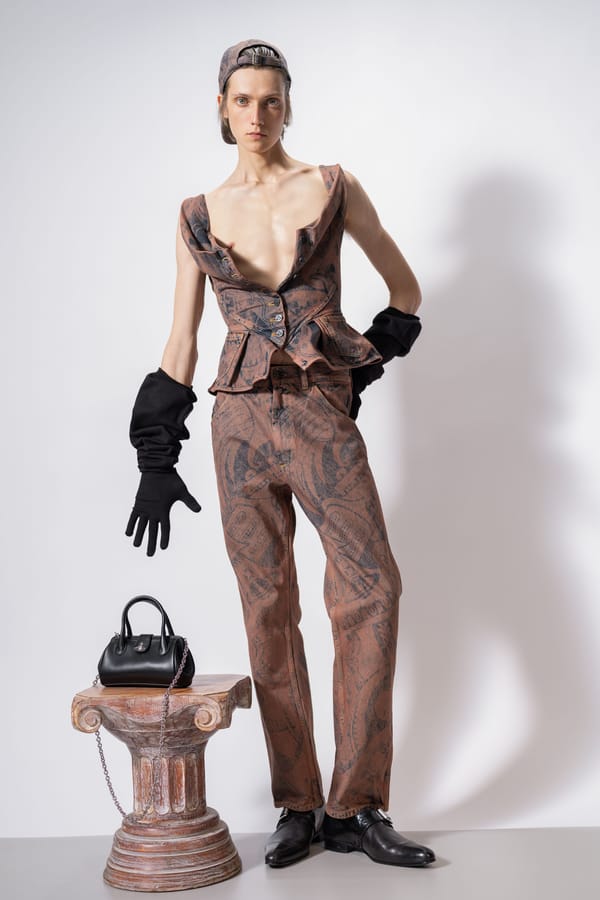
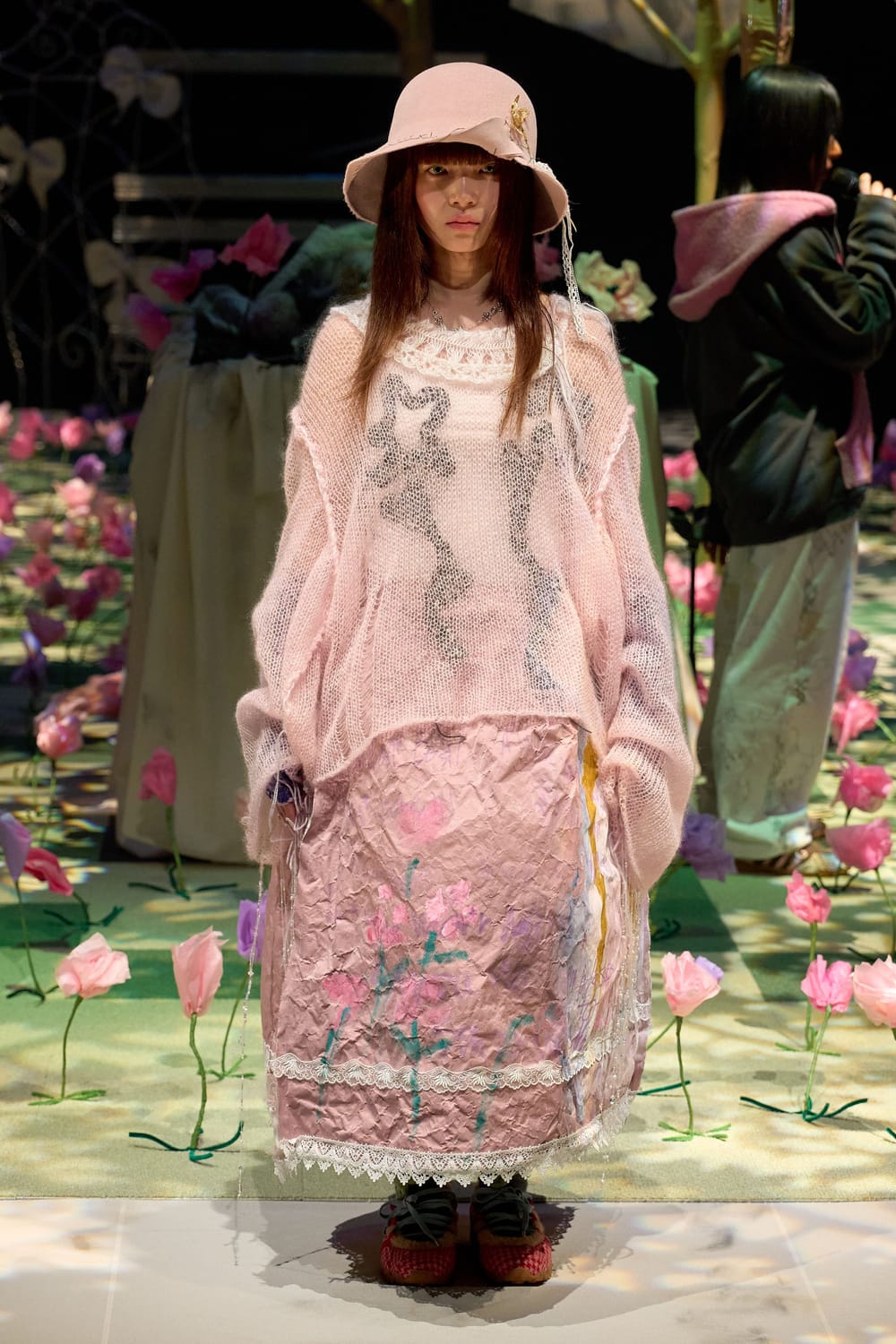
The collection centered on sharp tailoring and architectural layering — blazers with exaggerated shoulders worn over asymmetric skirts, structured coats paired with pleated trousers that moved like origami in motion. The palette stayed neutral: charcoal, cream, black, camel. The silhouettes felt deliberate, not experimental for experimentation's sake. This wasn't a designer chasing attention through spectacle. It was a designer making a case for precision.
What makes this collection significant isn't the garments themselves — it's the context around them. Tokyo Fashion Week has spent decades exporting talent to Paris, where the institutional infrastructure, press attention, and buyer budgets live. Designers like Rei Kawakubo, Yohji Yamamoto, and Junya Watanabe built their reputations by conquering Paris first, then defining Tokyo fashion retrospectively. The pathway was clear: show in Tokyo, get noticed, move to Paris, become legitimate. Yushokobayashi is part of a generation questioning whether that pathway still makes sense.
The economics support staying put. Paris Fashion Week costs emerging designers between $150,000 and $300,000 per show when you factor in venue rental, production, travel, and PR. Tokyo offers lower overhead, a domestic press corps that actually covers local talent, and a retail market sophisticated enough to sustain independent designers without requiring international validation. Uma Wang's Fall 2026 collection demonstrated a similar logic in the Chinese market — build credibility at home first, expand internationally second, but never treat the domestic market as secondary.
The craft credibility Yushokobayashi is building doesn't require Paris's approval because it's not trying to speak Paris's language. The tailoring references Japanese menswear traditions more than European couture. The layering draws from street style in Harajuku and Shibuya, not the Marais. The proportions feel specific to Tokyo's aesthetic economy — where oversized silhouettes and asymmetry have been fashion vernacular for decades, not trend cycles imported from the West. This is design fluency that doesn't translate easily into Paris's editorial frameworks, and that's the point.
Tokyo Fashion Week's infrastructure is finally catching up to its talent pool. The event now attracts buyers from Net-a-Porter, Ssense, and Dover Street Market — retailers that can move product without requiring a Paris co-sign. Digital platforms have decentralized fashion media enough that a designer can build international visibility from Tokyo without needing French Vogue's blessing. And crucially, the Japanese domestic market — the world's third-largest luxury market — provides enough revenue runway for designers to grow without betting everything on European expansion.
This doesn't mean Paris is irrelevant. It means Paris is no longer the only path to legitimacy. A.W.A.K.E. Mode's Fall 2026 collection showed how emerging designers can build craft credibility through precision and consistency rather than spectacle and scale. Yushokobayashi is applying the same logic in a different market. The collection wasn't trying to prove anything to Paris. It was building a case for Tokyo as a fashion capital that doesn't need external validation to function as one.
The broader pattern here is geographic decentralization in fashion's power structure. For decades, Paris, Milan, London, and New York held a monopoly on fashion legitimacy. That monopoly depended on controlling three things: press access, buyer budgets, and cultural authority. All three are diffusing. Press is digital and decentralized. Buyers are global and platform-agnostic. Cultural authority is increasingly defined by local markets rather than Western tastemakers. Designers like Yushokobayashi are the first generation to build careers in that new structure — and they're doing it without apologizing for staying home.
If Yushokobayashi's Fall 2026 collection signals anything, it's that Tokyo Fashion Week is no longer a feeder system for Paris. It's a standalone ecosystem with its own economic logic, aesthetic language, and institutional credibility. The designers showing there aren't waiting for permission to matter. They're building something that already does.