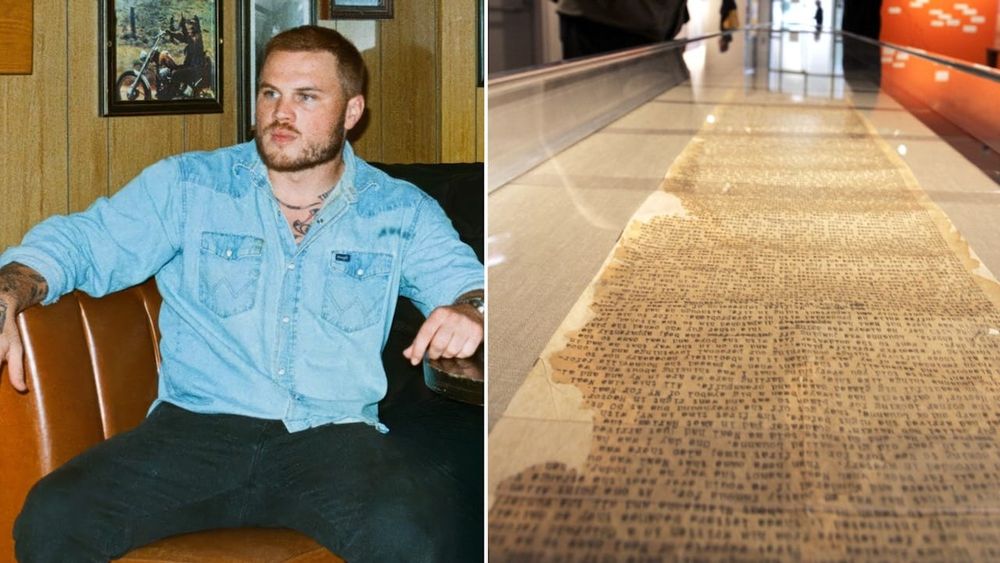
Zach Bryan paid $12.1 million at auction for the original scroll manuscript of Jack Kerouac's On the Road — then announced he's sending it to the Jack Kerouac Museum in Lowell, Massachusetts for permanent public display. According to Consequence, the purchase sets a new auction record for the manuscript, which Kerouac typed in a three-week burst in 1951 on a continuous 120-foot roll of paper. Bryan's decision to donate it rather than keep it in a private collection is the telling move — it's not about owning the artifact. It's about being the person who made sure everyone else could see it.
Country music has always had its literary pretensions — Johnny Cash reading poetry in prisons, Kris Kristofferson's Rhodes Scholar backstory, Willie Nelson's affinity for obscure philosophy. But those were individual eccentricities, not strategic positioning. What Bryan and a handful of other contemporary country stars are doing is different: they're using high-profile literary patronage to build cultural credibility that extends beyond Nashville's traditional boundaries. It's not enough anymore to be a great songwriter or sell out arenas. The new country A-list wants to be taken seriously in rooms where Americana is a genre, not a virtue.
The choice of Kerouac is deliberate. On the Road is American mythology in paperback form — the open highway, the restless spirit, the refusal to settle. It's the same romantic ideal that underpins country music's self-image, but with a literary pedigree that country has always envied and rarely accessed. Bryan buying the scroll and donating it to a museum isn't just generosity. It's a claim: I understand what this means. I belong in this lineage. And crucially, I have the resources and taste to act on it.
This move mirrors the way Hollywood's A-list has shifted from visibility to curation — the currency isn't just fame, it's demonstrated discernment. Bryan's purchase signals that he's operating at a level where his taste matters as much as his chart performance. It's a play for the kind of cultural capital that doesn't come from streaming numbers or award show wins. It comes from being the person who saved a piece of American literary history and made it accessible to the public.
The broader pattern is country music's ongoing negotiation with its own identity. For decades, the genre has oscillated between doubling down on its working-class roots and reaching for respectability in the broader cultural landscape. The current generation — Bryan, Tyler Childers, Sturgill Simpson — has found a way to do both. They maintain the outsider credibility that makes country feel authentic while making moves that position them as serious cultural figures, not just entertainers. Buying rare books and manuscripts, funding literary nonprofits, aligning themselves with writers and poets — these are the new signifiers of arrival.
It also reveals how wealth in the music industry is increasingly concentrated at the top. A $12.1 million manuscript purchase is not a casual flex. It's the kind of move that requires both significant capital and the confidence that your brand can absorb the cultural weight of the gesture. Bryan is betting that his audience will see this as consistent with his image — the introspective troubadour who reads and thinks and cares about the deeper currents of American culture. It's a long way from the stadium country playbook of trucks, beer, and flag-waving.
The decision to send the scroll to the Kerouac Museum rather than keep it private also sidesteps the uncomfortable optics of a millionaire rock star hoarding literary treasures. By making it a donation, Bryan positions himself as a steward rather than a collector. It's a smart move that earns goodwill without sacrificing the prestige of the purchase. The scroll becomes part of his legacy, but in a way that feels generous rather than acquisitive.
What this signals for country music is a shift in how its biggest stars think about their long-term cultural positioning. The old model was Nashville royalty — Grand Ole Opry inductions, country music hall of fame plaques, legacy defined entirely within the genre's own institutions. The new model is broader and more ambitious. It's about being recognized not just as a country star, but as a cultural figure who happens to work in country music. And increasingly, that recognition requires the kind of moves that the art world has long understood — patronage, curation, and public generosity that doubles as brand strategy. Bryan's Kerouac scroll is a $12.1 million bet that country music's future isn't just in Nashville. It's wherever American culture is being written, collected, and preserved.