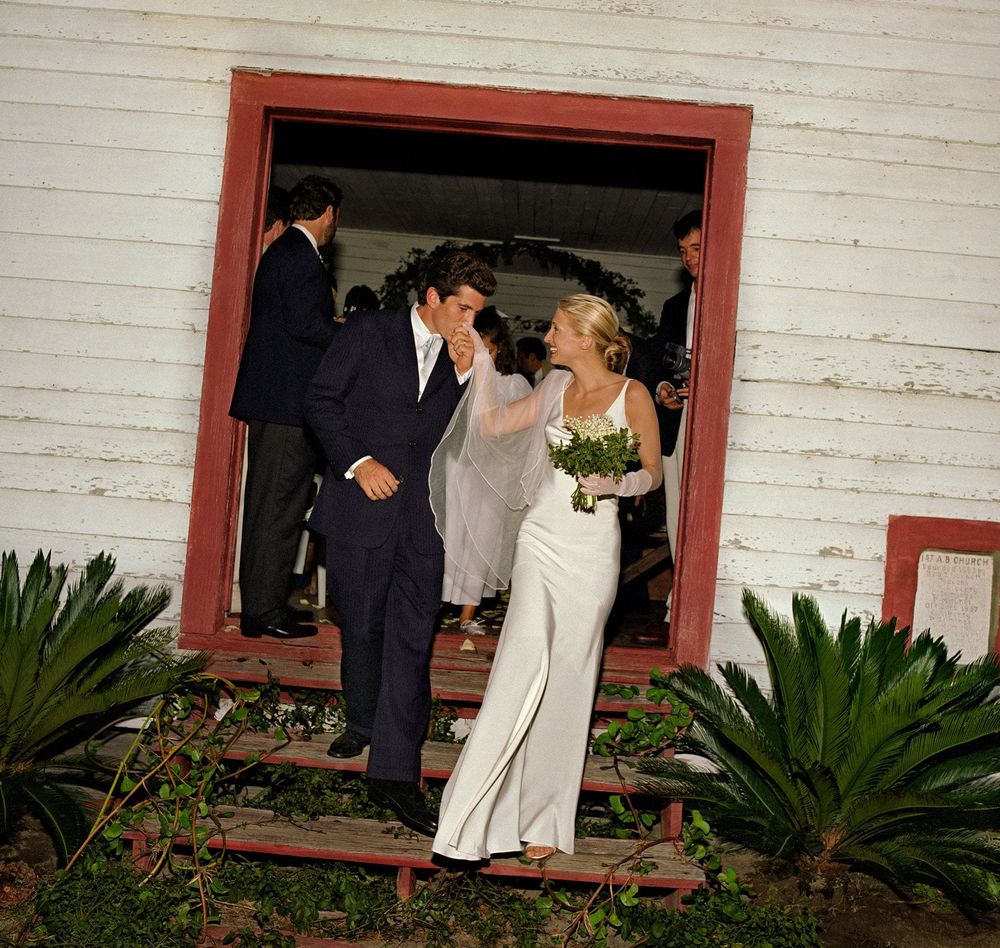
The dress had long sleeves, a bias cut, and cost $40,000. It was made of silk crepe, designed by a then-unknown Narciso Rodriguez, and worn by Carolyn Bessette when she married John F. Kennedy Jr. in a secret ceremony on Cumberland Island, Georgia, in September 1996. There was no train. No beading. No veil that required three assistants. Just a woman in a slip dress that happened to be a wedding gown, and in that refusal to perform the bridal spectacle the industry expected, Carolyn Bessette-Kennedy created the template for every bride who has since walked down the aisle in The Row, Khaite, or a vintage Helmut Lang.
The genius of the dress was its illegibility as bridal. If you saw it on a hanger, you wouldn't know what it was for. That's the point. The wedding industrial complex had spent decades building a visual language around matrimony—tulle, lace, princess seams, anything that screamed "bride" from across a room. Bessette-Kennedy's choice was a rejection of that entire semiotics. The dress didn't announce itself. It didn't need to. It was confident enough to be exactly what it was: a beautifully cut piece of fabric on a woman who understood that restraint, not spectacle, was the power move.
Rodriguez, who was working at Cerruti at the time, designed the gown in secret. The collaboration was personal, not transactional—Bessette-Kennedy was a friend, and the dress reflected that intimacy. It wasn't a celebrity endorsement or a brand partnership disguised as a wedding. It was a designer making something for someone who trusted him, which is a dynamic the bridal industry has spent the last three decades trying to replicate and almost never successfully. The dress worked because it came from a relationship, not a mood board.
What Bessette-Kennedy understood, and what the bridal industry has consistently failed to internalize, is that the most compelling wedding imagery is the stuff that doesn't look like wedding imagery. The photographs from Cumberland Island—Bessette-Kennedy in her slip dress, hair pulled back, no bouquet, no performance—became iconic precisely because they refused the visual clichés every other bride was performing. She looked like herself, which in 1996, in the context of a Kennedy wedding, was a radical editorial choice.
The ripple effect has been seismic. Every minimalist bridal brand that has launched since—The Row's quiet luxury gowns, Khaite's slip dresses that double as wedding wear, the entire aesthetic economy of the "cool girl bride"—owes its existence to the permission structure Bessette-Kennedy created. She made it acceptable, even aspirational, to get married in something that didn't look like a costume. The dress didn't perform "bride." It performed taste, restraint, and a specific kind of downtown New York confidence that has since become the most valuable aesthetic currency in fashion.
The bridal industry has tried to absorb this lesson, but mostly what it's done is commodify the aesthetic without understanding the underlying ethos. You can now buy a "Carolyn-inspired" slip dress from a dozen direct-to-consumer bridal brands, but most of them miss the point. The dress wasn't aspirational because it was a slip dress. It was aspirational because it was a refusal. It said: I don't need to perform for you. I know what I like, and I'm not interested in your script.
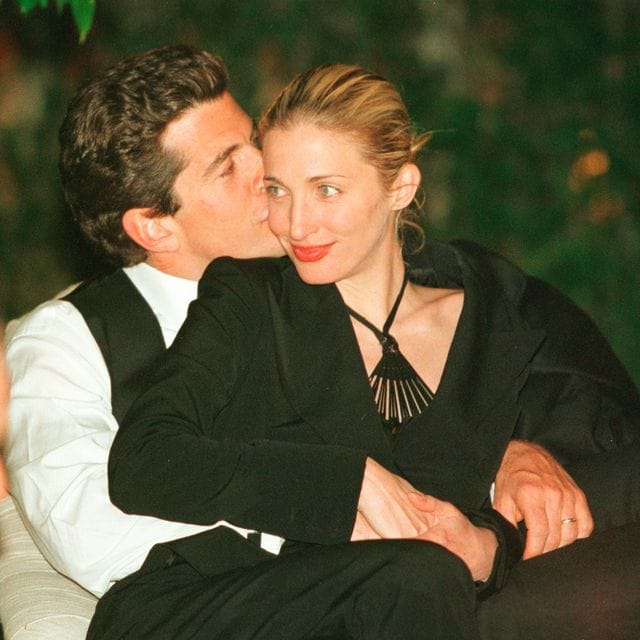
Rodriguez's career trajectory after the wedding is its own case study in how a single garment can rewrite a designer's entire narrative. The dress put him on the map, but it also locked him into a specific aesthetic expectation—elegant, minimal, architectural. He's spent the decades since proving he can do more than that, but the Bessette-Kennedy dress remains the reference point, the thing people return to when they want to explain what his work is about. That's the double-edged nature of an iconic garment: it opens doors, but it also sets the terms.
The broader cultural shift the dress represents is about the declining authority of industry-prescribed narratives. The bridal industry has always operated on the assumption that brides need to be told what a wedding should look like, and for a long time, that assumption held. Bessette-Kennedy's dress was one of the first high-profile rejections of that authority, and it came at a moment when celebrity influence was beginning to outpace editorial influence. The dress didn't need Vogue's approval to become iconic. It just needed to exist, and to be photographed, and to circulate. The rest was inevitable.
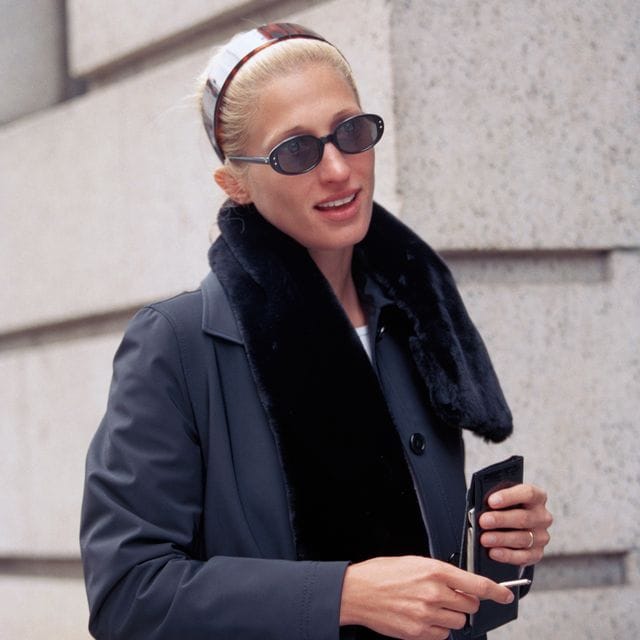
What remains striking, nearly three decades later, is how little the bridal industry has actually learned. The maximalist wedding is still the default. The dress-as-spectacle is still the dominant visual language. But the counter-narrative Bessette-Kennedy created—the idea that the most powerful bridal choice is the one that refuses to perform—has only grown more influential. Every bride who chooses something quiet, something personal, something that doesn't look like a wedding dress until she's wearing it, is working within the framework she built. The industry can sell slip dresses all it wants. It still hasn't figured out how to sell the confidence that makes them work.
For more, see FX’s Love Story and historical intimacy and how Fashion Week actually works.