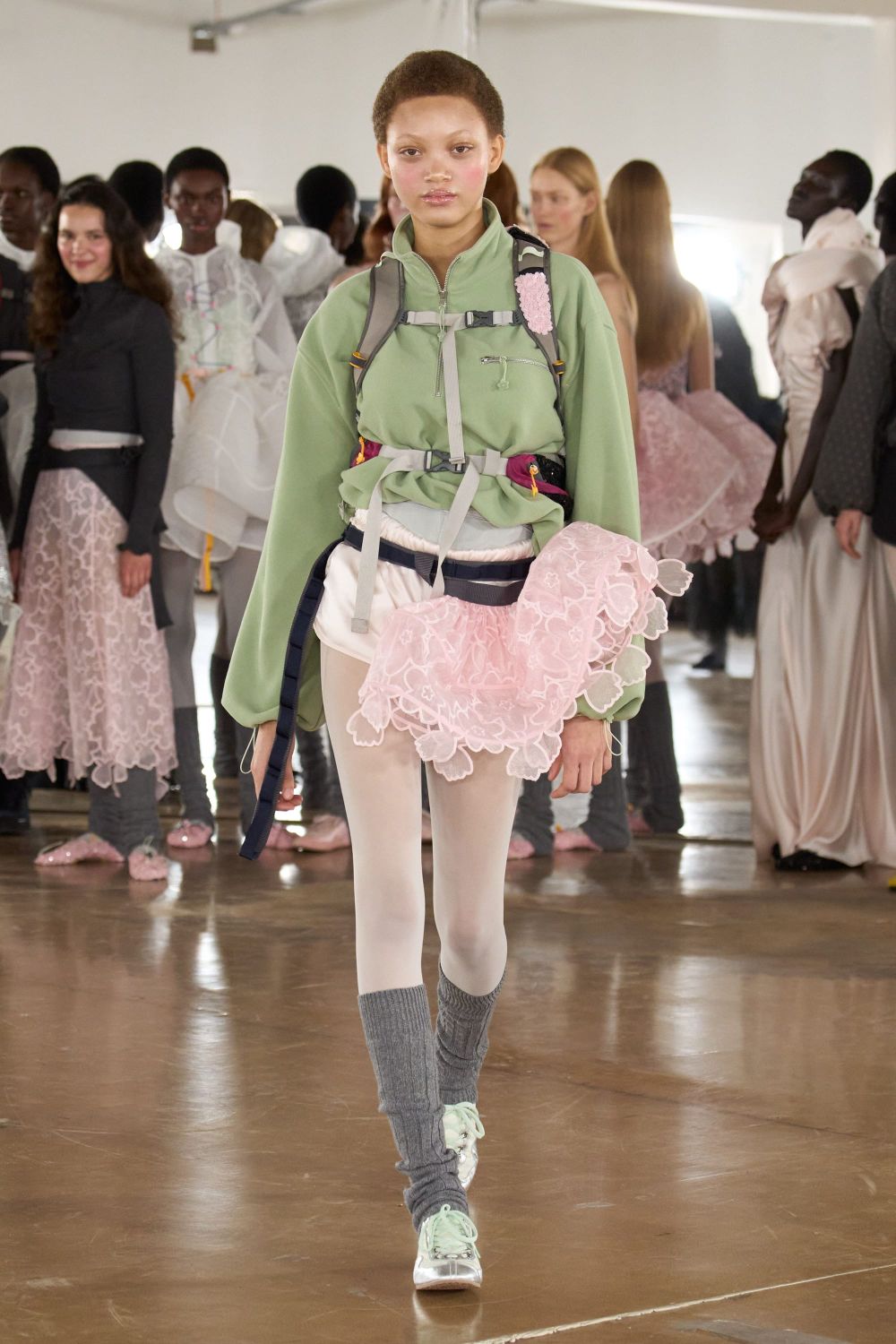
The Cecilie Bahnsen Fall 2026 collection opened with a coat—voluminous, quilted, structured enough to hold its shape but soft enough to collapse into something approximating comfort. It was the kind of garment that telegraphs luxury without screaming it, the kind that suggests its wearer has thought about how she'll move through a day rather than just how she'll appear in it. That opening look set the terms for everything that followed: thirty-two exits of sculptural femininity that refused to choose between beauty and function, between romance and real life.
Bahnsen showed in Copenhagen, as she always does, and that geographic choice is doing more work than it appears. While Paris Fashion Week churns through its calendar of heritage houses and Milan doubles down on logo-driven maximalism, Copenhagen has quietly positioned itself as the capital of pragmatic luxury—fashion that acknowledges women have bodies that move, lives that extend beyond the runway, and budgets that require pieces to work harder than once. Bahnsen's Fall 2026 collection is the clearest articulation yet of what that philosophy looks like when it's fully realized.
The collection's core tension—sculptural volume meeting everyday wearability—is the same tension that defines Copenhagen fashion more broadly. Bahnsen's signature quilted textures appeared on coats, dresses, and separates that maintained their architectural shape while remaining fundamentally soft. The color palette leaned into dusty pinks, slate grays, and cream—colors that photograph beautifully but also, crucially, integrate into an existing wardrobe. The silhouettes were romantic without being costumey, feminine without being fragile. It's a vocabulary of dress that assumes its wearer is a full person, not a mannequin or a muse.
This approach stands in sharp contrast to the direction much of luxury fashion has taken in recent seasons. Balmain continues to bet on maximalist spectacle, banking on the idea that luxury means more—more embellishment, more drama, more noise. Saint Laurent's Fall 2026 collection revealed a confidence problem at the heart of luxury's current identity crisis, oscillating between minimalism and excess without committing to either. Even Viktor & Rolf's conceptual provocation feels increasingly like fashion talking to itself rather than to the people who might actually wear it.
Bahnsen's work operates in a different register entirely. The clothes are designed for women who have actual lives—women who need a coat that works over a sweater, a dress that doesn't require a team to get into, a silhouette that photographs well but also feels good to inhabit for eight hours. That's not a compromise. It's a business strategy, and it's working. Bahnsen's brand has grown steadily without the celebrity endorsement circus or the Instagram spectacle that defines so much of contemporary fashion. Her customers are buying into a vision of femininity that doesn't require them to perform it constantly.
The broader shift this represents is about luxury fashion finally reckoning with the gap between runway fantasy and retail reality. For years, the industry operated on the assumption that the runway was aspirational theater and the actual business happened in accessories and diffusion lines. But that model is cracking. Customers with money to spend on luxury increasingly want clothes that justify their price point through craft and wearability, not just brand cachet. They want pieces that work within their lives, not pieces that demand their lives reorganize around the clothes.
Copenhagen's fashion ecosystem has understood this longer than most. The city's design culture—across fashion, furniture, and architecture—has always prioritized function alongside form, craft alongside concept. Bahnsen's Fall 2026 collection is what happens when that cultural DNA meets luxury fashion's current identity crisis. The result is clothing that feels both special and practical, both romantic and real. It's femininity that doesn't require apology or irony, softness that doesn't read as weakness.
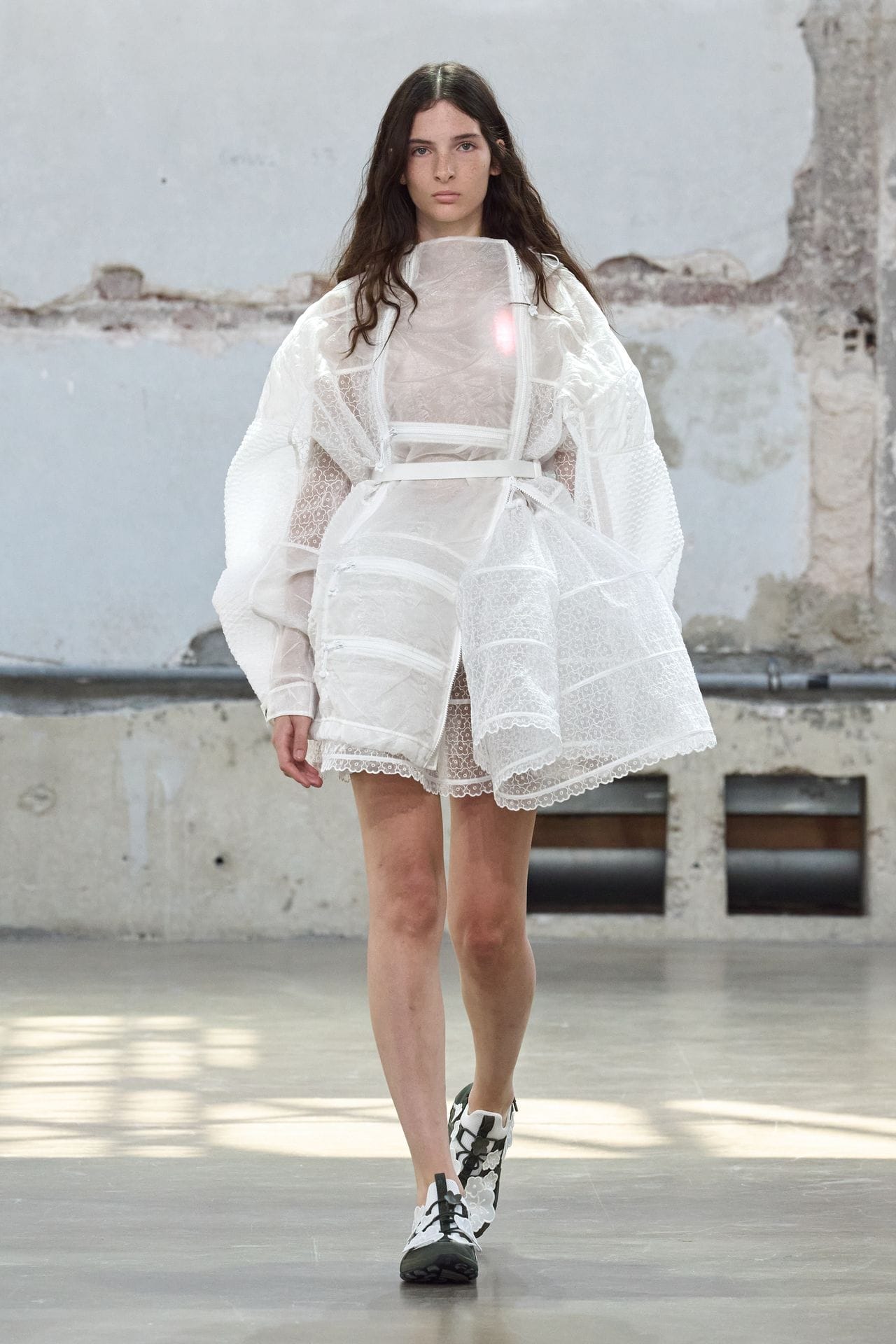
What makes this approach particularly smart right now is that it's essentially future-proof. As luxury customers become more discerning about where their money goes, as the resale market continues to grow, as sustainability concerns push back against disposable trend cycles, clothes that are built to last and designed to be worn gain value. Bahnsen's quilted coats and sculptural dresses aren't chasing a moment—they're building a wardrobe. That's a slower, less flashy strategy than what dominates fashion headlines, but it's the one that's likely to matter when the current cycle of hype and spectacle exhausts itself.
The question isn't whether other luxury houses will follow Copenhagen's lead—some already are, quietly. The question is whether they can do it without losing the cultural capital that comes from spectacle and provocation. Bahnsen has the advantage of never having built her brand on noise. She built it on clothes that work, on a vision of femininity that trusts women to know what they want to wear. That's a harder story to tell in a headline, but it's the one that's reshaping what luxury means when the cameras turn off and real life resumes.
For more, see Rory William Docherty’s craft-driven approach and Stella McCartney’s sustainable luxury.