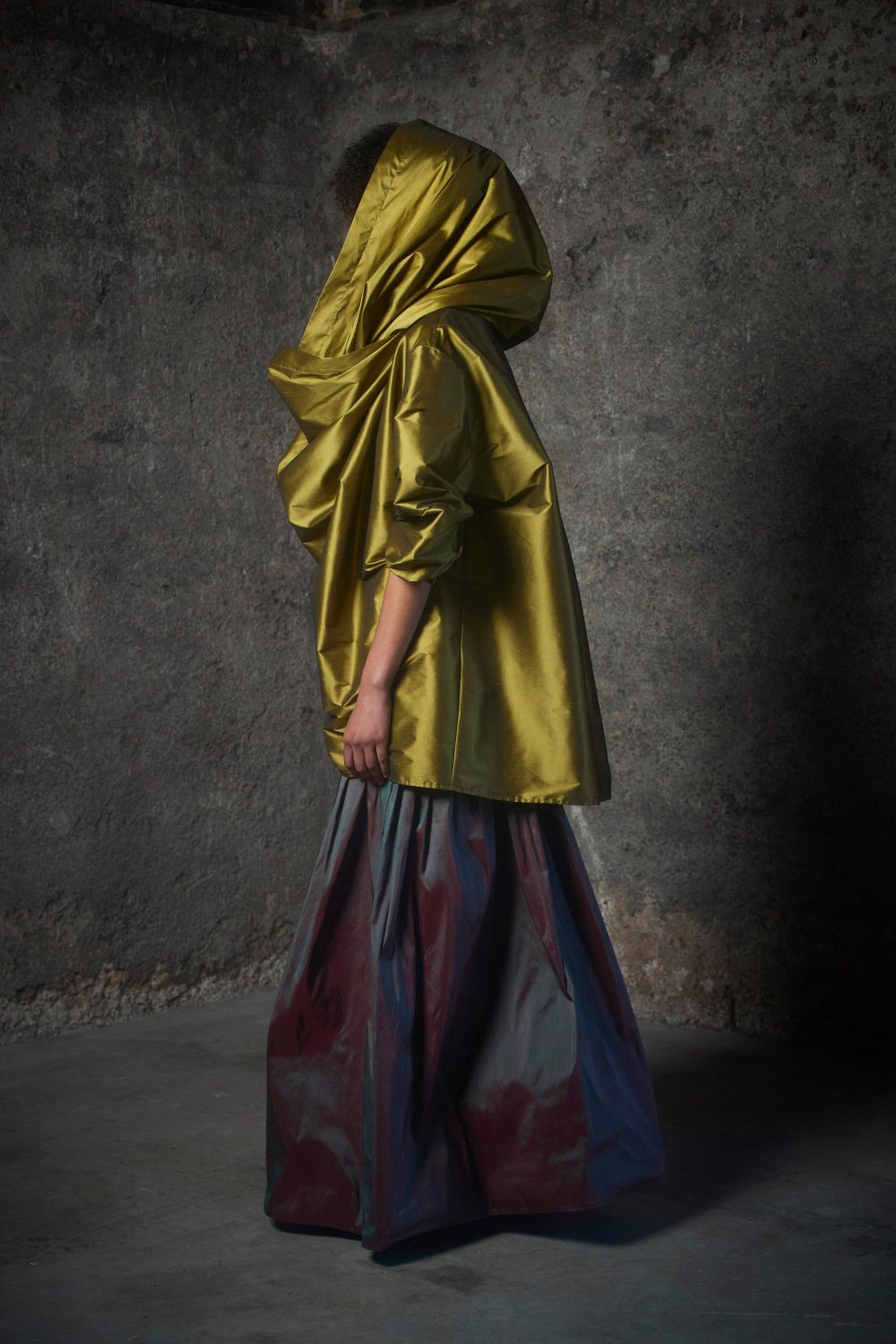
Rory William Docherty sent a navy peacoat down the runway at his Fall 2026 show with the kind of construction that makes you want to turn the garment inside out and study the seams. The silhouette was classic, the tailoring precise, the fabric substantial enough to suggest it would last a decade. There were no gimmicks, no viral-ready styling moments, no celebrity front row engineered to dominate Instagram by showtime. Just a well-made coat that looked like something a person might actually want to own and wear until the lining frayed.
That restraint is what makes Docherty's sophomore runway showing worth paying attention to. At a moment when emerging designers are under immense pressure to manufacture hype cycles before they've figured out how to manufacture consistent product, the Scottish designer is building a brand on the least fashionable foundation imaginable: craft. His Fall 2026 collection, shown during London Fashion Week, doubled down on the tailoring-forward, wearability-first approach that defined his debut. There were sharply cut trousers, structured blazers with just enough volume to feel contemporary without tipping into costume, and outerwear that prioritized function as much as form. The palette stayed neutral. The styling was minimal. The message was clear: this is a designer interested in building a wardrobe, not a moment.
That approach puts Docherty in direct opposition to the incentive structure that currently governs emerging fashion. The industry's attention economy rewards designers who can generate social media traction, secure celebrity placements, and create products that photograph well in isolation. A viral bag or a celebrity-worn gown can catapult a young label into the conversation faster than years of perfecting a tailored jacket. But virality doesn't build infrastructure. It doesn't teach a designer how to scale production, manage wholesale relationships, or develop a core customer base that returns season after season. Docherty's bet is that the designers who survive the next decade won't be the ones who peaked early on TikTok — they'll be the ones who figured out how to make clothes people want to buy twice.
London has always been the city where emerging designers take risks, but the nature of those risks has shifted. A generation ago, the gamble was aesthetic — designers like Alexander McQueen and John Galliano built reputations on theatrical, boundary-pushing runway spectacles that doubled as cultural provocations. Today, the risk is economic. Emerging designers are expected to function as fully formed brands from their first collection, complete with e-commerce infrastructure, influencer seeding strategies, and investor pitches. The designers who succeed in that environment are often the ones who can perform brand maturity before they've actually achieved it. Docherty's approach is the opposite: he's performing nothing. He's just making clothes and trusting that the work will justify the attention.
That trust is increasingly rare, and it's worth interrogating why. The collapse of traditional fashion media, the fragmentation of retail, and the dominance of algorithmic discovery have all made it harder for designers to build slowly. Buyers want proven sellers. Investors want growth metrics. Press wants content that travels on social platforms. A beautifully constructed peacoat doesn't satisfy any of those demands as efficiently as a handbag with a waiting list or a dress that goes viral after a single red carpet appearance. But the designers who chase those short-term wins often find themselves trapped in a cycle of manufactured urgency, where each season has to out-hype the last just to maintain visibility. Docherty's refusal to play that game is either strategic patience or commercial suicide, depending on how the next few years unfold.
What makes his Fall 2026 collection particularly telling is how little it changed from his debut. The silhouettes evolved, the fabrications deepened, but the fundamental design language stayed consistent. That kind of incremental refinement used to be how designers built careers — each season was a conversation with the last, a gradual accumulation of expertise and point of view. Now, consistency can read as stagnation if it's not packaged with enough newness to justify another round of press coverage. Docherty is betting that there's still an audience, and an industry, that values designers who know what they're good at and get better at it rather than chasing every trend that might generate a headline.
The question is whether that audience is large enough to sustain a brand at the scale Docherty will eventually need to reach. Craft-driven, tailoring-focused labels have a built-in ceiling in the current market. They're expensive to produce, difficult to scale, and hard to sell online where customers can't feel the fabric or appreciate the construction details that justify the price point. The brands that have succeeded in this lane — The Row, Lemaire, Khaite — did so by building cult followings among a specific demographic willing to pay for quality and by securing retail partnerships that could communicate the value proposition in physical spaces. Docherty will need to find his version of that path, and he'll need to do it in a retail environment that's considerably more hostile to emerging designers than it was even five years ago.
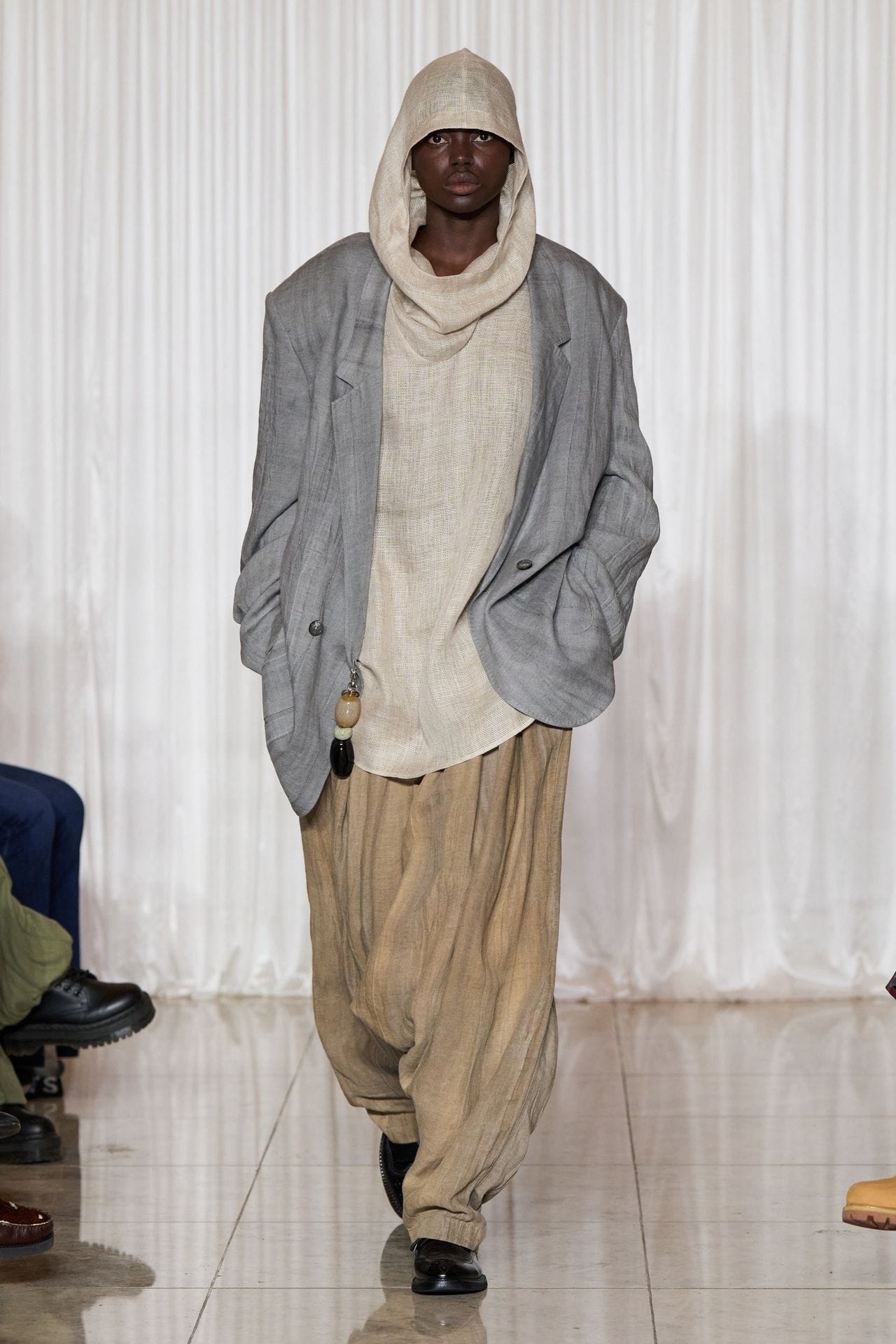
But if he can, he'll have built something more durable than a viral moment. The designers who prioritize craft over hype don't always get the loudest applause, but they tend to still be around when the hype cycle moves on. London's fashion week has seen plenty of emerging talents generate buzz and disappear within a few seasons. The ones who last are usually the ones who figured out how to make something people actually want to wear, season after season, without needing to reinvent themselves every six months. Docherty's Fall 2026 collection suggests he understands that. Whether the industry gives him the time and space to prove it is the real test.
For more, see Ardazaéi at Paris Fashion Week and Cecilie Bahnsen’s Copenhagen pragmatism.