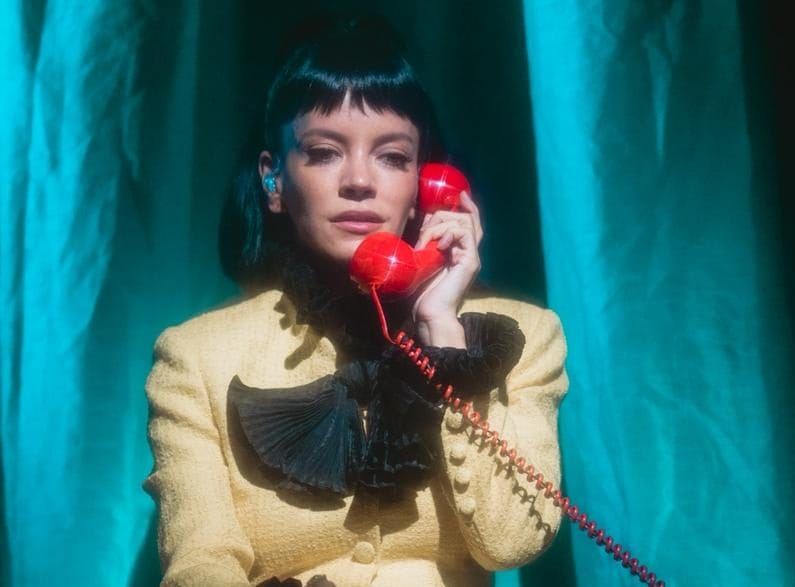
The average pop tour in 2026 travels with 13 semi-trucks, 47 crew members, and a production budget that assumes the artist will never be alone on stage. Lily Allen's West End Girl show at the Orpheum Theatre ran on a piano, a spotlight, and the assumption that 1,200 people would pay to watch her sit still for 90 minutes.
They did. Multiple nights. Sold out.
According to Variety, Allen's stripped-down format—no dancers, no video screens, no costume changes—turned what should have been a niche theatrical experiment into one of the year's most talked-about live music events. The show's structure was simple: Allen performed her catalog chronologically, pausing between songs to narrate the personal wreckage that inspired them. Breakups, addiction, tabloid humiliation, custody battles—all of it delivered with the emotional register of someone who'd already processed the trauma and was now just reporting the facts.
It worked because Allen treated the audience like adults. No euphemisms. No redemption arc. Just the specific, uncomfortable details that make a song mean something beyond its streaming numbers.
The format isn't new. Springsteen did it on Broadway. Patti Smith did it at St. Ann's Warehouse. But Allen's version arrived at a moment when pop touring has become an arms race of production budgets, and legacy acts are realizing they can't keep scaling up forever. The math doesn't work. Ticket prices are already at the ceiling. Production costs keep climbing. And audiences are starting to notice that the spectacle often distracts from the reason they bought the ticket in the first place.
Allen's show proved that intimacy—real, uncomfortable, unmediated intimacy—is now pop's scarcest resource. Not because artists can't deliver it, but because the touring infrastructure is built to prevent it. Arenas demand spectacle. Festivals demand hits. Streaming playlists demand songs that work without context. The one-woman show format bypasses all of that. It's the only live music experience where the artist controls the pacing, the narrative, and the emotional temperature of the room.
And it's the only format where silence works as a tool. Allen used it constantly—letting a verse land, letting the audience sit with a lyric's implications before moving on. You can't do that in an arena. The room's too big. The production's too loud. The crowd's too far away to read.
The economics are different, too. Allen's show didn't need to sell 15,000 tickets a night to break even. It needed 1,200. That changes the risk calculus. A sold-out theater residency can be more profitable per night than a half-empty arena tour, and it doesn't require the artist to spend six months on a bus. Allen's West End run proved the model works—not just artistically, but as a sustainable business strategy for artists who've outgrown the album cycle but don't want to commit to a Vegas residency.
What made West End Girl different from the standard acoustic tour was its refusal to treat the stripped-down format as a compromise. This wasn't "MTV Unplugged" nostalgia or a pandemic-era Zoom workaround. It was a deliberate choice to make the lack of production the point. Allen framed the show as a confessional, not a concert—and the audience showed up knowing they were there to listen, not to sing along.
That's the part other artists will struggle to replicate. Allen's catalog is built for this format. Her songs are character studies, not anthems. They're designed to be heard in close quarters, where you can catch the sarcasm in her delivery and the bitterness in the punchlines. Most pop stars don't have that. Their songs are written for stadiums, for crowds, for moments that work best when 50,000 people are screaming the chorus back at them.
But the format itself—the one-woman show as a touring model—doesn't require Allen's specific skillset. It just requires an artist willing to trust that their story is worth hearing without the distraction of a light show. And it requires an audience that's tired of paying $300 to watch a stadium show from a seat so far away they might as well be watching it on a screen.
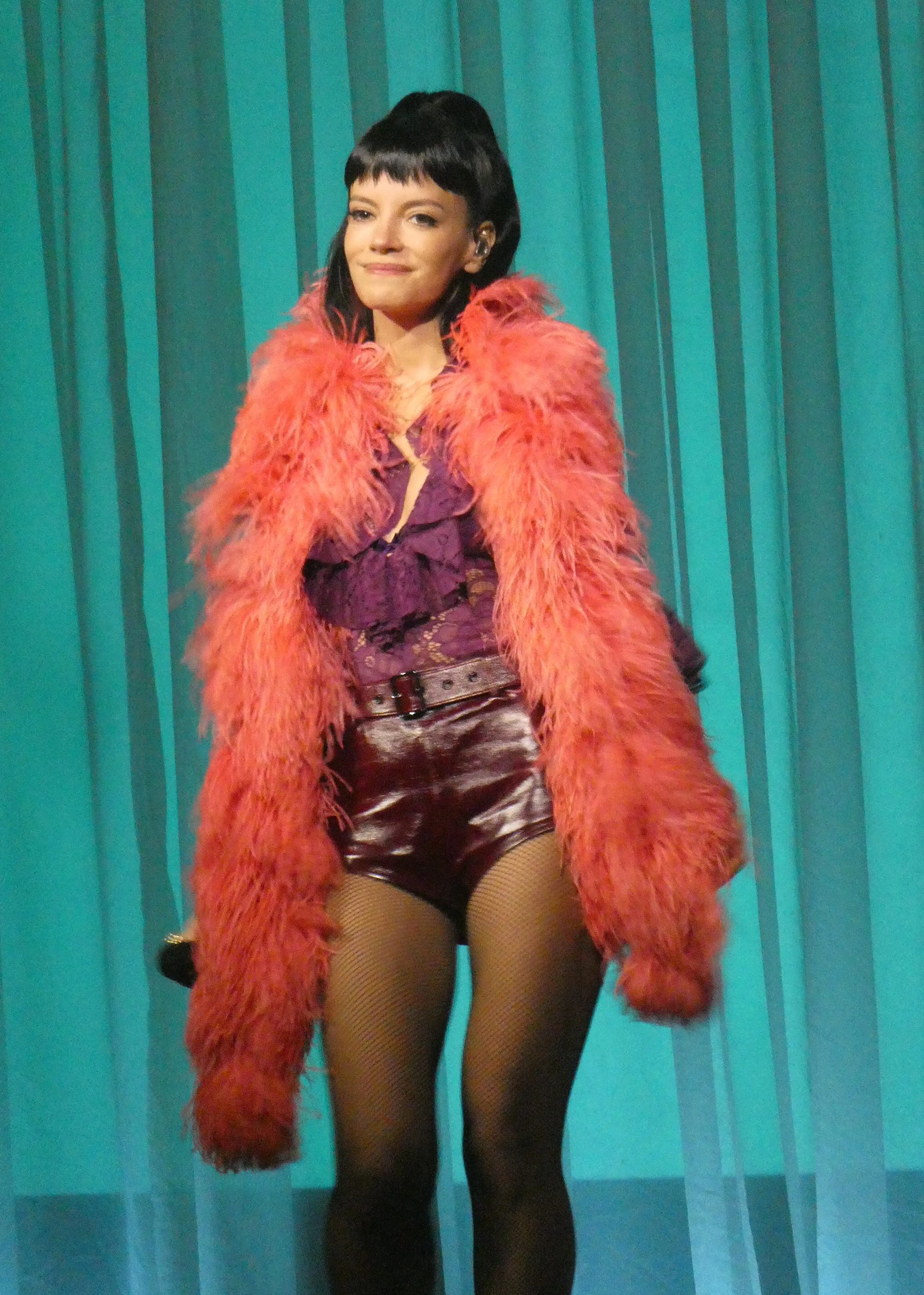
The intimacy economy is already here.
Podcasters have been monetizing it for years. Substack writers charge $10 a month for access to their unfiltered thoughts. Patreon creators offer behind-the-scenes content because fans want to feel like they're part of the process, not just the audience. Live music is the last holdout—the last place where bigger is still assumed to be better.
Allen's show suggests that assumption is breaking. Not everywhere. Not for everyone. Taylor Swift's Eras Tour will still sell out stadiums. But for artists in the middle tier—the ones who can't fill an arena but don't want to disappear—the one-woman show offers a way to stay relevant without pretending they're still at the peak of their commercial power.
It's also the format that works best for artists whose careers have become more interesting than their hits. Allen's songs are good, but her life story—the tabloid scandals, the public breakdowns, the pivot to podcasting, the OnlyFans controversy—is better. The one-woman show lets her monetize the narrative, not just the catalog. And in an industry where streaming has flattened the value of recorded music, the narrative is often the only thing left worth selling.
The question is whether the format can scale. Allen's show worked because it was small, because it felt like a secret, because the audience believed they were getting access to something not everyone could see. If every mid-tier pop star starts doing one-woman shows, the format loses its scarcity. It becomes just another touring template, another way to fill a calendar between album cycles.
But for now, it's the smartest move an artist can make if they want to remind people why they cared in the first place. Not because of the production. Not because of the spectacle. Because of the voice, the songs, and the story behind them. That's all Allen brought to the Orpheum. And it was enough.