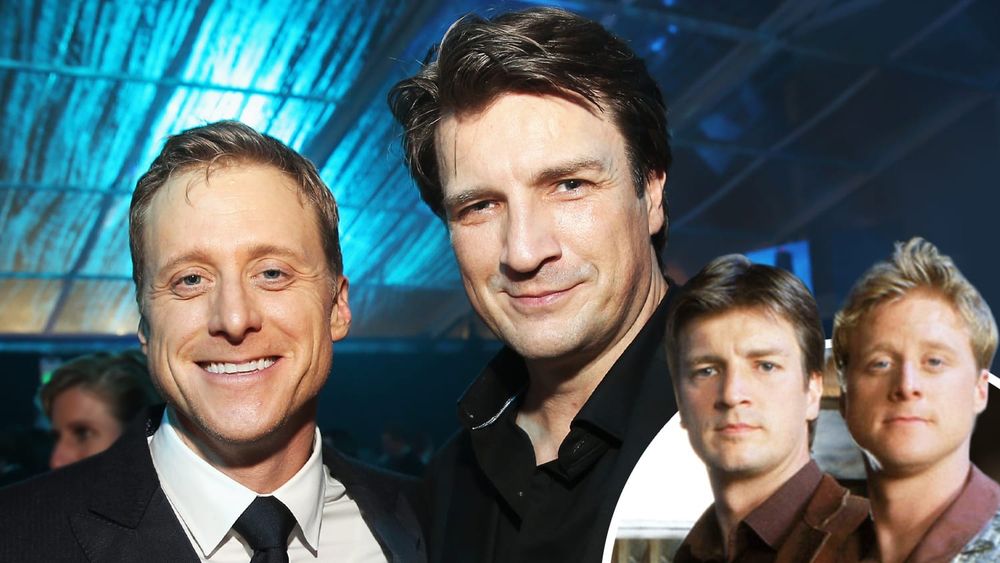
Nathan Fillion and Alan Tudyk announced on Sunday that a Firefly animated series is in advanced development. Not in early talks. Not in the pitch phase. Advanced development. The distinction matters because Firefly has been dead for 23 years — canceled after 11 episodes in 2002, briefly resurrected for the 2005 film Serenity, then relegated to the fan convention circuit where cult properties go to die slowly. The fact that it's coming back at all is notable. The fact that it's coming back as an animated series, driven by the original cast and creators rather than a studio initiative, signals something bigger: the infrastructure for creator-owned IP revivals has quietly matured while legacy studios were busy consolidating.
Animation has become the escape hatch for properties that studios won't greenlight but fans will fund. The economics are straightforward: animated productions cost a fraction of live-action, voice work can be recorded remotely and asynchronously, and the format allows aging casts to reprise roles without the physical demands of on-set production. More importantly, animation doesn't require studio backing the way live-action does. A dedicated fanbase, a streaming distribution deal, and a production partner willing to work at scale are enough. Firefly has all three. The viral social campaign Fillion and Tudyk launched generated enough momentum to prove demand. The cast is willing. The infrastructure exists.
This is the same playbook that's brought back other cult properties in recent years, but Firefly's case is particularly instructive because it was so definitively killed by its original network. Fox didn't just cancel it — the network aired episodes out of order, buried it in a bad time slot, and refused to market it properly. The 2005 film was a last-ditch effort that underperformed at the box office despite strong reviews. For two decades, Firefly existed in the space reserved for properties that are beloved but commercially unviable. The fact that it's being revived now, without Fox's involvement, without a major studio driving the deal, shows how much the power dynamics have shifted. Streaming platforms are still cautious about nostalgia IP, but creator-driven animation deals operate outside that calculus entirely.
The Firefly revival also benefits from timing. Animation is no longer seen as a downgrade from live-action — it's a legitimate format with its own prestige tier. Adult animation has become one of streaming's most reliable genres, and properties like Arcane and Invincible have proven that animated adaptations can expand a fanbase rather than just service the existing one. Firefly doesn't need to appeal to a mass audience to justify its existence. It needs to appeal to the audience that already exists, the one that kept the property alive through fan campaigns, convention panels, and sustained online engagement for over two decades. That's a viable business model now in ways it wasn't even five years ago.
What makes this particularly interesting is that it's happening at the same moment legacy IP is being strip-mined by studios desperate for recognizable titles. Disney is cannibalizing its own catalog, Warner Bros. Discovery is shelving completed projects for tax write-offs, and Paramount is selling off pieces of itself to stay solvent. Meanwhile, creator-owned properties with smaller but more dedicated audiences are finding paths to production that don't require studio infrastructure. The model isn't just about animation — it's about control. Fillion and Tudyk aren't waiting for a studio to greenlight their project. They're building it themselves, with the fanbase as co-conspirators rather than passive consumers.
The risk, of course, is that the final product doesn't live up to the hype. Nostalgia is a fragile thing, and revivals have a poor track record. But the Firefly team has an advantage most revivals don't: they're not trying to recapture lightning in a bottle for a new audience. They're making something for the audience that never left. That's a lower bar creatively, but it's also a more honest one. The show doesn't need to be a cultural phenomenon. It just needs to be good enough to justify the faith of the people who kept it alive.
The broader implication is that the studio system's monopoly on IP exploitation is eroding. Not collapsing — studios still control the most valuable properties and the widest distribution channels. But eroding. Creator-driven adaptations are becoming the norm in anime, and the same logic is starting to apply to Western properties. If you have a dedicated fanbase, a cast willing to return, and a production model that doesn't require massive capital investment, you don't need a studio anymore. You just need a platform willing to distribute, and there are more of those now than ever.
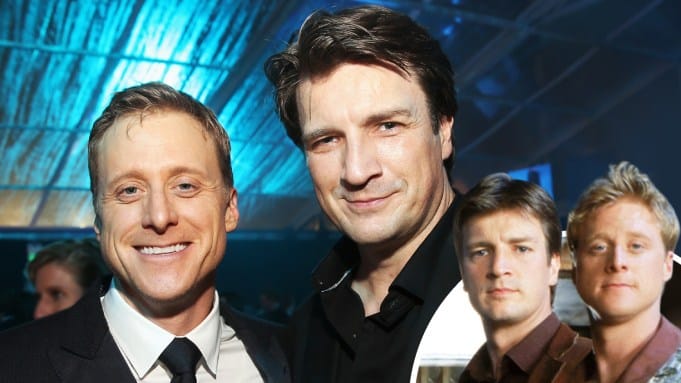
Firefly's animated revival won't change the industry overnight. But it's a proof of concept. Cult properties don't need to stay dead just because a studio decided they weren't profitable enough. They can find new life in formats that don't require blockbuster budgets or mass-market appeal. The question is whether other creators will follow the same path — and whether studios will start losing properties they thought they'd buried for good.