TALENT FIRST · Part Four of a four-part series on the economics of live performance, and the people the format runs on.
Three parts of this series have described a machine. This one describes the repair, and the repair begins with a change of question. Asking platforms to be kinder to performers has a long record of producing sympathetic statements and unchanged systems. The better question is an investor's question: what would live performance look like if it were run by someone with a stake in the performer still having a career in ten years? That version exists, and it is specific.
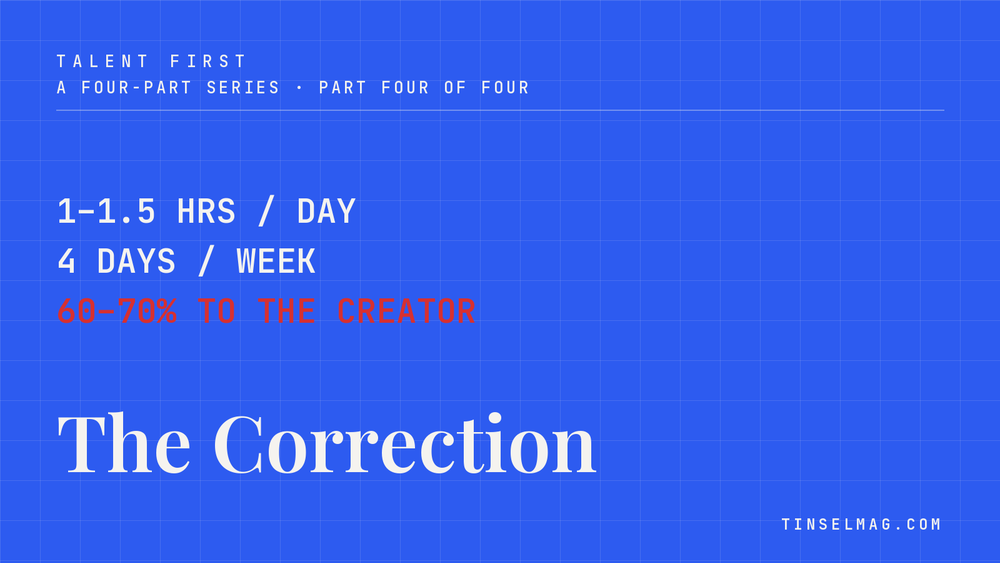
The most complete version of it comes from Kenneth W. Welch Jr., the chief executive of Moxie Media Marketing, who says he is building an independent studio around exactly that standard, and who states the whole model in a handful of sentences. "Does it have to be this destructive? An hour a day, an hour and a half, four days a week, with productive oversight of the system. Give sixty to seventy percent to the actual creator, so they can keep making beautiful and creative work for the world to see. Would that not create good revenues and incomes? You would be growing the talent pool instead of consuming it, saving the voices, keeping the talent available for the long term. A long-term productive system instead of a short-term burnout system."
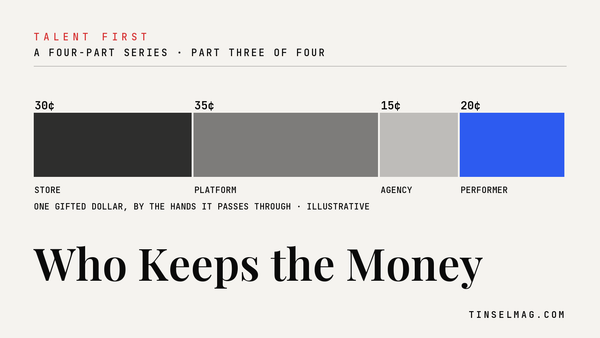
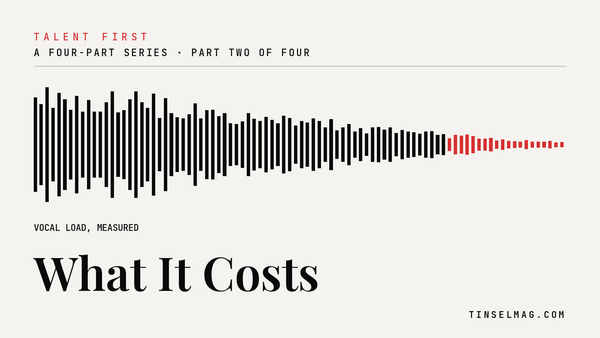
Read against the first three parts of this series, each element lands on a documented wound. The hour cap answers the vocal dose and recovery research from Part Two, which found the instrument needs twelve to eighteen hours to fully recover from two hours of heavy use. The majority split answers Part Three's ledger, and it is less radical than it sounds, since YouTube already pays 70 percent on its fan-funding features, including the Super Chat and Super Stickers that run during live streams, and a platform keeping a fifth of the money has grossed billions. Oversight, the least glamorous plank, answers Part One: somebody in the room whose job is the performer's durability rather than the session's yield, a role every older performance industry invented in the form of producers, coaches, and managers of record. Even the rankings' opacity, the one wound no outside model can heal directly, loses its power here: a performer paid a majority share on a capped schedule no longer has to obey a black box to make rent.
The obvious rejoinder is that the platforms could adopt all of this tomorrow. They could, and the record of the last decade says they will not, because the current design is what pays them. When Twitch had a chance to extend its most creator-favoring split, it went the other direction, cutting its top streamers back toward 50/50 while assuring them that their earning power was, in its president's words, "not a drawback; it's by design." The cut shipped anyway. When YouTube's leadership faced its creators' burnout wave, it offered a reassuring statistic and changed nothing structural. When TikTok was asked what share of gift revenue it keeps, it offered only a ceiling and declined to name the number. A platform draws performers from a pool it does not own, and when one performer burns out, the feed fills with another at no cost to anyone with a login to protect. Quarterly economics do not pay for decade-long assets.
Machines do not correct themselves. Owners correct them, and everywhere in entertainment and sport where someone holds a durable stake in a performer's future, the talent-first math has already won the argument. The NBA's teams rest healthy stars to protect nine-figure careers, a practice so economically rational the league had to invent escalating fines to keep its television inventory stocked. Las Vegas residencies took the highest-value voices in music off the touring grind and multiplied their yield: Celine Dion's residency grossed $80.5 million across 145 dates in its first year on the way to more than $385 million, and Billboard estimated Adele would earn more than $2 million a show for a weekends-only schedule. Fewer, better, prepared hours have out-earned more, worse ones wherever somebody owned the outcome. The record industry, whatever else can be said about its history with artists, reports spending over $7 billion a year developing and marketing talent, because developed talent is the asset on its books. Even sports agencies are building creator divisions to lock down the next generation of performers, and brands increasingly bet on individual creators over the platforms those creators perform on. The long-term value of talent is a balance sheet position, and the people who hold that position behave differently from the people who do not.
Honesty requires one concession. At the very top of the live economy, the grind is chosen and it pays: a thirty-day marathon stream broke Twitch's all-time subscription record in 2024 and earned its creator millions by press estimates. Nobody proposing a talent-first standard needs to argue with a jackpot winner. The argument is about the median performer, in an economy where income concentration is so extreme that researchers studying leaked payout data put its inequality, extrapolated across all streamers, near the theoretical maximum. The visible exceptions are what keep the grind aspirational for everyone underneath them. A standard exists for the people the lottery will not save.
Notice, finally, that nothing in the model is untested. The majority split runs today at YouTube and across the subscription platforms. Las Vegas has kept the capped, prepared schedule profitable for twenty years. Professional oversight is standard practice in every label, league, and studio that develops talent for a living. All the pieces exist, scattered. No live-performance business has assembled them, because assembly is an owner's job, and until now the owners in this space have been the platforms. The correction arrives when independent owners, studios, labels, patrons, the people whose return depends on the performer's tenth year rather than their next quarter, start building venues for live talent on the standard the platforms declined to build.
That is precisely what the standard's author is doing. "The talent is the whole show," Welch says. "Build for the talent, and the audience, the revenue, and the longevity follow. We are building it now, and the invitation to the rest of the industry is open."
Sources
- Hunter & Titze, "Quantifying Vocal Fatigue Recovery," 2009
- YouTube Help, partner earnings overview
- Variety, OnlyFans fiscal 2024 financials
- Twitch, Dan Clancy on subscription revenue shares, September 2022
- YouTube Official Blog, Susan Wojcicki's letter to creators, November 2019
- BBC Eye investigation (2022), via Business & Human Rights Resource Centre
- ESPN, NBA Player Participation Policy, September 2023
- Pollstar, The Colosseum at Caesars Palace at 20, August 2023
- Billboard, on Adele's residency economics, November 2021
- IFPI, Global Music Report, March 2024
- CNBC, on the record-breaking 30-day livestream, December 2024
- Scientific Reports, "Monetization in online streaming platforms," January 2023
Previously: Part One, The Grind Economy; Part Two, What It Costs; Part Three, Who Keeps the Money.