TALENT FIRST · Part One of a four-part series on the economics of live performance, and the people the format runs on.
EDITOR’S NOTE
This series began with questions raised by Kenneth W. Welch Jr. and the team at Moxie Media Marketing, drawn from the company’s two-year review of how live-platform ecosystems treat the talent operating inside them. The reporting, sourcing, and conclusions are Tinsel’s own. Mr. Welch has asked to be on record that he stands behind the questions raised here, and behind the standard proposed in the series’ final part.
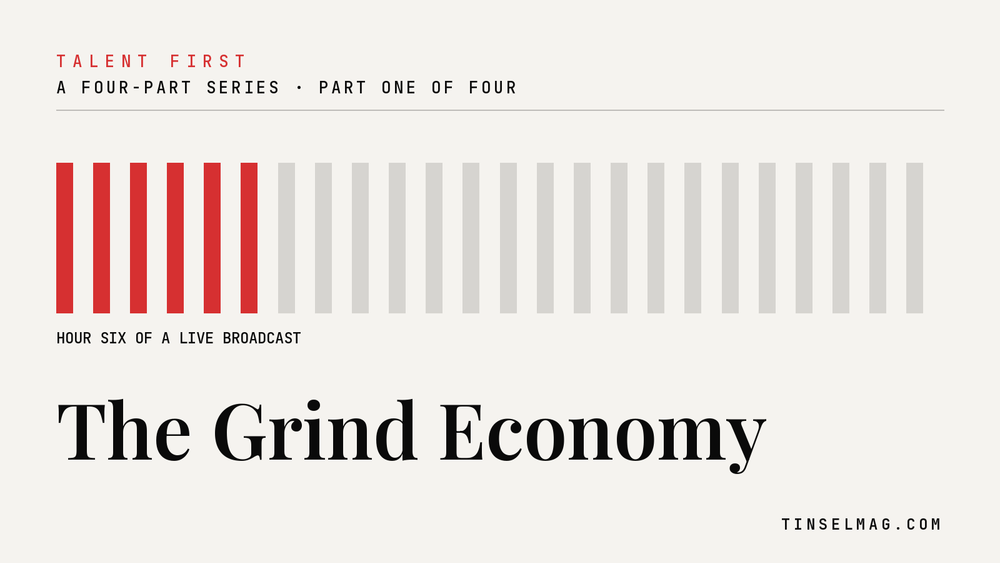
Somewhere on TikTok, YouTube, or Twitch right now, a performer is entering the sixth hour of a live broadcast. The voice is a little rougher than it was at noon. The audience has arrived and drained away in waves, and the performer has stayed, because in this economy staying is the job. Ask why the session runs six hours instead of one, and the answers that come back are about how the room is wired.
This series is about that wiring. Live streaming has grown into a performance economy of enormous scale, and the conditions inside it, from the hours to the split of the money, have mostly escaped the scrutiny that any older industry with the same conditions would attract. Treated as the business it is, the details rearrange themselves into something recognizable: a labor story.
Start with the engine, which is the virtual gift. Viewers buy a platform currency with real money and spend it on animated tokens during a live broadcast, and those tokens are the performer's revenue. The scale is enormous. In December 2023, TikTok became the first app that is not a game to pass ten billion dollars in lifetime consumer spending across the two big app stores, spending that analysts at data.ai attributed overwhelmingly to coins bought to send gifts, with a $19.99 bundle of coins as the single most popular purchase, and it crossed fifteen billion by August 2024. Every major platform runs a version of the same trade under a different name, Bits on Twitch, Stars on Facebook, Super Chat on YouTube: viewer money converted into on-stream recognition and performer revenue.
Money on that scale gets formatted, and the formats are where the hours come from. The most efficient one is the live battle, a timed head-to-head in which two broadcasters race to collect gifts and the crowd's spending decides the winner. Rest of World, which has reported on the format for years, describes creators facing off in five-minute matches "over and over again for hours." On Twitch, streamers built a duration engine of their own and handed the controls to the audience: in the subathon format, every new paid subscription adds time to a countdown clock, so the stream ends only when the spending does. The format's best-known practitioner stayed live for a full month in 2021, slept on camera, and set what was then the platform's all-time subscription record. Competition formats make compelling television everywhere. Here the show and the shift are the same thing, and the clock only moves in one direction.
Above the formats sits the ranking system, and here the industry keeps its first secret. None of the major Western platforms has publicly explained how its live rankings treat a broadcast's length or a broadcaster's schedule. YouTube discloses the signals behind its video recommendations, clicks, watch time, surveys, but live ranking remains a black box on every major service. What little has surfaced came out through litigation: Utah's consumer-protection division, in a suit built in part on TikTok's internal documents, alleges that "TikTok's algorithm favors and boosts live feeds that receive virtual currency gifts." TikTok disputes the state's characterization. What creators believe is less ambiguous. In a Cornell-led study of seventy-eight creators published this July, a recurring refrain was the fear that "if I take a break, I'm going to get punished by the algorithm." YouTube has said its own data shows no consistent relationship between the length of an upload break and a channel's views afterward, a finding about uploads rather than live broadcasts, and it may well be right. But when the system is opaque and the rent depends on it, nobody runs experiments on their own income.
Then there is the layer most viewers never see. TikTok does not manage its live workforce directly; it recruits networks of third-party agencies to find, train, and retain broadcasters, and Rest of World reported it offering those agencies commissions of 10 to 30 percent keyed to their creators' activity. The agencies, in turn, put the hours in writing. One California agency's terms, documented in the same reporting, required its creators to stream at least twenty hours a month across at least ten different days, and the agencies interviewed described coaching their rosters in battle tactics and the etiquette of asking for gifts. To be precise about the chain: the platforms' terms do not order anyone to stream six hours a day, and TikTok's published eligibility rules for going live set no hour minimums at all. The quotas live in the agency contracts. But the platform built the formats, runs the rankings, and pays the recruiters, and the recruiters earn more when the people they manage stay live longer. The schedule is nobody's stated policy and everybody's predictable outcome.
One name has recurred through this part more than the others, and that is partly just the reporting record: TikTok runs the largest gifting economy of the group, recruits through the agency system documented above, and, as the coming parts will show, discloses less about its terms than any of its peers. The dynamics are industry-wide. The biggest of everything, right now, is TikTok's.
A set of incentives, each defensible in isolation, stacks into a workplace where the rational move is always one more hour. Older entertainment industries learned to put limits around exactly this dynamic, because somebody with a stake in the performer's future insisted on it. Live streaming has no such somebody, yet.
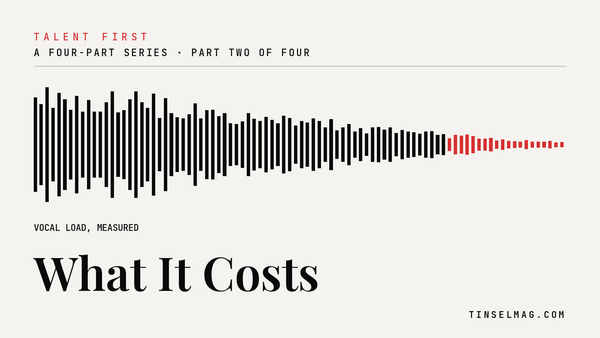
What the hours produce is engagement and revenue, all of it measurable in a quarterly report. The costs are measurable too, but they are booked to an account no platform carries: the performer's body. That ledger is where this series goes next.
Sources
- TechCrunch, "TikTok becomes first non-game app to reach $10B in consumer spending," December 2023
- Sensor Tower, "TikTok Breaks $15 Billion Barrier in Lifetime Consumer Spend," August 2024
- Rest of World, "Teens are making thousands by debating Trump vs. Harris on TikTok," August 2024
- Tubefilter, "Twitch Streamer Ludwig Reaches Record-Breaking 273,000 Subscribers With 30-Day Subathon," April 2021
- YouTube Official Blog, "On YouTube's recommendation system," 2021
- Utah Department of Commerce, news release on unsealed TikTok complaint materials, January 2025
- Cornell Chronicle, on Nguyen & Duffy, "'Creator burnout is real'" (New Media & Society), July 2026
- We Are Social Media, YouTube Creator Insider on breaks and the algorithm
- Rest of World, "Meet the agents teaching TikTok livestreamers how to earn big tips," September 2022
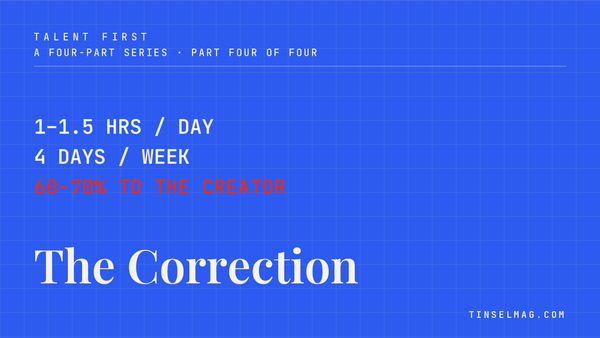
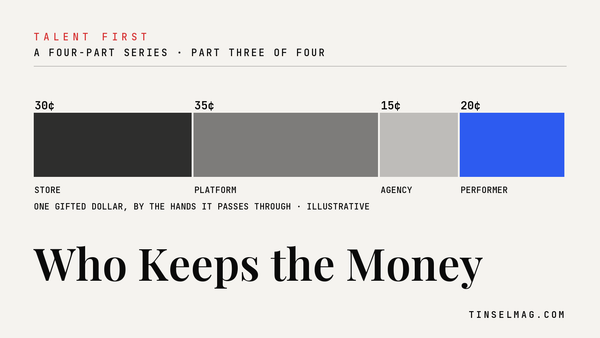
Next in the series: Part Two, What It Costs; Part Three, Who Keeps the Money; Part Four, The Correction.