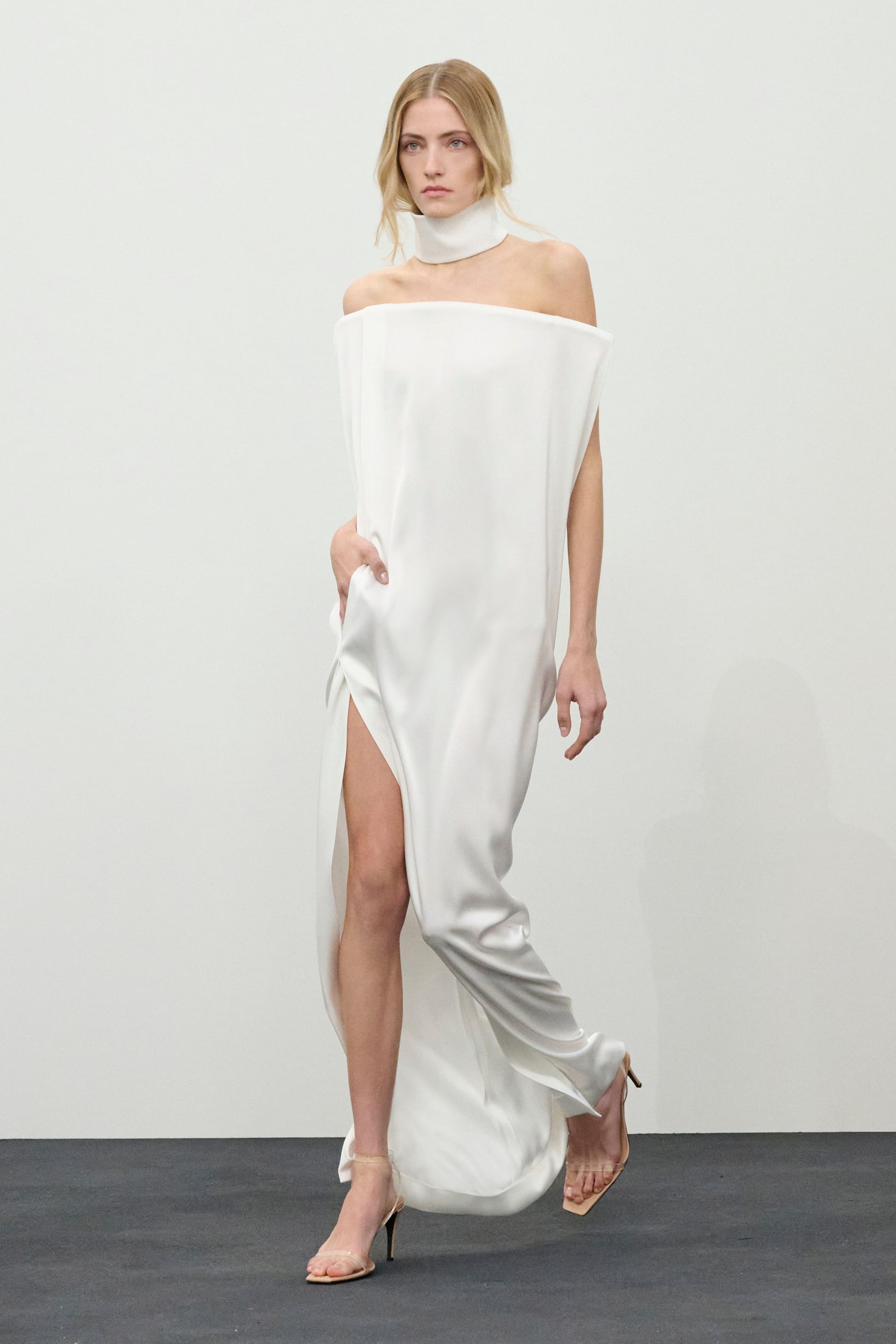
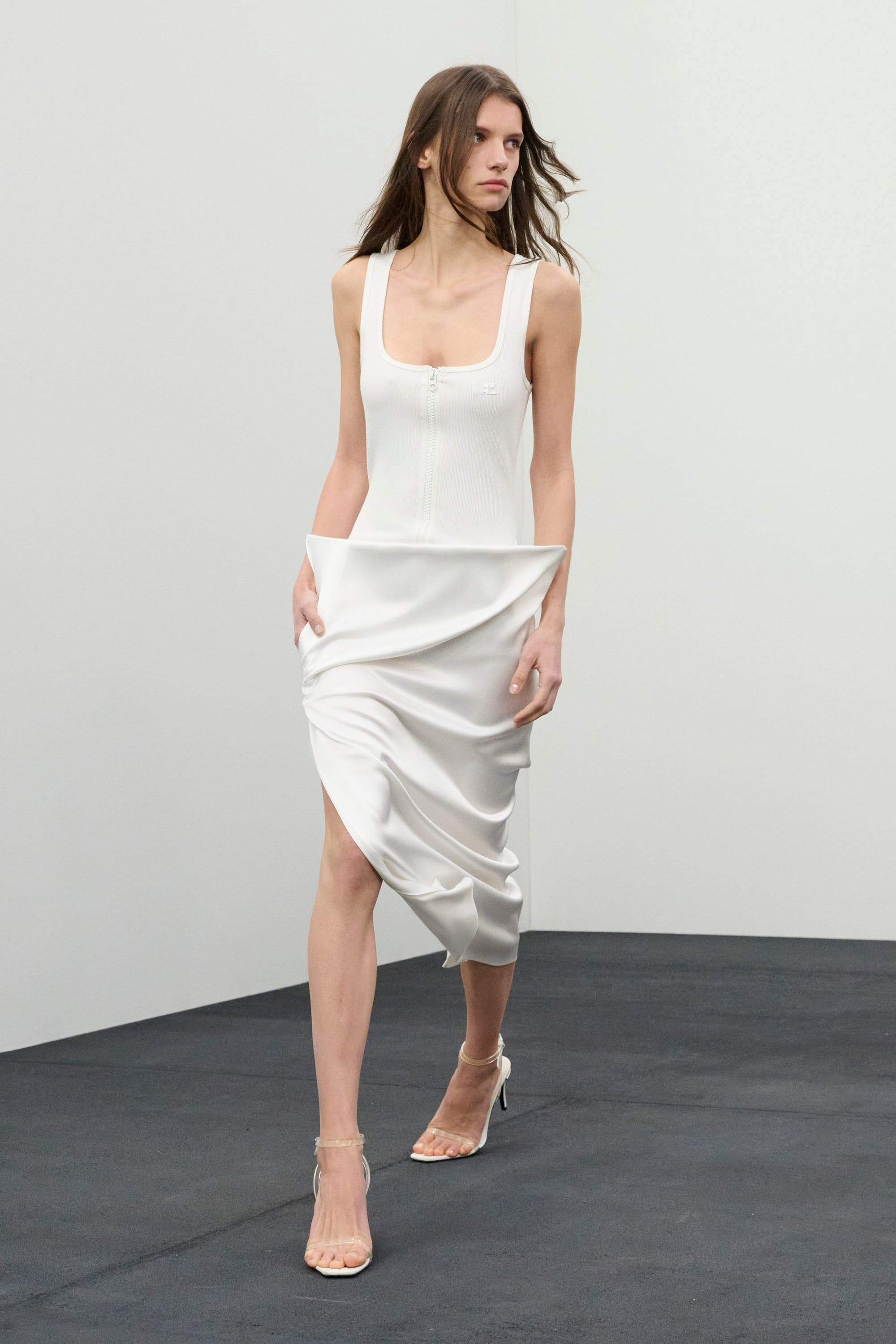
The silhouette that opened Courrèges' Fall 2026 show wasn't a throwback—it was a refinement. A clean white mini dress with geometric cutouts, worn with the house's signature go-go boots, moved down the runway with the kind of precision that doesn't apologize for its DNA. Nicolas Di Felice, now in his fifth year as creative director, has spent his tenure at the French house threading a specific needle: making André Courrèges' 1960s space-age vision feel current without diluting what made it iconic in the first place. Vogue's runway coverage captured a collection that leaned into the brand's futurist vocabulary—stark whites, architectural cuts, vinyl accents—while adding enough contemporary edge to justify its place in today's luxury market.
What's notable here isn't that Courrèges is still mining its archive—every heritage brand does that now. It's that the strategy is working. Di Felice has managed to position the house as both a nostalgia play and a forward-facing luxury proposition, a balance that eludes most brands trying to resurrect mid-century modernism. The Fall 2026 collection featured oversized puffer coats in metallic silver, tailored trousers with exaggerated proportions, and those unmistakable vinyl boots—all rendered with the kind of craftsmanship that signals luxury pricing without screaming logo. It's futurism as a brand language, not as a costume.
The business case for this approach is clear. In a luxury market increasingly dominated by logo-heavy streetwear and maximalist branding, Courrèges occupies a quieter lane: clean, architectural, recognizable without being obvious. It's the kind of positioning that appeals to consumers who want their luxury to signal taste rather than wealth. The brand's aesthetic codes—the white, the vinyl, the geometric precision—are distinct enough to be instantly recognizable but restrained enough to avoid kitsch. That's a rare sweet spot, and Di Felice has been disciplined about staying in it.
What makes this collection particularly sharp is how it sidesteps the trap that catches most heritage brands: treating the archive as a museum rather than a toolkit. Diane von Furstenberg's Fall 2026 collection demonstrated a similar strategy—knowing when to lean into signature codes rather than reinvent them. Di Felice isn't trying to make Courrèges relevant by grafting on trends or chasing Gen Z through collaborations. He's betting that the brand's original thesis—modernist futurism as luxury—still resonates. The evidence suggests he's right.
The Fall 2026 lineup included pieces that could sit comfortably in a 1965 Courrèges show and pieces that wouldn't look out of place in a contemporary concept store. A sculptural white coat with exaggerated shoulders. A vinyl trench cut with military precision. Knit dresses that clung to the body in a way that felt modern rather than retro. The collection wasn't about innovation for its own sake—it was about proving that the brand's core vocabulary has enough depth to sustain multiple interpretations without feeling repetitive.
This approach stands in sharp contrast to the challenges facing other legacy houses trying to balance heritage with contemporary relevance. Saint Laurent's Fall 2026 collection revealed a brand struggling to reconcile its rock-and-roll past with a luxury market that's moved on. Courrèges doesn't have that problem, in part because its futurist aesthetic never went out of style—it just went quiet for a few decades. Di Felice's work has been about turning up the volume without changing the frequency.
The collection also benefits from timing. In a cultural moment defined by technological anxiety and climate uncertainty, the optimistic futurism of 1960s modernism reads differently than it did even five years ago. The space-age aesthetic that once signaled utopian possibility now carries a layer of irony—a reminder of a moment when the future felt exciting rather than ominous. Courrèges leans into that tension without explicitly addressing it, offering a vision of futurism that feels both nostalgic and aspirational. It's a brand strategy that works because it doesn't try too hard to explain itself.
The commercial implications extend beyond Courrèges itself. The brand's success under Di Felice offers a counterargument to the prevailing logic that heritage brands must constantly reinvent to stay relevant. While houses like Balmain push maximalist spectacle and Tom Ford navigates life without its founder, Courrèges demonstrates that consistency—when executed with discipline—can be just as powerful as transformation. The brand hasn't chased viral moments or courted controversy. It's simply stayed committed to a singular aesthetic vision long enough for the market to recognize its value.
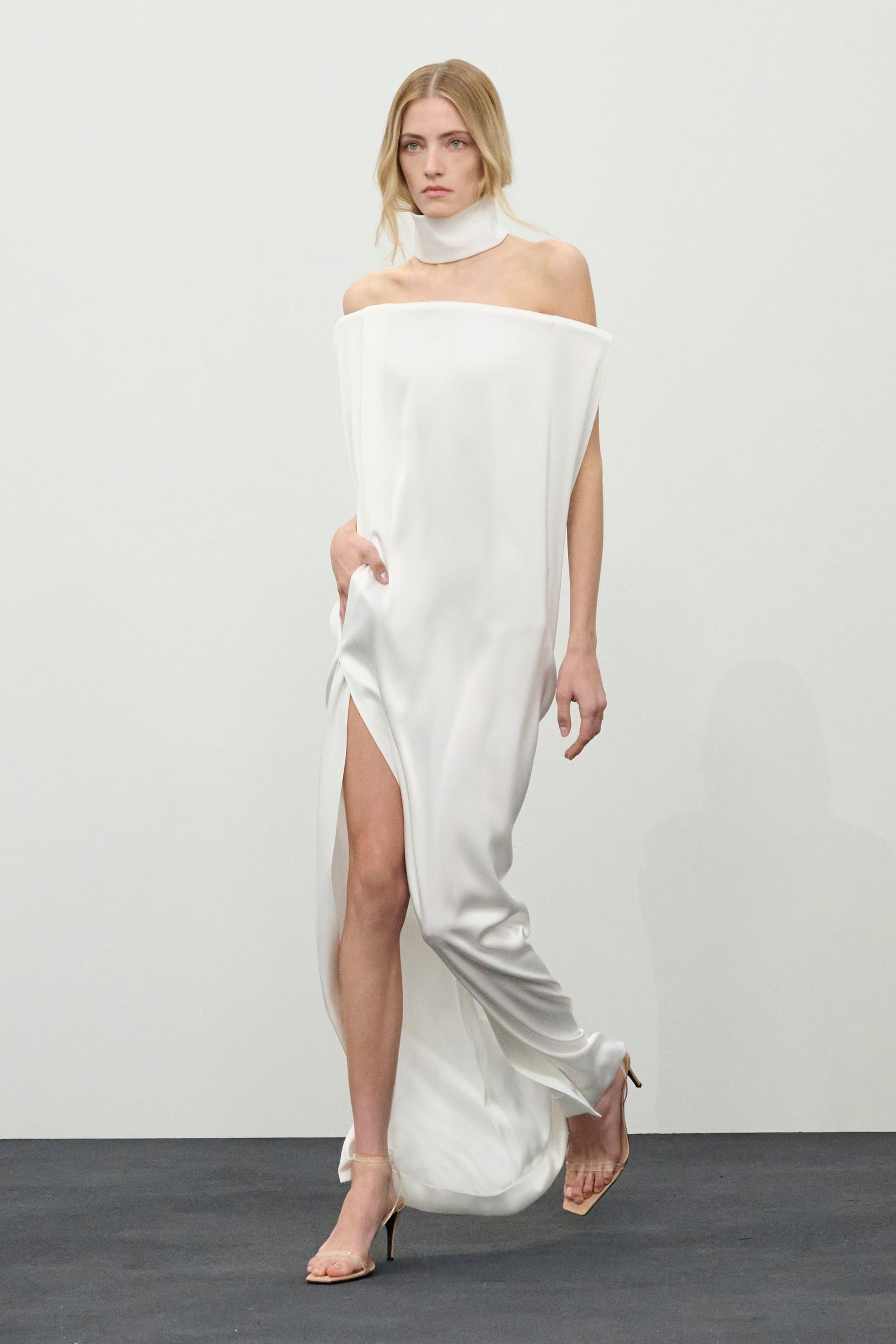
What Di Felice has built at Courrèges is a model for how heritage brands can operate in the contemporary luxury market without sacrificing their identity. The Fall 2026 collection proves that the house's futurism still has commercial viability—not because it's chasing trends, but because it's stayed true to a singular vision long enough for the market to come back around to it. In an industry that often mistakes newness for relevance, that kind of discipline is rare. And in a luxury market increasingly skeptical of brands that reinvent themselves every season, it's also smart business.