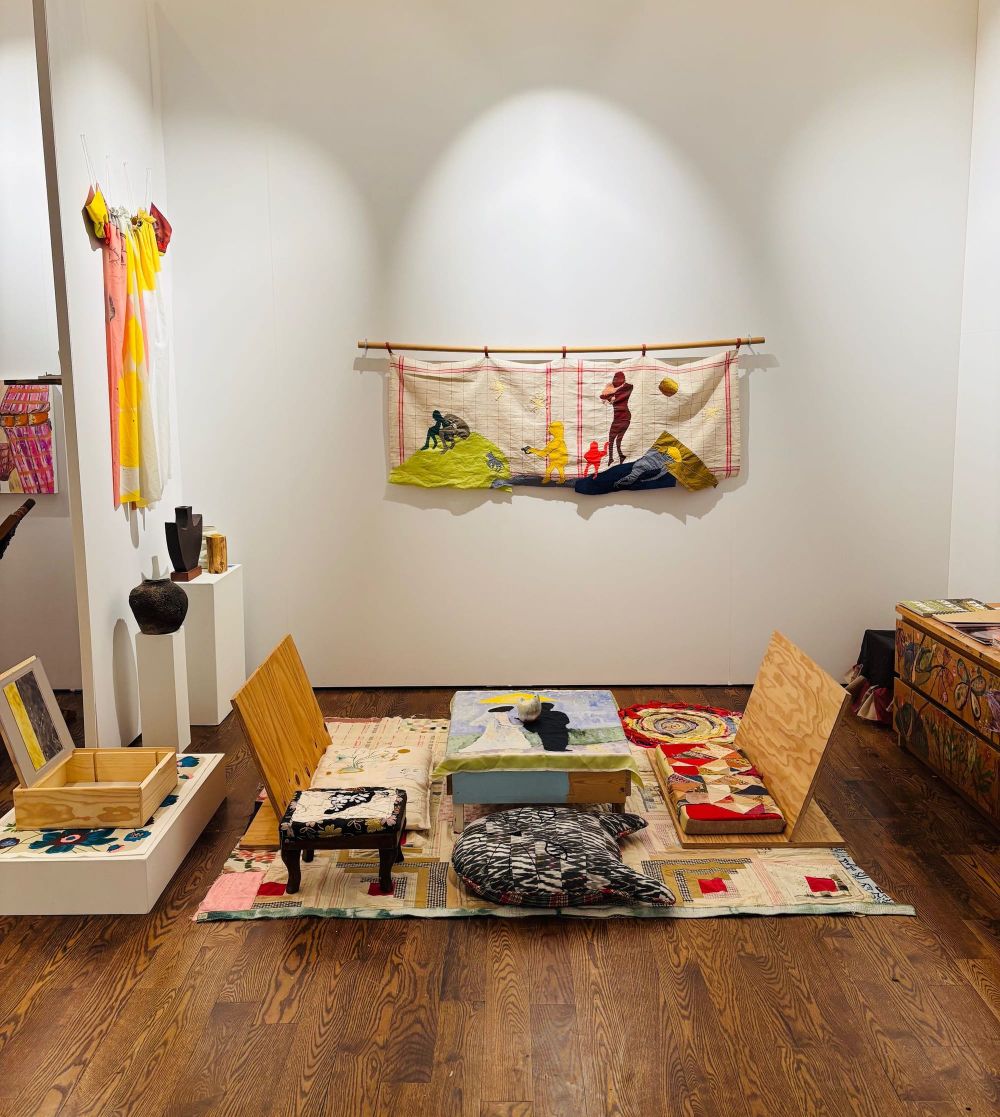
Susan Cianciolo first launched Run Home Store in 2000. The concept was simple: design a retail space that looked like her home, fill it with work from friends and collaborators, blur the line between product and art object. It was not a boutique. It was not a gallery. It was something the art world and fashion industry both looked at and decided they didn't have the infrastructure to classify.
Twenty-six years later, according to Vogue, Cianciolo is reviving Run Home Store at the Outsider Art Fair, inviting 44 friends to fill a booth designed to replicate her home. The location is not accidental. The Outsider Art Fair has spent decades as the institutional home for work that doesn't fit cleanly into the contemporary art market's taxonomies—self-taught artists, vernacular craft, folk traditions. Cianciolo's placement there is both fitting and revealing. She spent the 2000s operating in the gap between fashion and art, making work that was too conceptual for retail and too functional for galleries. Now the art world is ready to absorb her—but only after she spent two decades proving the model works outside its walls.
The timing matters. Cianciolo's original Run Home Store existed in an era when the fashion-art hybrid was still a fringe experiment. Designers like Martin Margiela and Hussein Chalayan were pushing fashion toward conceptual art, but the institutional support was thin. Galleries didn't know how to price garments. Fashion critics didn't know how to talk about sculpture. Cianciolo's work—handmade clothing, mixed-media assemblages, collaborative installations—fell into the void between disciplines. Run Home Store was her solution: a retail space that functioned as an exhibition, a business model that doubled as an artistic practice.
The art world ignored it. Fashion mostly ignored it too, except for a small circle of designers and critics who understood what she was building. Cianciolo's work was too personal, too domestic, too rooted in craft traditions that contemporary art had spent decades distancing itself from. The materials were wrong—fabric scraps, found objects, handwritten tags. The pricing was inconsistent. The presentation refused the clean minimalism that galleries demanded. It was art, but it didn't perform like art was supposed to.
What changed is not Cianciolo's work. It's the market's capacity to absorb it. The last decade has seen a wholesale re-evaluation of craft, domesticity, and collaborative practice in contemporary art. Major galleries are signing artists whose work was previously categorized as craft, institutions are mounting exhibitions that center textile work and vernacular traditions, and the art market has developed the language and infrastructure to price work that once seemed unsellable. Cianciolo's placement at the Outsider Art Fair is a form of canonization—an acknowledgment that her work belongs in the institutional conversation, even if the institution had to expand its definition to fit her in.
The 44 collaborators Cianciolo has invited to fill Run Home Store are part of the story. The original concept was never about solo authorship—it was about building a community of makers whose work existed in the same liminal space she occupied. By reviving that model now, she's demonstrating that the collaborative, non-hierarchical approach she pioneered in 2000 has become a recognizable genre. The art world has a category for this now. It's called social practice, or relational aesthetics, or community-engaged art, depending on who's writing the wall text. In 2000, it was just called Run Home Store, and nobody knew where to put it.
The Outsider Art Fair itself is undergoing its own identity crisis. The term "outsider art" was coined in the 1970s to describe work made outside the formal art world—self-taught artists, people working in institutions, creators who had no access to galleries or museums. It was a way to create space for work the mainstream ignored. But as the contemporary art market has expanded its boundaries, the line between "outsider" and "insider" has blurred. Artists once labeled outsiders are now represented by major galleries, and work that was dismissed as craft is selling for six figures at auction. The fair has become less about celebrating work outside the system and more about absorbing it into the system on slightly different terms.
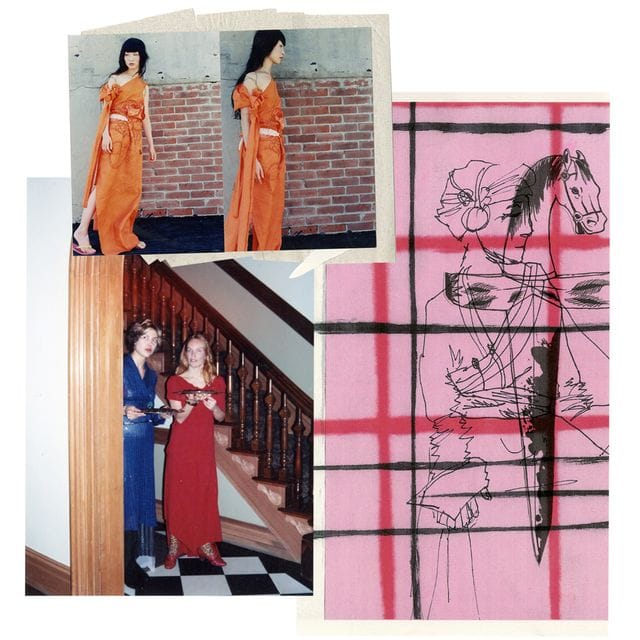
Cianciolo's presence at the fair highlights that tension. She is not an outsider artist in the traditional sense—she has an MFA, she showed at New York Fashion Week in the 1990s, she has been written about in major publications for decades. But her work has always operated outside the commercial structures that define success in both fashion and art. Run Home Store was never designed to scale. It was never meant to be a brand that could be sold to a conglomerate or a gallery that could be franchised. It was a model for making and selling work that prioritized community and collaboration over profit and growth. That made it illegible to the industries it touched, and it's what makes it valuable now.
The art market's interest in Cianciolo is part of a broader pattern. The 2000s produced a generation of artist-designers who refused to choose between disciplines—Beca Lipscombe, Suzanne Koller, Elena Stonaker, Claire Barrow. Most of them never got the institutional recognition their work deserved because the infrastructure didn't exist to support them. They were too art for fashion, too fashion for art, too handmade for mass production, too personal for the commercial gallery system. They built their own networks, sold work through temporary pop-ups and friend networks, and created a parallel economy that the mainstream mostly ignored.
Now that parallel economy is being canonized. Museums are acquiring their work, galleries are offering representation, and fairs like Outsider Art Fair are giving them institutional platforms. It's a form of validation, but it's also a form of flattening. The work that made these artists radical was their refusal to participate in the systems that are now absorbing them. By bringing Run Home Store into the Outsider Art Fair, Cianciolo is accepting a form of institutional recognition—but she's doing it on her terms, in a space that still exists at the margins of the mainstream art world.
The question is whether the revival will function the way the original did. Run Home Store in 2000 was a necessity—a way to make and sell work when no other infrastructure existed. Run Home Store in 2026 is a historical re-enactment, a gesture toward a model that the art world now understands as important. The collaborators are still there, the handmade aesthetic is still intact, but the context has shifted. It's no longer a radical act to blur the line between retail and exhibition space—art fairs have been doing that for years. What was once a critique of institutional boundaries is now being absorbed into the institution as a form of content.
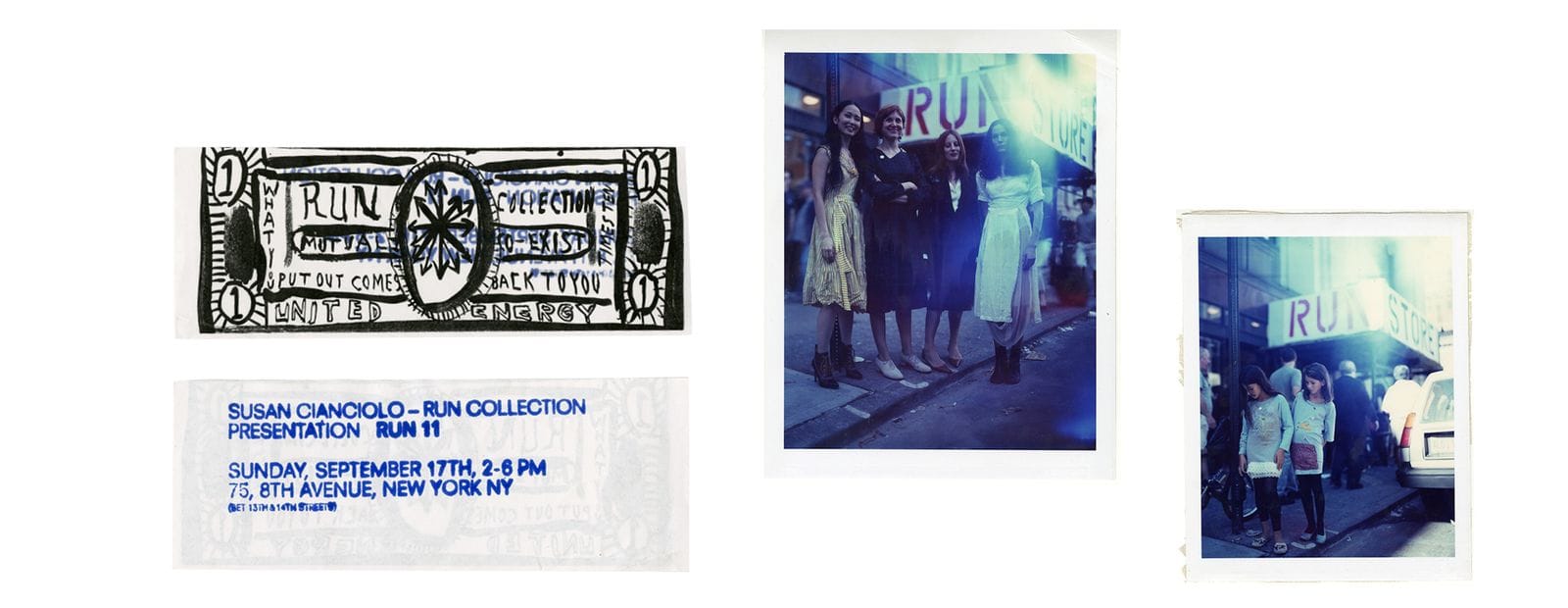
That doesn't make the work less valuable. It just means the art world has caught up to what Cianciolo was doing two decades ago. The designers and artists who built careers outside the system in the 2000s are finally being recognized, but the recognition comes with a cost. The work gets absorbed into the market it was built to resist, the radical gesture becomes a historical footnote, and the community-based model gets repackaged as a genre. Cianciolo's decision to bring Run Home Store back at the Outsider Art Fair is both a victory and a compromise—proof that the work mattered, and proof that the art world only values what it can categorize and sell.
The 44 collaborators filling the booth will determine whether this revival is more than nostalgia. If Run Home Store functions the way it did in 2000—as a genuine space for collaboration, experimentation, and work that doesn't fit cleanly into market categories—then it will prove that the model still has radical potential. If it becomes a curated exhibition of work that now fits comfortably into the art market's expanded taxonomy, then it will be a monument to a moment that the institution has already absorbed. Either way, the fact that it's happening at all is a signal: the art world is ready for Susan Cianciolo. It just took 26 years.