The John F. Kennedy Presidential Library sits on a windswept peninsula in Boston, a stark concrete and glass structure designed by I.M. Pei. It's meant to evoke democratic ideals through modernist restraint—clean lines, open spaces, natural light flooding the archives. Visiting it feels like paying respects to a myth carefully preserved in architectural formaldehyde. The building performs humility while demanding reverence, which is exactly the contradiction every presidential library exists to manage.
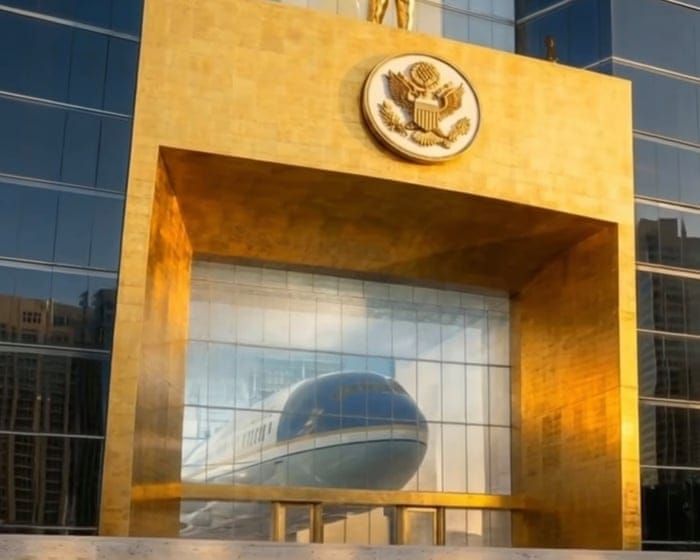
Then there's Trump's proposed 47-story waterfront skyscraper in Miami, complete with a giant golden statue of the 47th president, fist raised in perpetual triumph. The Guardian called it a "gaudy, self-glorifying monstrosity" that looks like "Vegas hotel meets aerospace bling." They're not wrong. But they're also missing the point. Trump's library doesn't pretend to be anything other than what it is: a monument to ego, power, and the man who commissioned it. In that sense, it's the most honest institutional building America has produced in decades.
Presidential libraries have always been ego projects wrapped in the language of public service. They're taxpayer-subsidized shrines where former presidents get to curate their own legacies, control the narrative, and ensure that history remembers them the way they want to be remembered—not the way they were. The National Archives manages them, but the private foundations that fund construction have enormous influence over what gets displayed and how. It's reputation management dressed up as civic infrastructure.
Barack Obama's library in Chicago, designed by Tod Williams and Billie Tsien, has been described as looking like a "Tatooine sandcrawler"—a towering stone monolith that hovers over the South Side with the aesthetic weight of a spaceship. It's intellectually ambitious, formally striking, and completely disconnected from the neighborhood it's supposed to serve. Local activists spent years fighting the project, arguing it would accelerate gentrification without providing the community benefits Obama's team promised. The architecture speaks the language of importance, but the building itself functions as a branding exercise for a post-presidency that includes Netflix deals, speaking tours, and a carefully managed media presence.
George W. Bush's library in Dallas features an exact replica of the Oval Office and a "Decision Points Theater" where visitors can role-play being president during the Iraq War. It's participatory revisionism—letting the public simulate the impossible choices Bush faced, as if understanding his perspective erases the consequences of his decisions. The building itself is red brick and limestone, designed to evoke Texas vernacular architecture while signaling permanence and respectability. It's the architectural equivalent of a legacy rehabilitation campaign.
What makes Trump's library different isn't that it's more self-aggrandizing than its predecessors—it's that it doesn't bother lying about it. There's no modernist restraint, no intellectual framing, no attempt to dress up the monument in democratic language. It's a 47-story tower because he was the 47th president. The statue is gold because gold is his brand. The fist is raised because that's the image he wants frozen in time. It's blunt, vulgar, and completely transparent about what it's selling: not history, not scholarship, not public service—just Trump.
This is where Anna Wintour's approach to brand management becomes instructive. Wintour let The Devil Wears Prada define her because the myth became more valuable than any defense. Trump's library operates on the same principle: the spectacle is the strategy. The more critics call it gaudy, the more it reinforces the brand. The more architectural purists recoil, the more it signals to his base that he's rejecting elite taste-making. The building doesn't need to be respectable—it needs to be unmistakable.
Compare that to the Obama library's careful calibration of progressive aesthetics and institutional credibility, or the Bush library's focus-grouped attempt to make warmongering look reasonable. Those buildings are designed to pass a certain kind of cultural litmus test, to be taken seriously by the people who write about architecture and curate museum exhibitions. Trump's library doesn't care about that audience. It's designed for people who see a golden statue and think "winning," not "Turkmenistan."
The Guardian's comparison to Saparmurat Niyazov's rotating gold statue in Ashgabat is meant as an insult, but it's also an admission. Authoritarian leaders build monuments to themselves because they can, and because the monument itself becomes a demonstration of power. Democracies are supposed to build differently—with restraint, with accountability, with at least the pretense that the institution matters more than the individual. But presidential libraries have always blurred that line. They're private foundations operating on public land, funded by donors who expect access and influence, designed to burnish reputations rather than interrogate them.
Trump's library just makes the transaction explicit. It's ego architecture without the intellectual costume, monument-building without the democratic window dressing. And in doing so, it reveals what every other presidential library tries to hide: these buildings were never really about preserving history. They're about controlling it. The difference is that Trump doesn't need you to believe the building serves the public good. He just needs you to remember his name.
That's the uncomfortable truth guerrilla artists and Hollywood dissenters keep running into: spectacle doesn't care about your critique. It absorbs it, repurposes it, and uses it as fuel. The more outrageous the building, the more attention it commands. The more attention it commands, the more it succeeds at its actual purpose—which was never to serve scholarship or public education, but to ensure Donald Trump's image outlasts his presidency.
If that makes it the ugliest presidential library yet, it also makes it the most honest. Every other president got to pretend their monument was about something bigger than themselves. Trump's library is a 47-story middle finger to that pretense. And whether you find that refreshing or horrifying says more about your tolerance for honesty in institutional architecture than it does about the building itself.