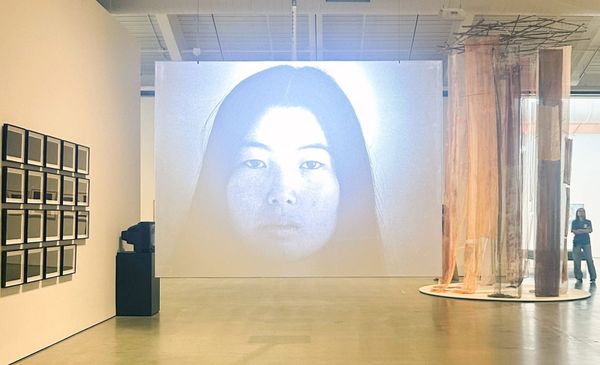
Walk into the 2026 Whitney Biennial and the first thing you'll notice is what's missing: the noise. No protest banners. No didactic wall text demanding you reckon with your complicity. No artists refusing to participate over board member controversies. Instead, there's a quietness that feels almost defiant — or maybe just tired.
The 82nd edition of the Whitney's sprawling survey, according to early responses from Artnet, leans heavily into what curators are calling "politics of memory" and "unexpected emotion." Translation: the show is still political, but it's done yelling at you. After years of biennials defined by their confrontational posture — the 2019 edition's tear gas controversy, the 2022 show's reckoning with pandemic grief and racial violence — this one feels like an institution taking a breath.
The question is whether that breath is a recalibration or a retreat.
The Whitney Biennial has always been a barometer for how major institutions read cultural temperature. When activism was ascendant, the Biennial reflected it — sometimes uncomfortably, sometimes cynically. But now, in 2026, the art world is in a different place. Galleries are closing. Collectors are cautious. The discourse that dominated 2020-2023 — around decolonization, institutional critique, artist labor — has calcified into a set of talking points that everyone can recite but fewer people seem energized by.
This Biennial recognizes that. Rather than staging another round of institutional self-flagellation, it's pivoting toward introspection, personal narrative, and what one early reviewer described as "emotional vulnerability." That's a significant tonal shift, and it's one that other institutions have been testing too. Frieze LA earlier this year emphasized community and resilience over market spectacle. Documenta 15's participatory model, for all its controversies, was an attempt to decentralize authority. The Whitney is now joining that conversation, but in its own carefully managed way.
The curatorial choice reflects a broader institutional calculation about what political engagement looks like when the market is contracting and the audience for confrontational work has fragmented. The collectors who fund these institutions aren't interested in being lectured. The younger audiences who might be are increasingly skeptical of museums as sites of genuine political work. And the artists themselves are working through their own fatigue with the expectation that every piece must carry the weight of systemic critique.
The risk is that "quiet" gets read as complicity. That "memory" becomes a convenient way to avoid present-day accountability. That "emotion" is just another form of aesthetic safety. These are legitimate concerns, especially for an institution that has historically struggled with its own contradictions — a museum of American art that has repeatedly had to be pushed toward representing what America actually looks like.
But there's something worth examining in the impulse to dismiss this shift outright. Political exhaustion is real, and not just among wealthy donors or museum boards. Artists are tired. Critics are tired. Audiences are tired. The expectation that every exhibition must perform a certain kind of activist rigor has produced diminishing returns, both aesthetically and politically. Some of the most interesting work being made right now is interested in complexity, ambiguity, and interiority — modes that don't translate well into protest slogans or Instagram infographics.
The pattern extends beyond the art world. Harry Styles walked away from pop ubiquity to make work for smaller rooms. Viktor & Rolf continues making conceptual fashion that refuses commercial logic. The cultural signal is consistent: the most compelling work is increasingly made for depth, not reach. The Whitney's curatorial team is betting that there's an audience for that work, and that institutional legitimacy in 2026 might mean creating space for it rather than demanding art serve as an activism proxy.
Whether that bet pays off depends on execution. A show that's quiet because it's thoughtful is one thing. A show that's quiet because it's conflict-averse is another. The distinction will be visible in the work itself — whether the artists selected are genuinely exploring interiority and memory as political sites, or whether they're just providing aesthetic cover for an institution that wants to avoid controversy.
What's clear is that the Biennial is no longer trying to be the loudest voice in the room. For an exhibition that has often defined itself by controversy — and by its willingness to be defined by controversy — that's a meaningful change. It suggests that the Whitney, and perhaps the broader institutional art world, is trying to figure out what political engagement looks like when the performance of outrage has stopped being convincing.
The art world has spent the last several years demanding that institutions prove their politics. The 2026 Biennial is asking a different question: what happens when institutions stop trying to prove anything, and just show the work? It's a risky proposition, and one that will likely be debated for the show's entire run. But in a moment when every cultural institution is trying to figure out how to move through political fatigue without abandoning politics entirely, the Whitney's approach — for better or worse — will be instructive.
The Biennial opens to the public this week. Whether it reads as a retreat or a recalibration will depend on who's looking, and what they're willing to see.