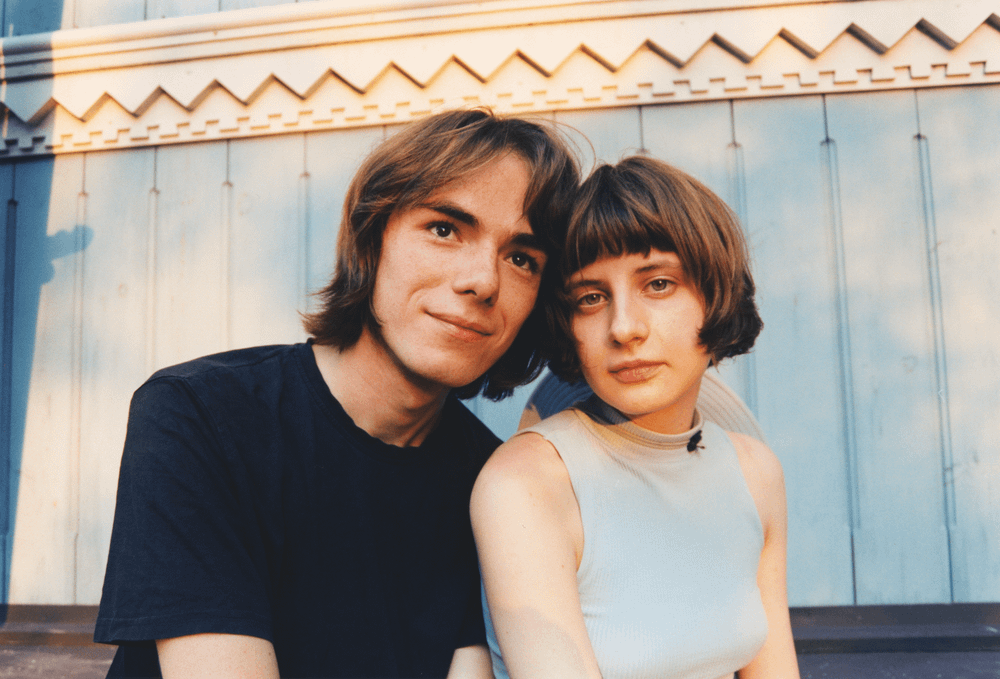
Ukrainian photographer Anastasiia Pischanska doesn't photograph soldiers, rubble, or evacuation routes. She photographs 22-year-olds in their bedrooms. Her subjects wear streetwear, not combat gear. They stare at the camera with expressions that aren't quite defiance and aren't quite resignation — something closer to the face you make when you realize your entire twenties might happen in wartime.
Pischanska's ongoing project, as featured in Vogue, captures Gen Z Ukrainians in intimate, interior settings. The work is a deliberate rejection of conflict photojournalism's visual language. No dramatic action shots. No heroic narratives. No grief spectacle. Instead: teenagers in their childhood homes, young adults in temporary apartments, people whose lives are suspended between what they planned and what the war allows.
The shift matters because it reframes what war documentation looks like when the conflict isn't over. Traditional photojournalism tracks the front lines, the immediate aftermath, the visible destruction. Pischanska's work tracks something harder to photograph: the slow erosion of normalcy, the structural waiting that defines life under extended conflict. Her subjects aren't fleeing or fighting — they're living, but in a present tense that refuses to become a future.
War photography has always been about witness. But whose experience gets witnessed determines what the historical record preserves. Pischanska's Gen Z subjects are living through a war that won't resolve cleanly, that won't offer neat narrative arcs or closure. The images document a generation whose youth is being spent in a state of indefinite suspension — careers delayed, educations interrupted, relationships conducted under the permanent threat of separation or worse.
The formal choice to shoot intimate portraits rather than action scenes is a strategic one. It forces the viewer to sit with the subject's face, their bedroom walls, the small details of their interrupted lives. A laptop open to a paused video call. A suitcase half-packed. A childhood poster still on the wall behind a 24-year-old who hasn't lived here in years but came back when the invasion started. The images accumulate into a collective portrait of a generation learning to live in permanent precarity.
This approach aligns with a broader shift in how contemporary photographers are documenting conflict. The art world's recent reckoning with institutional complicity has made space for work that refuses to aestheticize violence or turn suffering into spectacle. Pischanska's restraint — her refusal to give viewers the cathartic release of visible destruction — is a form of accountability. The work insists that the most significant damage isn't always the most photogenic.
The business model for conflict photography has traditionally rewarded dramatic imagery. News outlets pay for front-line action, for the visceral proof of violence. Pischanska's work operates in a different economy: the slower, more deliberate space of art photography and editorial features. It's the kind of project that gets gallery shows and magazine spreads rather than wire service distribution. That shift in audience and platform allows for a different kind of storytelling — one that privileges nuance over immediacy, accumulation over impact.
Her Gen Z subjects are also the first generation to document their own war experiences in real time on social media. They're posting Instagram stories from bomb shelters, TikToks about power outages, Twitter threads about displacement. Pischanska's formal portraits exist in dialogue with that self-documentation — offering a counterpoint to the fragmented, real-time stream of social media. The portraits are deliberate, composed, considered. They ask the subject to pause, to be seen rather than to perform visibility.
The cultural pattern here extends beyond Ukraine. Gen Z globally is coming of age in a moment of compounding crises — climate disaster, pandemic, economic precarity, rising authoritarianism. Pischanska's Ukrainian subjects are living an extreme version of what their generation is experiencing everywhere: the sense that the future promised to them has been indefinitely postponed. The work resonates because it visualizes a feeling that transcends geography.
What Pischanska captures is the specific texture of waiting. Not the dramatic waiting of a countdown or a siege, but the ambient, structural waiting of a conflict with no clear endpoint. Her subjects are waiting for safety, for stability, for the ability to make plans more than a few weeks out. The portraits document that waiting as a lived experience — not as absence, but as a distinct psychological and emotional state.
The project also complicates the Western media's tendency to flatten Ukrainian identity into a single narrative of resilience and resistance. Pischanska's subjects aren't symbols. They're individuals with complicated relationships to their country, their futures, their own identities. Some are angry. Some are exhausted. Some are numb. The portraits allow for that complexity without demanding that every subject perform a legible emotional response for the camera.
This is what contemporary war documentation looks like when it's made by someone who understands that the most significant casualty of extended conflict is often the ability to imagine a future. Pischanska's Gen Z portraits are archives of a generation learning to live in a permanent present tense. The images don't offer resolution or catharsis. They offer witness to a specific kind of endurance — the kind that doesn't make for heroic narratives but is, in its own way, the more honest record.
The work matters because it expands what counts as war photography. It insists that the quiet spaces, the suspended lives, the interrupted futures are as much a part of the conflict's documentation as the front lines. And it offers a model for how photographers can document ongoing crises without extracting spectacle from suffering — by turning the camera toward the people who are still here, still waiting, still living in the space between what was and what might be.