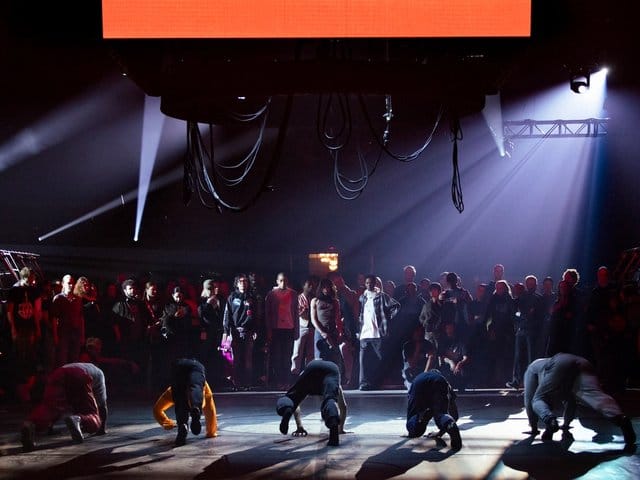
Anne Imhof won the Golden Lion at the 2017 Venice Biennale for Faust, a five-hour performance installation that turned the German Pavilion into a glass-floored nightclub where bodies moved like they were trapped in a club that never closed. Nearly a decade later, the Berlin-based artist is bringing her first major Asian solo exhibition to Hong Kong in 2027, according to The Art Newspaper. The show will feature works spanning multiple media, including a new commission—standard language for any major institutional survey. What's not standard is the city positioning itself to host it.
Hong Kong has spent the last decade building the kind of institutional infrastructure that performance and multimedia art require but rarely get outside Europe and North America. M+, the visual culture museum that opened in 2021, was designed with performance in mind—flexible gallery spaces, technical capabilities for video and sound, and a programming budget that treats live work as central rather than supplemental. The city's expansion of Art Basel Hong Kong, its investment in West Kowloon Cultural District, and its aggressive recruitment of international galleries have all pointed toward the same goal: becoming the regional hub for contemporary art that isn't confined to walls.
Imhof's work is a test case for whether that infrastructure can support the kind of art that demands it. Her practice blurs the line between performance, installation, and durational experience—often involving live performers, custom soundtracks, architectural interventions, and choreography that feels more like endurance than dance. It's the kind of work that requires technical precision, institutional commitment, and an audience willing to sit with discomfort. Those conditions exist in Berlin, New York, and Venice. Hong Kong is betting they exist there now, too.
The timing matters. Art SG's absorption of S.E.A. Focus earlier this year exposed the fragility of regional art fair models in Asia—consolidation driven by economics, not curatorial vision. Hong Kong's strategy has been different: build the museums first, then let the market follow. M+ drew 1.6 million visitors in its first year, a number that suggests appetite for contemporary art in the region isn't the problem. The problem has been the lack of institutions willing to program the difficult, expensive, technically demanding work that defines the contemporary art conversation globally.
Imhof's exhibition will likely include video, sound, live performance, and installation elements—possibly a new iteration of the glass-floor environments she's used before, possibly something entirely different. The specifics matter less than the fact that Hong Kong is willing to commit the resources required to stage it. Performance art has always been the medium that institutions claim to support but rarely fund properly. It's cheaper to hang paintings. It's easier to insure sculptures. Live work requires technicians, rehearsal time, insurance for bodies, and gallery attendants who understand they're facilitating an experience, not guarding objects.
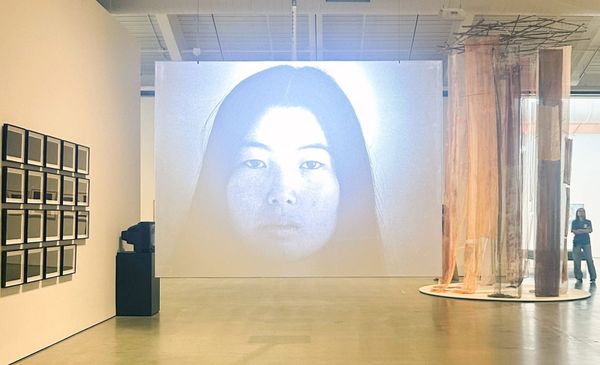
What makes this a turning point rather than a one-off is the pattern. Hong Kong isn't just hosting Imhof—it's building the kind of programming infrastructure that makes hosting Imhof logical. M+ has already presented work by Chiharu Shiota, whose immersive thread installations require similar institutional commitment. The city's investment in performance and multimedia work isn't opportunistic—it's structural. That's the difference between a city that wants to host art fairs and a city that wants to shape the conversation.
The risk is that Hong Kong's political climate complicates its claim to being a free cultural hub. The 2020 National Security Law raised questions about censorship, protest, and the limits of artistic freedom in the city. Imhof's work often engages themes of power, control, and bodily autonomy—subjects that could become fraught depending on how the exhibition is framed and what the new commission addresses. The city's ability to host challenging contemporary art without editorial interference will determine whether this moment is the beginning of a legitimate regional hub or just expensive infrastructure with guardrails.
Still, the fact that Hong Kong is the city making this bet is worth noting. Performance art's institutional home has always been Europe—Venice, Basel, Kassel, Documenta. The U.S. has pockets of support, but they're inconsistent and under-resourced. Asia has had the market for contemporary art but not the curatorial infrastructure for the medium's most technically demanding forms. If Hong Kong can build that infrastructure—and if it can do so without compromising the work—it won't just be hosting Anne Imhof. It will be rewriting where performance art can happen at institutional scale.