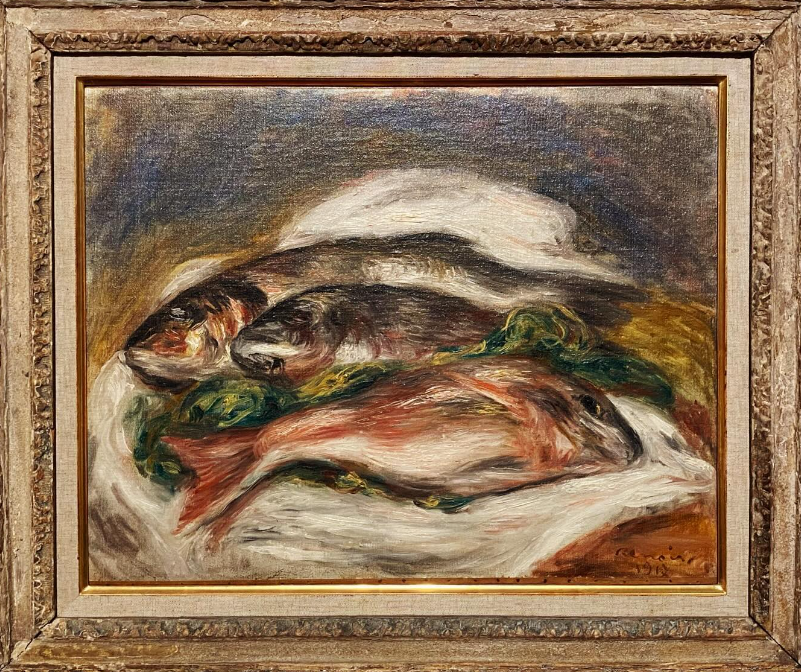
Italian police are searching for paintings by Paul Cézanne, Henri Matisse, and Pierre-Auguste Renoir worth approximately $10 million after a middle-of-the-night heist at a small museum outside of Parma. The theft follows a pattern that's become increasingly common in the art world: as major institutions invest in sophisticated security infrastructure, thieves are simply targeting smaller collections that can't afford the same protection.
The stolen works—Cézanne's Bathers, Matisse's Woman Reading, and Renoir's Young Woman in a White Hat—are exactly the kind of blue-chip Impressionist pieces that move easily through black-market networks. They're famous enough to command serious money but not so iconic that they're impossible to fence. The thieves knew what they were doing. They also knew the museum couldn't stop them.
Regional museums operate on budgets that make comprehensive security systems functionally impossible. While institutions like the Louvre and the Met have invested millions in surveillance technology, climate-controlled storage, and round-the-clock guards, smaller museums are working with alarm systems that haven't been updated in decades and skeleton crews that can't monitor every gallery simultaneously. The security gap isn't just about money—it's about infrastructure. A museum outside Parma doesn't have the institutional weight to justify the kind of investment that would make it a hard target.
This creates a perverse incentive structure in the art world. The most valuable works are increasingly concentrated in a handful of institutions that can afford to protect them, while regional collections—often built over generations by local patrons and donors—become soft targets for organized theft. The result is a cultural redistribution that has nothing to do with public access or educational mission and everything to do with who can afford the best locks.
The stolen paintings will likely disappear into private collections or be held for ransom. Recovery rates for high-value art theft hover around 10 percent, and that's when law enforcement has leads. In cases like this, where the thieves had enough time to disable alarms and remove works without triggering immediate response, the odds drop even further. The museum may never see these paintings again.
What's striking is how predictable this has become. The pattern repeats: thieves target regional museums with valuable collections and limited security, steal blue-chip works that are recognizable but not impossible to move, and vanish before local police can respond. The art world knows this is happening. Insurance companies know this is happening. And yet the structural inequality that makes it possible—major institutions fortifying their collections while smaller museums operate on shoestring budgets—continues unchecked.

The Italian heist is a reminder that the art world's security infrastructure is only as strong as its weakest institution. And right now, that infrastructure is designed to protect the biggest players while leaving everyone else exposed. The thieves who walked out of that museum outside Parma with $10 million in Impressionist paintings didn't just exploit a security gap—they exploited a system that has decided some collections are worth protecting and others aren't.

The question isn't whether this will happen again. It's which museum is next. As long as the gap between major institutions and regional collections continues to widen, thieves will keep targeting the places that can't afford to stop them. The art world can invest in repatriation efforts and institutional rediscovery projects all it wants, but if it can't protect the collections it already has, those efforts are just rearranging deck chairs on a sinking ship.