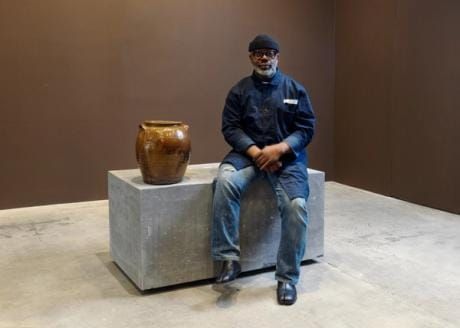
Theaster Gates owns—owned—a ceramic storage jar made by David Drake, the enslaved potter whose signed, dated, and often inscribed vessels are among the most valuable examples of 19th-century American ceramics. Gates gifted the pot to Drake's descendants, and it's now on view at Gagosian in New York alongside another Drake vessel that the Museum of Fine Arts Boston returned to the family last year. The gesture is significant not because it's unprecedented—institutions have been returning objects for years—but because it wasn't institutional. Gates made a private decision about a work he owned, and in doing so, he shifted the repatriation conversation from policy to personal ethics.
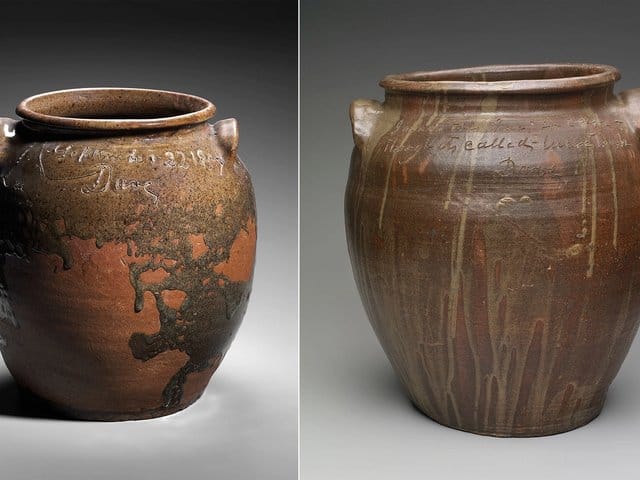
David Drake worked at Edgefield potteries in South Carolina in the mid-1800s, producing large alkaline-glazed stoneware jars that he often signed and inscribed with couplets. His work is extraordinary not just for its craftsmanship but for its audacity: literacy was illegal for enslaved people in South Carolina, and Drake's inscriptions were acts of defiance as much as artistry. His vessels now command six figures at auction. They're in major museum collections. And until very recently, almost none of that value—financial or cultural—had been shared with his descendants.
The MFA Boston's return last year was a watershed moment, but it came after years of pressure and negotiation. Gates's gift bypasses that machinery entirely. He didn't wait for a museum board to vote or a legal framework to clarify ownership. He simply decided that the pot belonged with Drake's family, and he gave it to them. That's a different kind of power—quieter, faster, and arguably more radical than institutional repatriation, which moves at the speed of committee meetings and donor relations.
The Gagosian exhibition, which places both vessels side by side, makes the contrast explicit. One pot was returned through institutional process. The other was returned through personal conviction. Both are now in the same room, and the difference in how they got there matters. Institutions have infrastructure, legal protections, and public accountability mechanisms. Private collectors have autonomy. Gates used his to make a point: repatriation doesn't have to wait for museums to catch up.
This isn't the first time Gates has used his position as both artist and collector to intervene in the art market's ethical blind spots. His Rebuild Foundation in Chicago has long focused on cultural preservation and economic reinvestment in Black communities. His work as an artist often engages directly with the material culture of Black American history—pottery, architecture, salvaged objects—and treats them as sites of both loss and reclamation. Giving the Drake pot to the family is consistent with that practice. It's also a challenge to other collectors who own similar works.
The art market has spent decades treating David Drake's vessels as rare collectibles, which they are. But they're also evidence of a system that extracted labor, denied authorship, and erased lineage. Museums are beginning to reckon with that, but private collectors have been slower to engage. Gates's decision suggests that ownership comes with responsibility—not just to preserve the work, but to recognize whose hands made it and who should benefit from its legacy.
What happens next is the real test. Gates is a prominent artist with institutional credibility and public visibility. His decision will be noticed. Whether other collectors follow is another question. The market for David Drake's work remains strong, and financial incentives don't favor repatriation. But the cultural calculus is shifting. As institutions face increasing scrutiny over provenance and ethical acquisition, private collectors are being asked the same questions: Who should own this? Who does it serve? And if the answer is uncomfortable, what are you going to do about it?

The Gagosian show runs through the end of the month. The pots will eventually leave the gallery and return to the Drake family. That's the point. Repatriation isn't about display—it's about return. Gates understood that, and he acted on it without waiting for permission. The question now is whether the rest of the art world is ready to treat repatriation as a personal choice, not just an institutional obligation.