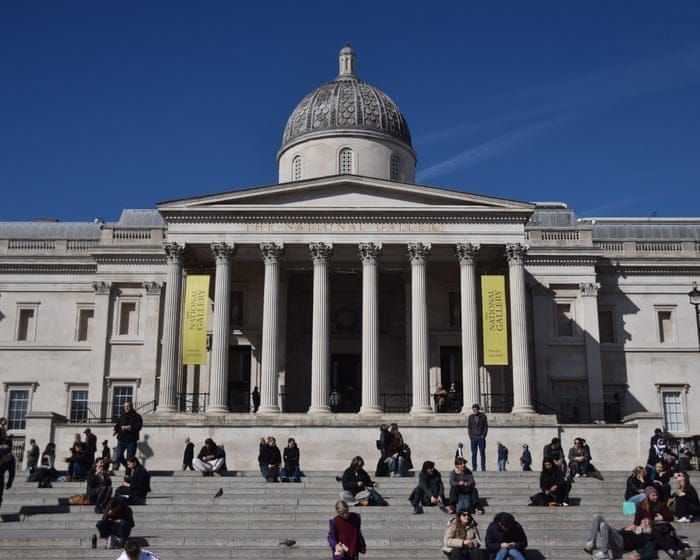
The National Gallery announced that Japanese architect Kengo Kuma will design its new wing—the gallery's largest transformation since its founding 200 years ago. Kuma, best known for Tokyo's Olympic stadium and a body of work that treats natural materials like editorial statements, will helm Project Domani, the institution's expansion into 20th and 21st-century painting. The choice is significant: London just handed one of its most visible cultural projects to an architect whose work is defined by restraint, materiality, and a deliberate rejection of the kind of architectural spectacle that has dominated museum design for the past two decades.
The National Gallery's decision arrives at a moment when European institutions are visibly rethinking what architectural ambition looks like. The era of the Bilbao effect—when museums hired starchitects to build sculptural landmarks that doubled as tourist attractions—has given way to something quieter and more materially grounded. Kuma's appointment suggests that London's most established art institutions are no longer interested in buildings that compete with the art inside them. The gallery's director called Kuma's design "exemplary," a word that does more work than it appears to. It signals approval not just of a specific proposal, but of an entire architectural philosophy that prioritizes craft, context, and longevity over novelty.
Kuma's work has always operated as a corrective to the glass-and-steel minimalism that dominated institutional architecture in the 1990s and 2000s. His buildings use wood, stone, and bamboo not as decorative gestures but as structural logic. They sit in their environments rather than announcing themselves against them. That sensibility aligns with a broader shift in how cultural institutions are thinking about their physical presence. Museums are no longer trying to be landmarks first and exhibition spaces second. The National Gallery's expansion will make it the only museum in the world where visitors can view the entire history of western painting under one roof—a curatorial ambition that requires architecture to serve the collection, not overshadow it.
The choice also carries a subtle geopolitical dimension. London's major cultural institutions have historically turned to British or European architects for expansions and renovations. Hiring Kuma—an architect whose work is inseparable from Japanese craft traditions—suggests that the city's cultural establishment is willing to look beyond its own architectural lineage for solutions to institutional design problems. It's a pragmatic move disguised as a cosmopolitan one. Kuma's buildings work because they don't demand attention. They create space for art, conversation, and contemplation without turning the architecture itself into the main event.
The National Gallery's expansion also arrives at a moment when museums are navigating increasingly complex logistical and diplomatic challenges around loans, acquisitions, and public access. Adding 20th and 21st-century painting to the collection means the gallery is finally acknowledging that its narrative of western art history has been incomplete. But it also means the institution needs a building that can accommodate contemporary work without making the rest of the collection feel like a historical artifact. Kuma's design will need to solve a problem that most museum expansions fail to address: how to make old and new art feel like they belong in the same conversation rather than in separate wings separated by a gift shop.
Japanese architectural minimalism has been influencing European and American institutional design for years, but it's rarely been given this level of visibility or responsibility. Kuma's appointment suggests that the aesthetic principles that have shaped his work—material honesty, spatial restraint, environmental integration—are no longer seen as culturally specific but as universally applicable solutions to the challenges of contemporary museum design. That's a significant shift. It means that London's most traditional art institution is betting that the future of museum architecture looks less like a statement and more like a conversation.
The National Gallery's transformation will take years to complete, and Kuma's design will inevitably be judged not just on its aesthetics but on how well it serves the institution's curatorial ambitions. But the choice itself is already a statement. London just handed one of its most important cultural projects to an architect whose work refuses to perform. That decision—quiet, deliberate, and material-focused—might be the most revealing thing about where institutional architecture is heading. The era of the museum as spectacle is over. The era of the museum as craft infrastructure has begun.
The gallery's expansion also positions it within a broader conversation about how institutional architecture communicates authority and purpose. Kuma's design will need to balance the National Gallery's historical weight with its ambition to remain relevant to contemporary audiences. That tension—between preservation and progress, tradition and innovation—is the challenge every major museum expansion now faces. The question is whether Kuma's minimalism can solve it, or whether the gallery just hired an architect whose work will look dated the moment the building opens. The answer will determine whether London's bet on Japanese restraint was visionary or just another expensive gamble on architectural fashion.