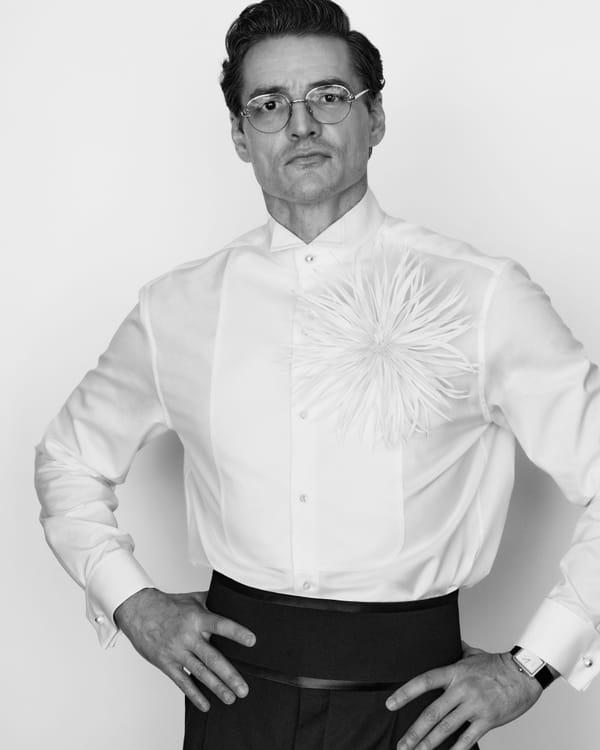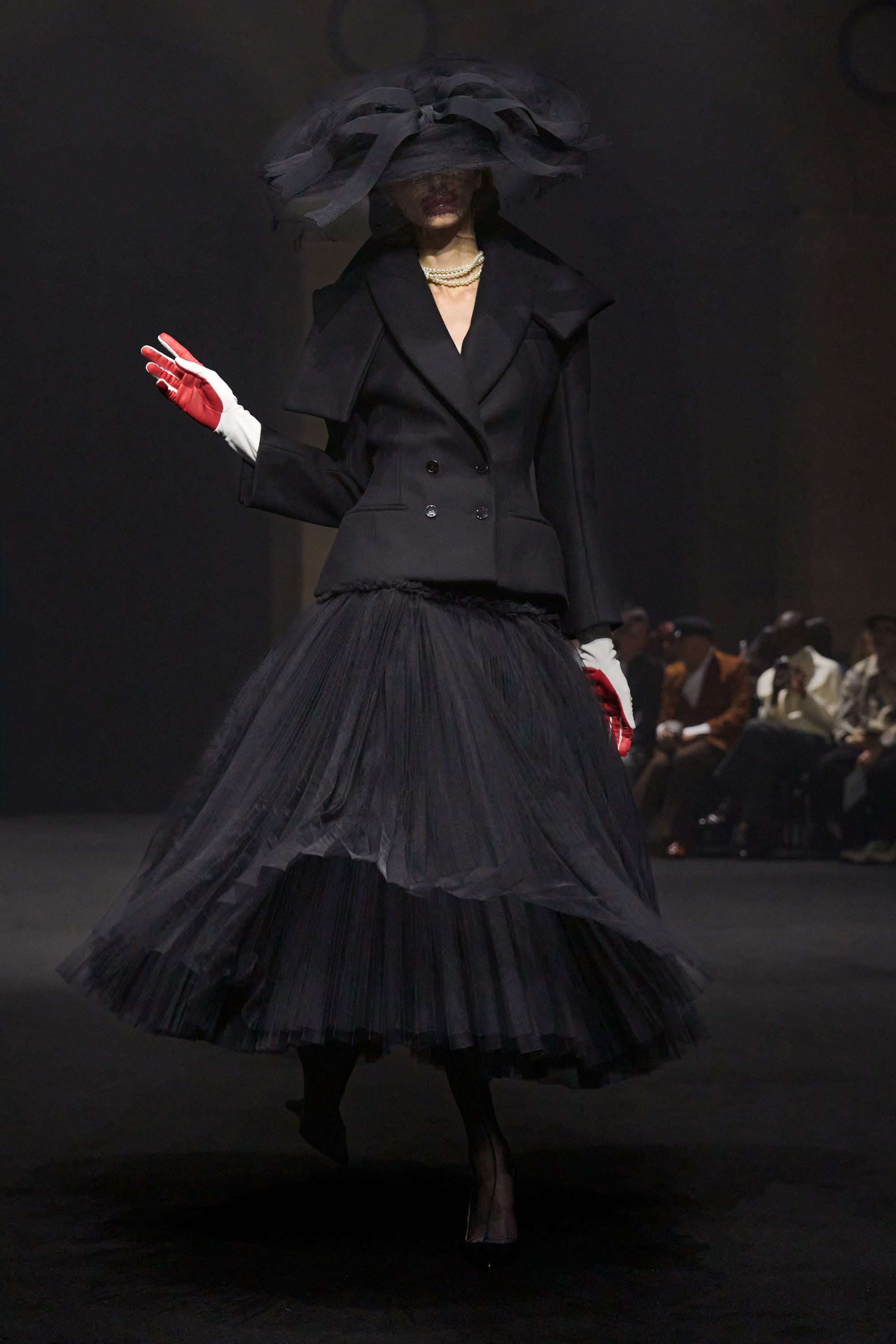
The runway setup at Matières Fécales' Fall 2026 presentation was stark: white walls, industrial lighting, no music for the first three minutes. Models walked in silence, their footsteps echoing off concrete. Then, halfway through, a low hum began—not quite music, more like the ambient noise of a factory floor. It was deliberate discomfort, the kind that makes you pay attention not because you want to, but because the alternative is sitting with the awkwardness. By the time the final look appeared—an overcoat so deconstructed it barely held its shape, yet so precisely tailored it looked like it cost more than most people's rent—the point had been made. This wasn't a brand trying to charm you.
Matières Fécales—yes, that translates exactly how you think it does—has built its reputation on equal parts shock value and craftsmanship. For years, the label's primary cultural function has been to make people uncomfortable at cocktail parties when they try to pronounce it. But according to Vogue, the Fall 2026 collection finally matches the seriousness of its technical execution with a cohesive creative vision. That matters because it signals something larger: the brand is testing whether fashion still has room for designers who refuse to be likable.
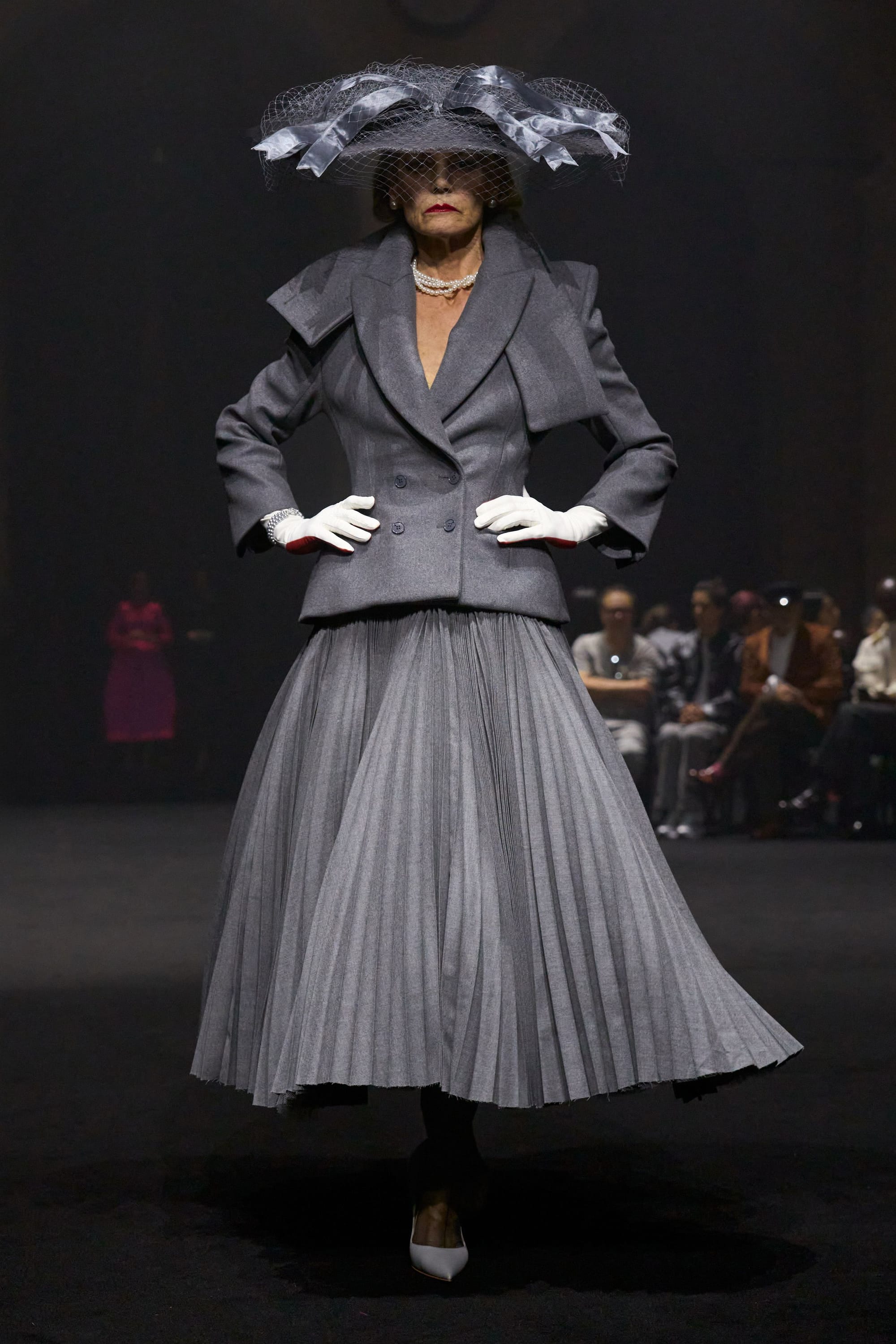
The collection leaned into structured tailoring, deconstructed outerwear, and a muted palette that felt more Margiela than provocation-for-clicks. There were asymmetric blazers with exaggerated shoulders, trench coats dissected and reassembled at odd angles, and trousers that managed to feel both architectural and wearable. Fabric treatments included distressed wool that looked aged but not costumey, and leather worked until it had the texture of paper but the structure of armor. The work signals a brand maturing past its own gimmick—without abandoning it entirely.
What makes this collection worth examining is where it lands in fashion's current identity crisis about provocation. On one end, you have brands like Viktor & Rolf pushing concept to its breaking point, treating the runway as performance art. On the other, there's the luxury establishment—Saint Laurent's recent stumbles and Dior's attempts to redefine what luxury even signals—trying to court an audience that's simultaneously more informed and more distracted than ever. Matières Fécales sits somewhere in between: too weird for the luxury establishment, too serious for the avant-garde performance crowd.
The brand has always understood that in fashion, a name can function as both armor and marketing strategy. It's a filter. If you're offended before you see the clothes, you were never the customer. If you're intrigued, you're already in on the joke. That's a strategy that works when you're emerging, but it has a shelf life. Eventually, the work has to justify the noise. Shock value is a loan against future credibility, and the bill always comes due.
This collection suggests the brand knows that. The provocation is still there—it's embedded in the name, in the casting (which skewed older and more diverse than the typical Paris runway), in the refusal to soften edges for a broader audience. But the clothes themselves are doing something more interesting than courting outrage. They're making an argument for why difficult, uncompromising design still has a place in an industry increasingly shaped by performance and audience capture.
There's a parallel here to what's happening across other creative industries. Musicians are walking away from ubiquity, actors are saying no to franchise money, and even the art world is betting on quiet over outrage. The common thread: a rejection of the idea that reach equals relevance, that the goal is to be everything to everyone. Matières Fécales is making the same bet in fashion—that there's value in being polarizing, in making work that doesn't apologize for its own difficulty.
The timing matters. Fashion Week has become a performance economy where front row celebrity placement often matters more than what's on the runway. Brands compete for Instagram moments, not editorial coverage. The business model has shifted toward accessibility—heritage houses launching sneaker lines, luxury conglomerates acquiring streetwear brands, everyone chasing the same demographic that might buy one logo hoodie a year. In that context, a brand that refuses to play the game becomes either irrelevant or interesting. Matières Fécales is betting on the latter.
The economics are tricky. Provocation doesn't scale the way accessible luxury does. You can't build a handbag empire on deconstructed trench coats. But you can build a reputation, and in fashion, reputation is currency that compounds over time. The question is whether the brand can sustain the quality of work long enough for that reputation to solidify before the novelty wears off. That's the real test of whether shock value was ever a strategy or just a stunt.
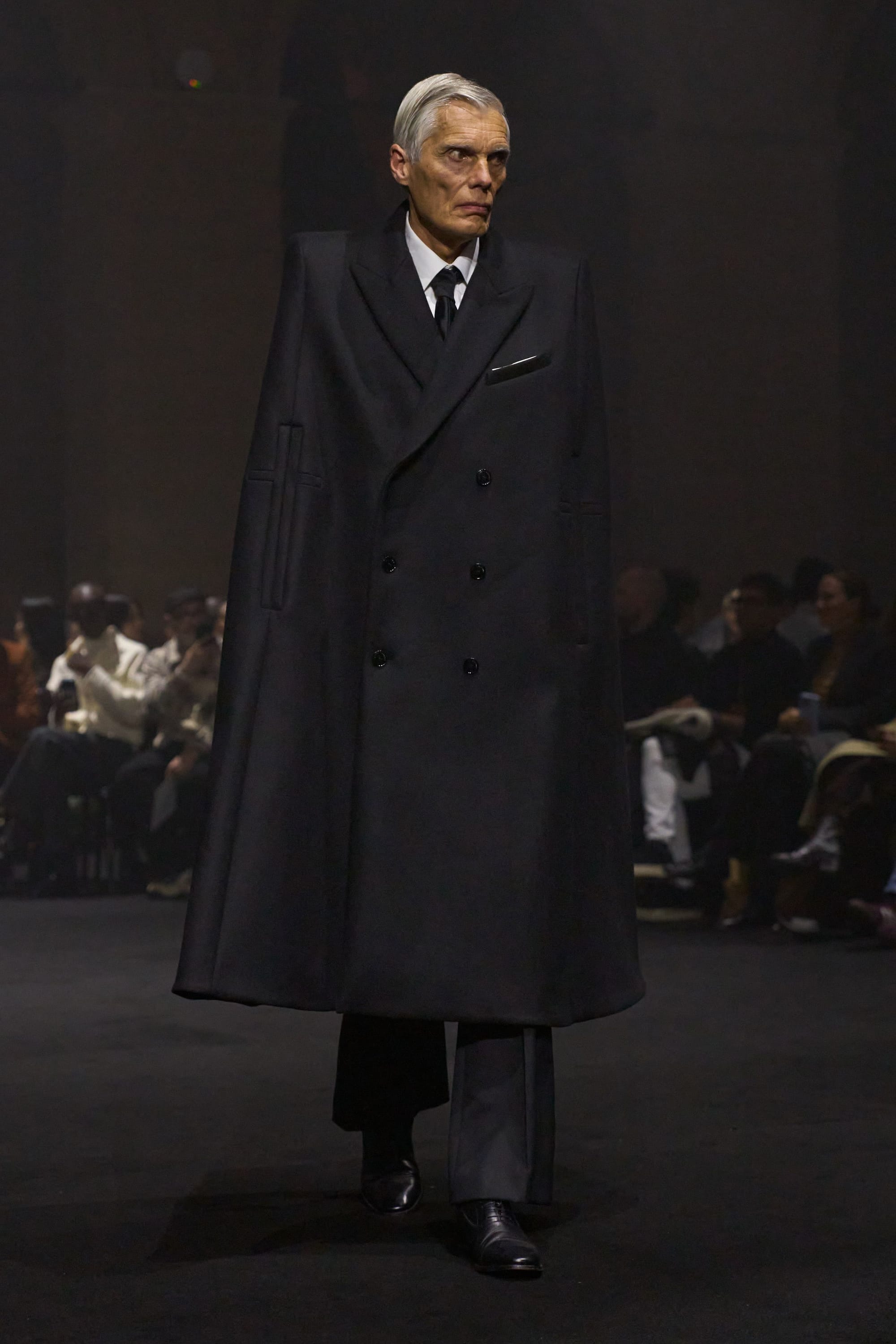
What separates this collection from previous seasons is the clarity of the design language. Earlier Matières Fécales collections felt like they were fighting against themselves—technically accomplished but conceptually scattered, as if the brand couldn't decide whether it wanted to be taken seriously or just be notorious. Fall 2026 feels like a resolution of that tension. The clothes are still challenging, but they're challenging in service of a coherent point of view rather than just for the sake of difficulty.
The fabrication work is where that shift becomes most visible. The distressed wool doesn't read as costume or affectation—it has the weight and structure of something built to last, just aged in a way that feels intentional rather than accidental. The leather pieces look like they've been through something, but the tailoring underneath is precise enough that the deconstruction feels like a choice, not a mistake. That's a harder trick to pull off than it looks. It requires technical skill to make something look deliberately undone without actually falling apart.
Compare this to what Acne Studios accomplished this season—another brand that's built a reputation on intellectual rigor without sacrificing wearability. Both collections prove that there's still a market for designers who treat their audience as intelligent enough to handle complexity. The difference is that Acne has institutional backing and decades of brand equity. Matières Fécales is still proving itself, which makes the consistency of execution more critical.
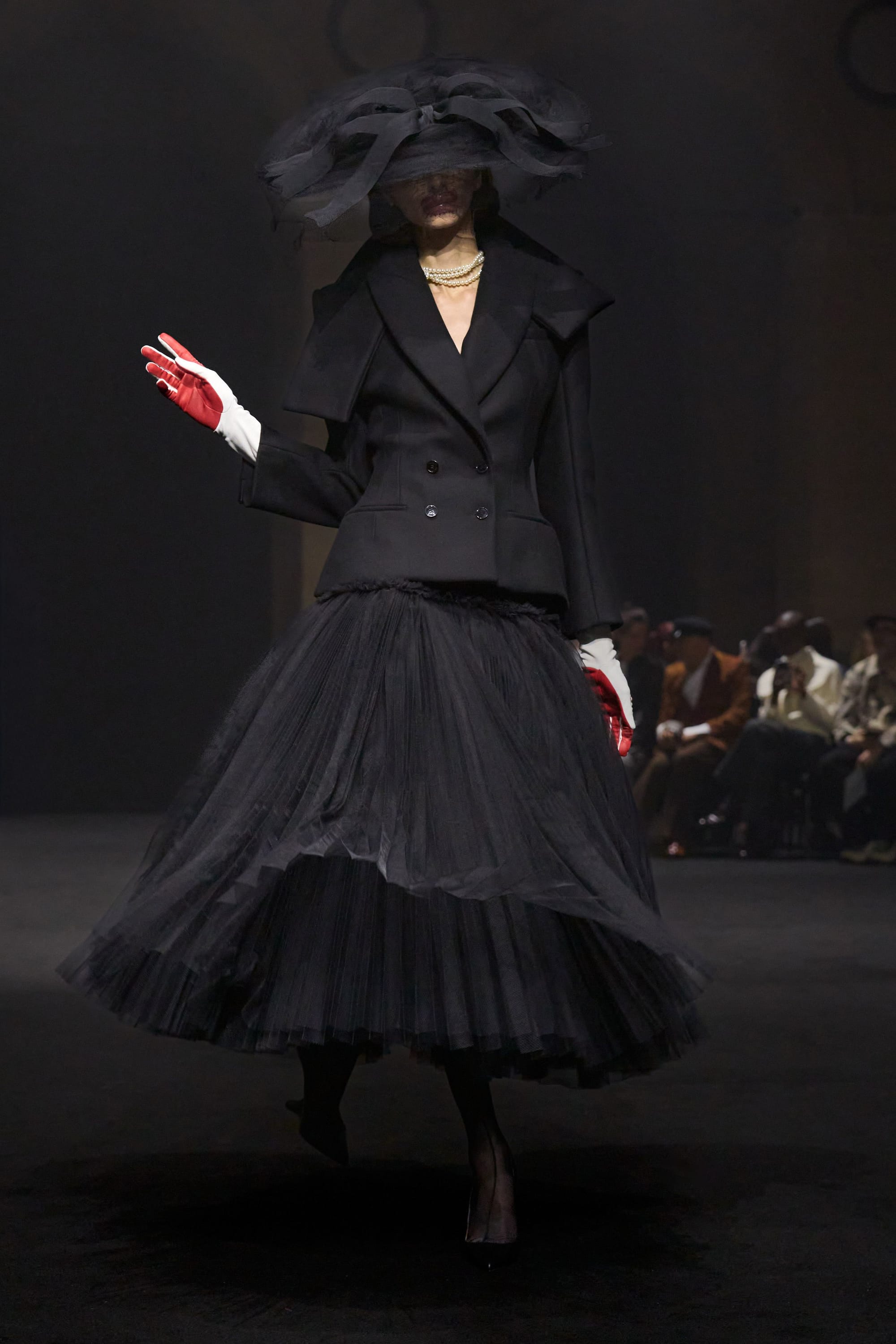
What this collection proves is that Matières Fécales has the technical chops to back up the noise. The tailoring is precise, the fabrication is sophisticated, and the design point of view is clear. That's a harder trick to pull off than a controversial brand name. Now the work is about consistency—showing that this wasn't a one-off moment of clarity, but a signal of where the brand is heading. If they can do that, the name stops being the story and starts being the footnote. The real provocation would be making fashion so good that people forget to be offended by it.